
About Michał Plater-Zyberk
Lived 1777 – 1862 (aged 84–85). Michał Plater-Zyberk was a Russian and Polish landlord, official, naturalist and statesperson.
Count Michał Plater-Zyberk (28 December, 1777 – 1862, ) – Polish nobleman, naturalist, civilian vice-governor of Vilnius.
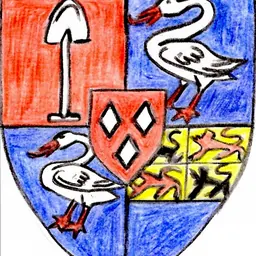
Biography His parents were and Izabela Borch, daughter of , Great Crown Chancellor. In 1803, he married Izabela Helena Syberg zu Wischling, Zyberk coat of arms, daughter of , the last male representative of the Syberg family. In order to save his wife's family name, he adopted her surname and coat of arms, for which he received a special consent from Emperor Alexander I. Thus, he started a new line – Plater-Syberg, soon polonized to Plater-Zyberk.
In his youth, he took part in the Kościuszko Uprising (1794) and traveled with his parents. After getting married, he settled in the estate. He was a lover of science. In 1805 he was elected an honorary member of the Imperial University of Vilnius, in January 15, 1806 he was elected as school inspector for the governorates of Vitebsk and Mogilev. He belonged to the Typographic Society in Vilnius and the Courland Society for the Study of Literature and Art, which he co-founded. He was a member of several masonic lodges: Szkoła Sokratesa , Zum Guten Hirten , and the Doskonała Jedność .
In 1816, he took the office of the civilian vice-governor of Vilnius. For the next few years, he actually ran the governorate, while Governor Franciszek Ksawery Drucki-Lubecki stayed in Warsaw most of the time as a member of the commission for settling the financial accounts between Kingdom of Poland and Russian Empire. The idea of abolishing serfdom became popular among the nobility of Vilna Governorate, influenced by the acts abolishing serfdom in Courland and Estonia in 1816 and 1817. The reform became the subject of debate at the governorate assembly in Vilnius on December 30, 1817. Although Plater-Zyberk was in favor of the reform, he ordered the assembly to close its session, and the next day notified the Governor-General Alexander Rimsky-Korsakov of the incidents, and then the Emperor himself, proposing that the reform be taken up by the imperial court. The imperial court rejected the idea of reform and ordered to reprimand Plater-Zyberk and the marshal of the nobility, Teodor Ropp.
Līksna meteorite Līksna meteorite. Drawing from the journal "Annalen der Physik", 1821.He was the first to describe the fall of a meteorite that took place on July 12, 1820 near Līksna (probably in ), about 5:30 p.m. He also collected its fragments and prepared a detailed documentation of the event. Information about the find was first published in the Allgemeine Deutsche Zeitung für Russland on July 21, 1820, then reprinted in Polish by the Kuryer Litewski on July 24, and later by the Dziennik Wileński in October.
Michał Plater-Zyberk also sent fragments of the meteorite to Ignacy Horodecki, at the University of Vilnius, who in turn passed it on through Alexandre Brongniart, a member of the Academy of Sciences in Paris, to André Laugier, a specialist in meteorites. André Laugier conducted research on the meteorite, which he published in 1823-1824. Some fragments of the meteorite were also donated to Warsaw University in February 1828 by Kazimierz Plater-Zyberk, son of Michał.
Ludwika (1805-1878), married to Karol Jerzy Borch, Jan (1807-1809), Kazimierz Bartłomiej (1808-1876), married to Ludwika Teodora Borewicz, Izabela (1809-1888), married to Julian Emeryk Ropp, Józefa (1811-1842), married to Fabian Antoni Broel-Plater, Henryk Wacław Ksawery (1811-1903), married to Adelajda Keller, Maria (1813-1893), married to Mikołaj Szadurski Konstanty (1814-1850), married to Aniela Broel-Plater Józef (1818-1839), Michał (1819-1823), Anna (1821-1904), married to , Stanisław Kazimierz (1823-1896), married to Maria Teresa Borch.
Don’t just read it —
keep it.
Full-length biographies made to live with: read them, listen on the way to work, watch them tonight.
- E-book
- Audio
- Video
Instant download · yours to keep · every purchase keeps this site free
Important facts
People in Michał Plater-Zyberk's life
Named in this biography and alive at the same time

Related people
Same field, nearest in time



Contemporaries
People whose lives overlapped Michał Plater-Zyberk's


Frequently asked questions
Who was Michał Plater-Zyberk?
Polish statesman (1777-1862)
When was Michał Plater-Zyberk born?
Michał Plater-Zyberk was born on 28 December 1777.
When did Michał Plater-Zyberk die?
Michał Plater-Zyberk died in 1862.
What was Michał Plater-Zyberk's occupation?
Michał Plater-Zyberk was a landlord, official, naturalist and statesperson.
What nationality was Michał Plater-Zyberk?
Michał Plater-Zyberk was Russian and Polish.
Sources & further reading
· Wikipedia: Michał Plater-Zyberk
· DBpedia: Michał Plater-Zyberk
Cite this page
APA: Biography.guide. (2026). Michał Plater-Zyberk. https://biography.guide/michal-plater-zyberk/
MLA: "Michał Plater-Zyberk." Biography.guide, https://biography.guide/michal-plater-zyberk/.
Chicago: "Michał Plater-Zyberk." Biography.guide. https://biography.guide/michal-plater-zyberk/.
Data last updated: 2026-09-20 · Spot an error? Report a correction.
Page generated 2026-09-27 05:23 UTC