
About Michał Hydzik
Lived 1944 – 2017 (aged 73). Michał Hydzik was a Polish cleric.
Michał Hydzik (born 2 January 1944 in Brzeżawa, died 13 April 2017) was a Polish Pentecostal clergyman, pastor, and evangelist who served as the chief presbyter of the Pentecostal Church from 1988 to 2000. Prior to that, he was a clergyman and district presbyter of the United Evangelical Church and a member of the United Evangelical Church Presidium from 1984 to 1987. In the Pentecostal community, he was known for his prayers for healing. He authored five books and numerous articles. Hydzik had an interest in demonology and eschatology. He was an anti-ecumenist, uninterested in closer cooperation with related Evangelical groups, but he aspired to unite all Pentecostal movements.
Early life Michał Hydzik was born in Brzeżawa, Przemyśl County, on 2 January 1944. In 1946, his father, who was a preacher in the , was killed along with other members of the congregation. and was suspected by the Security Service of collaborating with the Workers' Defence Committee after 1976.
In 1966, Hydzik married Tatiana Ilczuk, with whom he had three children: Małgorzata, Dorota, and Daniel.
From 1966 to 1976, as a member of the United Evangelical Church in Wapienica near Bielsko-Biała, Hydzik served as an evangelist and district youth leader. In 1978, he was ordained as a presbyter by and .
From 1976 to 1987, Hydzik was the pastor of the in Ustroń. He introduced monthly healing services, and under his leadership, the congregation grew from 35 to over 200 members in ten years. They built the largest Evangelical prayer house in Poland at that time, with a hall for 600 people. Each summer, he organized youth courses in , Koszalin, and Przemyśl, adhering to an unwritten rule that no one could leave without receiving the baptism with the Holy Spirit.
Career as a clergyman
In 1984, he became a member of the Presidium of the United Evangelical Church. He conducted talks with representatives of the Christian Pentecostal Fellowship, encouraging them to join the United Evangelical Church.
On 13 September 1986, at a meeting of the United Evangelical Church Council, he submitted a proposal for the independence of the individual constituent groups of the church. The proposal was accepted in December at the next council meeting. The decision for reorganization was made by the XII Synod of the United Evangelical Church.
In 1987, he became the presbyter of the . At the first synod of the newly formed Pentecostal Church, he was elected the chief presbyter. Hydzik's leadership was not accepted by a group of congregations from Lublin, which was one of the reasons for the formation of the . He served as the chief presbyter until 2000.
During his first term in this position (1988–1992), 57 new congregations were established; during the second term (1992–1996), 31 congregations; and during the third term (1996–2000), 18 congregations. As chief presbyter, he desired to integrate the entire Pentecostal movement in Poland and initially had a lot of enthusiasm for this goal. He initiated joint meetings for this purpose. However, during the discussions, representatives of other groups limited themselves to criticizing these initiatives, accusing the Pentecostal Church of trying to absorb them and not presenting their own proposals.
As chief presbyter, he prioritized Evangelistic and missionary work. described him as a charismatic leader.
From 2000 to 2008, he was the pastor of the in Bielsko-Biała, and from 2005, he was again the pastor of the Betel congregation in Ustroń. As a result, he served as a pastor in two congregations for three years. He remained the pastor in Ustroń until 2014, when he resigned from all church offices.
As a preacher, he ministered in many places in Poland and worldwide. He preached at the European Pentecostal Conference and the World Pentecostal Conference. In the US, he ministered at John Osteen's congregation in Houston and David Wilkerson's congregation at Times Square in New York.
Views
Ecumenism
He viewed the United Evangelical Church negatively during the time when Stanisław Krakiewicz was its leader. He claimed that Pentecostals were persecuted, citing himself and the congregation in Przemyśl as examples, where the church authorities did not want to accept a Pentecostal as pastor. His opinion of the United Evangelical Church did not change when he joined the church leadership. He stated that he often returned from many meetings "tired, discouraged, and disappointed". He accused other groups of dishonesty towards Pentecostals, giving the example of the congregation in , which was excluded by the strict Christian faction but later accepted by another United Evangelical Church-affiliated group.
As a member of the Presidium, he sought the church's withdrawal from the Polish Ecumenical Council and the dissolution of the United Evangelical Church. On 30 March 1984, at a United Evangelical Church Council meeting, he submitted a motion to withdraw from the Polish Ecumenical Council. During the discussion, it was decided that the synod should make the final decision on this matter. Hydzik was perceived as an anti-ecumenist who significantly contributed to the dissolution of the United Evangelical Church. However, when the Pentecostal Church was established in 1988, he advocated for the new church's membership in the Polish Ecumenical Council. Although he showed little interest in non-Pentecostal groups, he did meet with Catholic Charismatic Renewal activists (until 1997).
He was a proponent of uniting all Pentecostal denominations into one church and was personally involved in this matter. However, he did not achieve any success in this area. He did not engage in the formation of the . In his autobiography, he stated that he painfully experienced the fact that it was easier to reach an understanding with non-Pentecostal Evangelical groups than with closer Pentecostal-like groups.
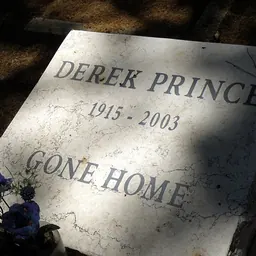
Demonology Hydzik was interested in demonology. In 1983, he wrote an article on the subject in magazine (The Exorcism of Demons), and in 2004, he published an entire book titled Enemies. He distinguished between provoked and unprovoked possession. Demons, he believed, could not tolerate talk about the blood of Christ. He asserted that only certain individuals should perform exorcisms and that they should never do so alone. Hydzik also noted that some people in contemporary times feign possession. He rejected Derek Prince's teaching on so-called generational curses (which claims that if any ancestor engaged in spiritualism, it brought a curse upon all their descendants).
On 16 February 2013, a conference titled Ministry of Deliverance was organized to establish the church's position on demonology. The direct reason for this conference was the exorcism activities of Janusz Lindner, a pastor from Krotoszyn. Hydzik was one of the speakers at the conference.
Other views Hydzik believed that nature is the second book, after the Bible, that testifies to the existence of God. According to him, there are no coincidences in nature; everything exists with purpose. All religious meetings should be marked by optimism and enthusiasm. Sad, gloomy Christianity will attract no one. Let's express our joy for salvation, for the fact that Jesus reigns in our lives. Initially, he was a proponent of the "second wave" of Pentecostalism known as the charismatic movement and promoted this movement within the church. However, from the mid-1990s, he gradually evolved towards classical Pentecostalism. When the issue of "intercessors" arose in the late 1990s, he was unable to take a definitive stance, which was criticized by his successor. Hydzik responded that he was emotionally connected to the individuals in the "intercessor" movement, initially saw them as the future of the church, and therefore left the resolution of this issue to his successor.
In his book What Awaits Us? (1994), he expressed the controversial view that the generation of 1948 would not die a natural death (i.e., people born in that year would witness the end of the world). He based this speculation on the text from Luke 21:32. In the second edition of the book, published in 1998, this view was softened to: We can infer that the final events may happen very soon. However, in his 2016 commentary on the Apocalypse, he did not address this topic. He applied a Darbyite interpretation to the Apocalypse.
Publications
Books
Articles
Don’t just read it —
keep it.
Full-length biographies made to live with: read them, listen on the way to work, watch them tonight.
- E-book
- Audio
- Video
Instant download · yours to keep · every purchase keeps this site free
Important facts
People in Michał Hydzik's life
Named in this biography and alive at the same time




Related people
Same field, nearest in time



Contemporaries
People whose lives overlapped Michał Hydzik's


Frequently asked questions
Who was Michał Hydzik?
Polish clergyman
When was Michał Hydzik born?
Michał Hydzik was born on 2 January 1944 in Brzeżawa.
When did Michał Hydzik die?
Michał Hydzik died on 13 April 2017 in Skoczów.
What was Michał Hydzik's occupation?
Michał Hydzik was a cleric.
What nationality was Michał Hydzik?
Michał Hydzik was Polish.
Sources & further reading
Cite this page
APA: Biography.guide. (2026). Michał Hydzik. https://biography.guide/michal-hydzik/
MLA: "Michał Hydzik." Biography.guide, https://biography.guide/michal-hydzik/.
Chicago: "Michał Hydzik." Biography.guide. https://biography.guide/michal-hydzik/.
Data last updated: 2026-09-20 · Spot an error? Report a correction.
Page generated 2026-09-27 05:18 UTC