
About Michał Boym
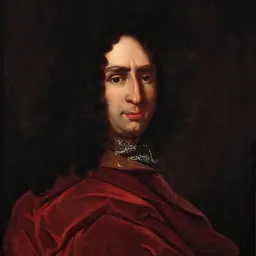
Lived 1614 – 1659 (aged 44). Michał Boym was a Polish explorer, linguist, biologist, sinologist, naturalist and cartographer.
Michał Piotr Boym, SJ (; c. 1612 – 22 June 1659) was a Polish Jesuit missionary, scientist, and explorer active in China during the 17th century.
He was among the first Westerners to travel extensively within the Chinese mainland and is credited with introducing European audiences to aspects of Chinese geography, medicine, and natural history. Boym authored several important works, including treatises on Asian flora and fauna, and a detailed account of the Ming–Qing transition.
The first known Chinese–European dictionary, published posthumously in 1670, is often attributed to Boym.
Biography Drawings of Chinese fruit trees from Michał Boym's Briefve Relation de la Chine (Paris, 1654). Depicted are Cinnamomum cassia, the durian, and a variety of banana (or plantain) tree, with their Chinese names. Michał Boym was born in Lwów, Poland (now Lviv, Ukraine), around 1614, into a well-off family of Hungarian descent. His grandfather, Jerzy Boim, came to Poland from Hungary with King Stephen Báthory and married Jadwiga Niżniowska. Michał’s father, Paweł Jerzy Boim (1581–1641), The emperor’s eunuch secretary Pang Tianshou (龐天壽), known by his Christian name Achilles, was also a convert.
Boym was chosen to deliver letters from Empress Dowager Helena and Pang Achilles to Pope Innocent X, the Superior General of the Jesuit Order, and Cardinal John de Lugo. Additional letters were sent to the Doge of Venice and the King of Portugal. Accompanied by a young court official, Andreas Chin , Boym embarked on his return voyage to Europe.
After arriving in Goa in May 1651, Boym learned that the Portuguese crown had withdrawn support for the Ming cause, and the Jesuits now discouraged involvement in Chinese political affairs. Placed under house arrest, Boym eventually escaped and continued his journey on foot through Hyderabad, Surat, Bandar Abbas, and Shiraz, reaching Isfahan in Persia. He then travelled via Erzurum, Trabzon, and İzmir, arriving in Venice in December 1652 disguised as a Chinese mandarin to avoid political entanglements.
Initially refused an audience by the Doge of Venice, Boym secured support from the French ambassador and delivered his letters. However, the Pope—then hostile to French influence—reacted negatively, and the Jesuit Superior General Goswin Nickel also feared Boym’s mission could endanger Jesuit activities in Asia. Only in December 1655 did Pope Alexander VII receive Boym, offering sympathy but no material aid. The papal letter, however, opened diplomatic doors, and in Lisbon Boym gained an audience with King John IV of Portugal, who promised assistance.
In March 1656, Boym set out again for China. Of the eight priests accompanying him, only four survived the journey. Upon reaching Goa, he found the Portuguese authorities unwilling to allow him passage to Macau for fear of jeopardizing relations with the Qing. Determined, Boym travelled overland to Ayutthaya, capital of Siam, and from there by ship to northern Vietnam. In Hanoi, he sought guides to Yunnan, but failed to find any. Continuing the journey with only his companion Chang, Boym reached Guangxi, China, where he died on 22 June 1659, before he could deliver the Pope’s letter to the Yongli court. His burial place remains unknown.
Works A sumxu (松鼠) chasing a green-haired turtle (綠毛龜), from Boym’s Flora Sinensis (1656).
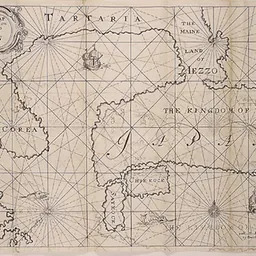
Boym is best remembered for his works describing the flora, fauna, history, traditions, and customs of the regions he travelled through. During his first journey to China, he wrote a short treatise on the plants and animals of Mozambique. The manuscript was sent to Rome but was never printed. During his return journey, Boym prepared a large collection of maps depicting mainland China and Southeast Asia. He planned to expand the work into nine chapters covering China’s geography, customs, political system, science, and inventions.
The significance of Boym’s maps lies in their accuracy: they were the first European maps to depict Korea correctly as a peninsula rather than an island. They also accurately located numerous Chinese cities that had previously been unknown to Europeans or known only from the semi-legendary accounts of Marco Polo. Boym also included representations of the Great Wall and the Gobi Desert. Although the collection was not published during his lifetime, it substantially expanded European knowledge of China.
Boym’s best-known work is the Flora Sinensis (“Chinese Flora”), published in Vienna in 1656. The book was the first European publication to describe an ecosystem of the Far East. Boym emphasized the medicinal properties of Chinese plants and included appeals for support of the Catholic Chinese emperor. The volume also contained a poem of nearly one hundred chronograms, referencing the year 1655—the coronation date of Emperor Leopold I as King of Hungary—in an effort to gain the monarch’s patronage for Boym’s mission.
Athanasius Kircher later drew extensively on Flora Sinensis for the chapters on Chinese plants and animals in his China Illustrata (1667). Boym also authored the first published Chinese dictionary for a European language—a Chinese–French dictionary included in the first French edition of Kircher’s work (1670).
In other works—such as Specimen medicinae Sinicae (“Chinese Medicinal Plants”) and Clavis medica ad Chinarum doctrinam de pulsibus (“Key to the Medical Doctrine of the Chinese on the Pulse”)—Boym described aspects of traditional Chinese medicine and introduced diagnostic methods previously unknown in Europe, particularly the measurement of the pulse. However, the authorship of Clavis medica ad Chinarum doctrinam de pulsibus has been disputed, and it is likely that it was actually written by the Dutch physician and scholar Willem ten Rhijne.
Don’t just read it —
keep it.
Full-length biographies made to live with: read them, listen on the way to work, watch them tonight.
- E-book
- Audio
- Video
Instant download · yours to keep · every purchase keeps this site free
Important facts
People in Michał Boym's life
Named in this biography and alive at the same time


Related people
Same field, nearest in time

Contemporaries
People whose lives overlapped Michał Boym's






Frequently asked questions
Who was Michał Boym?
Jesuit missionary into China
When was Michał Boym born?
Michał Boym was born on 7 November 1614 in Lviv.
When did Michał Boym die?
Michał Boym died on 22 June 1659 in Guangxi.
What was Michał Boym's occupation?
Michał Boym was an explorer, linguist, biologist, sinologist, naturalist and cartographer.
What nationality was Michał Boym?
Michał Boym was Polish.
Sources & further reading
Cite this page
APA: Biography.guide. (2026). Michał Boym. https://biography.guide/michal-boym/
MLA: "Michał Boym." Biography.guide, https://biography.guide/michal-boym/.
Chicago: "Michał Boym." Biography.guide. https://biography.guide/michal-boym/.
Data last updated: 2026-09-20 · Spot an error? Report a correction.
Page generated 2026-09-27 05:25 UTC