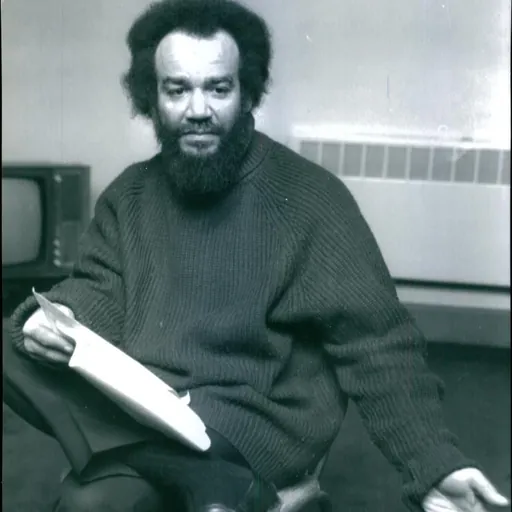
About Michael X
Lived 1933 – 1975 (aged 41). Michael X was a British writer and activist.
Michael X (17 August 1933 – 16 May 1975), born Michael de Freitas, was a Trinidad and Tobago-born self-styled black revolutionary, convicted murderer, and civil rights activist in 1960s London. He was also known as Michael Abdul Malik and Abdul Malik. Convicted of murder in 1972, Michael X was executed by hanging in 1975 in Port of Spain's Royal Gaol.
Biography Michael de Freitas was born in Belmont, Port of Spain, Trinidad and Tobago, to an "Obeah-practising black woman from Barbados and an absent Portuguese father from St Kitts". Encouraged by his mother to pass for white, "Red Mike" was a headstrong youth and was expelled from school at the age of 14. He professed to dislike the role, but it paid for his lifestyle. Appearing to look for a way out, he became involved in the radical politics and groups active in and around Notting Hill.
By the mid-1960s, he had become known as Michael X. "Michael X" became a well-known exponent of Black Power in London. Writing in The Observer in 1965, Colin McGlashan called him the "authentic voice of black bitterness."
In 1965, under the name Abdul Malik, he founded the Racial Adjustment Action Society (RAAS).
In 1967, he was involved with the counterculture/hippie organisation the London Free School (LFS) through his contact with John "Hoppy" Hopkins, which both helped widen the reach of the group, at least in the Notting Hill area, and create problems with local police who disliked his involvement. Michael and the LFS were instrumental in organising the first outdoor Notting Hill Carnival later that year.
Later that year, he became the first non-white person to be charged and imprisoned under the UK's Race Relations Act, which was designed to protect Britain's Black and Asian populations from discrimination. He was sentenced to 12 months in prison, having been arrested on the accusation of using words likely to stir up hatred "against a section of the public in Great Britain distinguished by colour". This was after his speech at an event in Reading when he said, referring to the Notting Hill race riots: "In 1958, I saw white savages kicking black women in the streets and black brothers running away. If you ever see a white laying hands on a black woman, kill him immediately." He also said "white men have no soul".
In 1969, he became the self-appointed leader of a Black Power commune on Holloway Road, North London, called the "Black House". The commune was financed by a young millionaire benefactor, Nigel Samuel. Michael X said, "They've made me the archbishop of violence in this country. But that 'get a gun' rhetoric is over. We're talking of really building things in the community needed by people in the community. We're keeping a sane approach." John Lennon and Yoko Ono donated a bag of their hair to be auctioned for the benefit of the Black House.
In what the media called "the slave collar affair", businessman Marvin Brown was enticed to The Black House, viciously attacked, and made to wear a spiked "slave collar" around his neck as Michael X and others threatened him in order to extort money. The Black House closed in the autumn of 1970. The two men found guilty of assaulting Marvin Brown were imprisoned for 18 months.
The Black House burned down in mysterious circumstances, and soon Michael X and four colleagues were arrested for extortion. His bail was paid by Lennon in January 1971.
In February 1971, Michael X fled to his native Trinidad and Tobago, where he started an agricultural commune devoted to Black empowerment east of the capital, Port of Spain. "The only politics I ever understand is the politics of revolution," he told the Trinidad Express. "The politics of change, the politics of a completely new system." A witness at his trial said that Skerritt was a member of Michael X's "Black Liberation Army" and had been killed by him because he refused to obey orders to attack a local police station. Michael X was found guilty and sentenced to death.
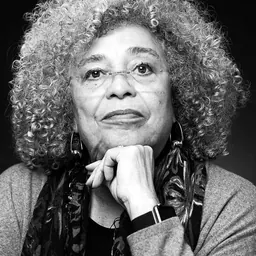
The Save Malik Committee, whose members included Angela Davis, Dick Gregory, Kate Millett and others, including the well-known, self-described "radical lawyer" William Kunstler, who was paid by Lennon,
Legacy Under the name Michael Abdul Malik, Michael X was the author of the autobiography From Michael de Freitas to Michael X (André Deutsch, 1968), which was ghost-written by John Stevenson. Michael X also left behind fragments of a novel about a romantic black hero who wins the abject admiration of the narrator, a young woman named Lena Boyd-Richardson. The novel was never completed.
Cultural references Michael X is the subject of the essay "Michael X and the Black Power Killings in Trinidad" by V. S. Naipaul, collected in The Return of Eva Perón and the Killings in Trinidad (1980), and is also believed to be the model for the fictional character Jimmy Ahmed in Naipaul's 1975 novel Guerrillas.
Michael X is a character in The Bank Job (2008), a dramatisation of a real-life bank robbery in 1971. The film claims that Michael X was in possession of indecent photographs of Princess Margaret and used them to avoid criminal prosecution by threatening to publish them; according to the movie plot, X killed Gale Benson because she was a British Secret Services agent and revealed where he kept the blackmail material. He was played by Peter de Jersey.
Michael X and his trial are the subject of a chapter in Geoffrey Robertson's legal memoir The Justice Game (1998).
Documentary film, Who Needs a Heart (1991), is inspired by Michael X. John Akomfrah is the director.
Michael X plays a part in Make Believe: A True Story (1993), a memoir by Diana Athill.
Michael X is the eponymous title of a play, by the writer Vanessa Walters, that takes the form of a 1960s Black Power rally and was performed at The Tabernacle Theatre, Powis Square, London W11 (Notting Hill), in November 2008.
Michael X (played by Adrian Lester) is portrayed in a scene opposite Jimi Hendrix in the 2013 film All Is By My Side, based on Hendrix's early years in the music industry.
In 1966, Muhammad Ali gave his bloodied boxing shorts that he wore when he fought Henry Cooper to Michael Abdul Malik, who is referred to as a black militant from Trinidad in The Greatest: My Own Story (1975) by Muhammad Ali with Richard Durham.
Michael X is a subject in the 2021 Adam Curtis documentary series Can't Get You Out of My Head.
Don’t just read it —
keep it.
Full-length biographies made to live with: read them, listen on the way to work, watch them tonight.
- E-book
- Audio
- Video
Instant download · yours to keep · every purchase keeps this site free
Important facts
People in Michael X's life
Named in this biography and alive at the same time




Related people
Same field, nearest in time




Contemporaries
People whose lives overlapped Michael X's



Frequently asked questions
Who was Michael X?
Civil rights activist and convicted murderer (1933–1975)
When was Michael X born?
Michael X was born on 17 August 1933 in Trinidad and Tobago.
When did Michael X die?
Michael X died on 16 May 1975 in Port of Spain.
What was Michael X's occupation?
Michael X was a writer and activist.
What nationality was Michael X?
Michael X was British.
Sources & further reading
Cite this page
APA: Biography.guide. (2026). Michael X. https://biography.guide/michael-x/
MLA: "Michael X." Biography.guide, https://biography.guide/michael-x/.
Chicago: "Michael X." Biography.guide. https://biography.guide/michael-x/.
Data last updated: 2026-09-23 · Spot an error? Report a correction.
Portrait: Wikimedia Commons · author & licence
Page generated 2026-09-27 05:07 UTC