
Michael W. Young
American geneticist, chronobiologist
About Michael W. Young
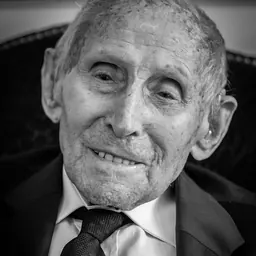
Born 1949. Michael W. Young is an American geneticist, chronobiologist, university teacher and biologist, known for Circadian rhythm.
Michael Warren Young (born March 28, 1949) is an American biologist and geneticist. He has dedicated decades to research studying genetically controlled patterns of sleep and wakefulness within Drosophila melanogaster.
Life
Early life Michael W. Young was born in Miami, Florida, on March 28, 1949. His father worked for Olin Mathieson Chemical Corporation managing aluminum ingot sales for the south eastern United States. His mother worked for a law firm as a secretary. Despite no history of science or medicine in either of their backgrounds, Young’s parents were supportive of his interest in science and provided the means of scientific exploration through microscopes and telescopes. They lived in an environment close to private zoos, where occasionally some of the animals would escape into their backyard and spark Young's scientific interest.
Michael Young grew up in and around Miami, Florida. Then, his family moved near Dallas, Texas, where he graduated from L. D. Bell High School. In his early teens, Michael’s parents gifted him one of Darwin’s books on evolution and biological mysteries. The book described biological clocks as the reason why a strange plant he had seen years earlier produced flowers that closed during the day and opened at night. The location and composition of these clocks were unknown, and this sparked Michael Young’s interest at an early age. In 2004, Young was appointed Vice President for Academic Affairs and was also granted the Richard and Jeanne Fisher Chair. Later, by determining the sequence of the gene on the X chromosome, they found that the arrhythmic mutation produced a functionless protein, while long-period and short-period mutants of per changed the amino acid sequence of a still functional protein.
Period and Timeless proteins bind together to form a stabilized dimer, which allows the two to enter the nucleus. Phosphorylation of period by double-time initiates degradation.
Discovery of timeless Following the discovery of per, the Young lab looked for additional circadian genes. In late 1980s, Amita Sehgal, Jeff Price, Bernice Man helped Young use forward genetics to screen for additional mutations that altered fly rhythms. A new gene located on chromosome 2 was named timeless (tim) and was successfully cloned and sequenced. They found strong functional connections between tim and per. Tim mutants interfered with per mRNA cycling. In 1994, Leslie Vosshall, a graduate student in Young's lab, discovered that if PER proteins were protected from degradation, they would accumulate without TIM, but could not move to the nuclei. Later Young and others found that TIM proteins did not accumulate in nuclei in per mutants. They concluded that PER and TIM worked together. Another lab member Lino Saez, saw that PER and TIM associate with each other to stabilize each other and to allow their nuclear accumulation. Later studies by the Young, Sehgal, and Edery labs revealed that light causes the rapid degradation of TIM and resets of the phase of the circadian rhythm.
Doubletime phosphorylation In 1998, Jeff Price from the Young lab discovered a kinase called doubletime (Casein kinase 1) that phosphorylates PER on certain serine residues. This signal marks it for degradation. When PER and TIM are bound, doubletime does not seem to be able to phosphorylate PER, allowing it to accumulate. Young’s discovery of doubletime mutants in 1998 was soon followed by the 2001 discovery of a form of Familial Advanced Sleep Phase Syndrome (FASPS) in humans, which is linked to an hPer2 polymorphism that removes a serine normally phosphorylated by Casein kinase 1. Other forms of FASPS are caused by mutations that alter the Casein kinase 1 gene. Doubletime mutations in Drosophila alter the phosphorylation and degradation of PER protein. This affects the regularity in period of the organism. This discovery solidified doubletime as a necessary part of the circadian clock.
Positions and honors 1978: Andre and Bella Meyer Foundation fellowship 2011: Louisa Gross Horwitz Prize (with Michael Rosbash and Jeffrey C. Hall) 2017: Nobel Prize in Physiology or Medicine (with Michael Rosbash and Jeffrey C. Hall) 2018: Member of the American Philosophical Society
Don’t just read it —
keep it.
Full-length biographies made to live with: read them, listen on the way to work, watch them tonight.
- E-book
- Audio
- Video
Instant download · yours to keep · every purchase keeps this site free
Important facts
People in Michael W. Young's life
Named in this biography and alive at the same time





Related people
Same field, nearest in time

Contemporaries
People whose lives overlapped Michael W. Young's


Frequently asked questions
Who is Michael W. Young?
American geneticist, chronobiologist
When was Michael W. Young born?
Michael W. Young was born on 28 March 1949 in Miami.
What is Michael W. Young's occupation?
Michael W. Young is a geneticist, chronobiologist, university teacher and biologist.
What is Michael W. Young known for?
Michael W. Young is known for Circadian rhythm.
What nationality is Michael W. Young?
Michael W. Young is American.
Sources & further reading
Cite this page
APA: Biography.guide. (2026). Michael W. Young. https://biography.guide/michael-w-young-geneticist/
MLA: "Michael W. Young." Biography.guide, https://biography.guide/michael-w-young-geneticist/.
Chicago: "Michael W. Young." Biography.guide. https://biography.guide/michael-w-young-geneticist/.
Data last updated: 2026-09-20 · Spot an error? Report a correction.
Page generated 2026-09-27 05:22 UTC