
Michael the Syrian
Patriarch of Syriac Orthodox Church of Antioch from 1166 to 1199
About Michael the Syrian
Lived 1126 – 1199 (aged 72–73). Michael the Syrian was a historian, christian minister and patriarch.
Michael the Syrian, also known as Michael the Great (; 1126 – 7 November 1199), was the Syriac Orthodox Patriarch of Antioch from 1166 until his death in 1199. He is widely regarded as one of the most important figures in the history of the Syriac Orthodox Church, remembered both as a saint and as a historian.
Hailing from the distinguished Qindisi family of Melitene, he quickly rose through the ranks to become Patriarch of Antioch. His tenure as patriarch at the Mor Hananyo Monastery involved maintaining good political and ecumenical relations with Crusaders, expressing disdain for Byzantines, and protecting his flock from Arab and Turkic incursions while navigating various church politics, including a schism in the patriarchate by Theodoros bar Wahbun.
His monumental Chronicle is the largest surviving historical work in Syriac literature, covering world history from Creation up to his own day. The chronicle, mainly preserved in an Edessan manuscript as a copy of a copy, records ecclesiastical affairs, natural phenomena, secular history, and other pertinent matters. Modern scholars call it "undoubtedly the greatest of all Syriac chronicles" and a cornerstone of medieval historiography, in addition to dozens of other works by Michael which catalyzed the era of "Syriac Renaissance."
Michael, described as "one of the greatest pontiffs [...] finest of the Patriarchs [...] of everlasting name, of graceful pursuit, and of uncommon qualities," is highly venerated in the Oriental Orthodox Communion and his feast day in the Syriac Orthodox Church is on November 7, the date of his repose.
Life The life of Michael is recorded by Bar Hebraeus. Michael was born in Melitene (modern Malatya, Turkey) into a Syriac Orthodox priestly family in 1126. His father, Reverend Eliya al-Qindasi (Elias Qîndîsî), was a priest, and his uncle Athanasius Zakkai (or Zakka) was a monk who later became bishop of Anazarbus in Cilicia in 1136. He thus belonged to the distinguished Qindasi family. At the time of his birth, Melitene was part of the Turkoman Danishmend dynasty, and after its division in 1142, it became the capital of a principality. In 1178, the city came under the control of the Sultanate of Rûm.
As a youth, Michael joined the Monastery of Mar Barsauma near Melitene, which had served as the patriarchal seat of the Syriac Orthodox Church since the 11th century. After completing his theological studies, he was ordained as a monk. Before reaching the age of thirty, he was appointed archimandrite (abbot) of the monastery, a position he held for nearly a decade. During this tenure, Michael enlarged the monastery's library, added new buildings, and rebuilt the water supply system, ensuring that it could accommodate the thousands of pilgrims who gathered annually for the feast of Saint Barsauma. He also took measures to improve the monastery's defenses against marauding bandits.
Michael soon gained a reputation as both a historian and theologian. In 1165, Patriarch Athanasius VII (1139–1166) sought to ordain him bishop of Amid (modern Diyarbakir), but Michael declined in order to devote himself to study. Following the patriarch's death in 1166, the Holy Synod met at Dayr Fesqin (or Peshqîn) near Melitene to elect his successor. After much debate, Michael was proposed as one of three candidates. Though initially reluctant, he accepted on the condition that the synod agree to enforce certain canons aimed at strengthening the church in its time of turmoil. Dionysios Jacob bar Salibi, bishop of Marash and Mabbug, preached in his favor, and Michael was unanimously elected and consecrated Patriarch of Antioch on 18 October 1166, in the presence of 28 bishops.
Patriarchate Michael was the first Syriac Orthodox patriarch to act within the city of Antioch itself since the expulsion of Severus of Antioch by Justinian in the 6th century, and he consecrated a number of bishops there. He established his primary patriarchal residence at the Monastery of Deyruelzafaran in Mardin, while also spending significant time at Mar Barsauma. Immediately after his election, he contacted Pope John I of Alexandria (Yohanna ibn Abi Ghalib), in keeping with the traditional bonds between the Syriac and Coptic patriarchates. Michael also traveled extensively through the Levant. In 1168 he made a pilgrimage to Jerusalem, staying at the Monastery of Mary Magdalene near the Damascus Gate (Bāb al-'Amūd), and subsequently resided for a year at Antioch, which was under Crusader rule. In Antioch and Jerusalem, he was received with great respect by the Latin patriarchs and nobility, cultivating cordial relations with figures such as Amaury de Nesle, the Latin patriarch of Jerusalem.
Michael was invited in 1178 to attend the Third Lateran Council in Rome by Pope Alexander III but he declined, though he sent a theological treatise in his stead. He likewise refused overtures from Byzantine Emperor Manuel I Komnenos, who attempted to negotiate ecclesiastical union. On three occasions (1170, 1172, and thereafter), Michael declined to travel to Constantinople or meet imperial envoys, instead sending representatives and responding with clear affirmations of the Syriac Orthodox Miaphysite faith.
As patriarch, Michael appointed twenty-five bishops, reformed lax clerical practices, and combated simony. His reforms provoked opposition, and he faced several rebellions from bishops and clergy. In 1171 and again in 1176, monks of Mar Barsauma rebelled against him. In 1174, he deposed Yuhanna al-Qaluniqi, bishop of Mardin, who retaliated by agitating the emir of Mosul and ruler of Mardin against Michael. Further opposition came from Bar Masih and culminated in the consecration of Theodore bar Wahbun as antipatriarch in Cilicia around 1180. Supported by discontented clergy, the Armenian king, the Catholicos of Armenia, and even at times the Crusaders — all of whom claimed jurisdictions over the Syrians of Cilicia — Theodore appealed in vain to Saladin for recognition. Michael excommunicated him, and after his escape from imprisonment at Mar Barsauma, Theodore sought refuge with the Armenian catholicos Gregory IV and Prince Leo II of Cilician Armenia, who officially recognized him. The schism persisted for 13 years until Theodore's death in 1193, when the Syriac Orthodox synod reaffirmed loyalty to Michael. In his Chronicle, Michael lamented the suffering of Middle Eastern Christians under Latin occupation, particularly in Jerusalem.
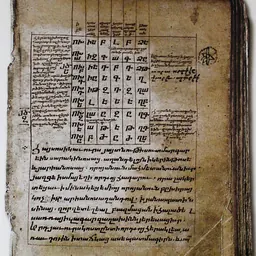
Late in his life, amidst the controversies with Theodore bar Wahbun and the burdens of office, Michael attempted to resign in 1193, but the synod refused his abdication. He continued his patriarchate until his death on 7 November 1199 at the Monastery of Mar Barsauma, aged 72, having served 33 years as patriarch, and was buried in a tomb he had constructed in advance, located north of the altar of the monastery's church. During his patriarchate, Michael ordained one Maphrian and 54 bishops. It was composed in a unique three-column format: the first column for secular and political history, the second for ecclesiastical affairs, and the third for natural phenomena such as earthquakes, locust swarms, and celestial events. Between chapters, Michael inserted chronological tables that synchronized different systems of dating — the Seleucid era, the Nativity, Olympiads, and the Hijra (used exclusively in reference to Muslim caliphs). A small miscalculation in aligning Seleucid and Nativity dates runs throughout the work. This method built upon the tables of Eusebius of Caesarea, was expanded by Jacob of Edessa, and later developed by Michael himself.
This new format of separate columns outlining different historical sections was used by earlier by Syriac Orthodox hierarchs such as John of Ephesus, Jacob of Edessa, and Dionysius of Tell-Mahre, and later by Bar Hebraeus. It was reserved for senior hierarchs which emphasized the important mission that accompanied it. The scribe preserved Michael's style, while correcting errors in the margins — sometimes with remarks such as "This was in the year 1909 of the perfidious and corrupt Greeks," echoing Michael's own hostility toward Byzantine persecutions against the Jacobites. The surviving codex, written in elegant script on roughly 800 large folios, was preserved in the library of Edessa, though 19 folios are missing. This Edessene manuscript remained in Urfa until 1924, when the city's Christian population was expelled in the aftermath of Sayfo; it was then moved to the Syriac Orthodox church of St. George in Aleppo. The Hill Museum and Manuscript Library digitized it in 2008.
Syriac manuscript tradition The 1598 Urbish copy remains the only extant Syriac witness of the text, written in Serto script, although other transcriptions based on it exist. The manuscript was discovered in Edessa and subsequently copied for modern scholars. One such copy was made for the Syriac Catholic Patriarch Ignatius Ephrem Rahmani in 1887, and another for the French orientalist Jean-Baptiste Chabot in 1899 (a digital facsimile is available at vHMML Reading Room). The Vorlage for these later copies is preserved today by the Edessene community in Aleppo. The text has lacunae, corresponding exactly to the gaps in the Arabic versions made from it. Despite these defects, the 1598 codex is regarded as the best surviving witness to the Chronicle'''s original layout and presentation.
After the disaster of 1146, the city declined morally and its native Syrian inhabitants were spiritually broken. Christians became a minority while the Muslim population grew and more mosques were built. Edessa was later absorbed by the Ayyubids, the Mongol conquests of Tatars and Hulaguids, and finally the Ottoman Empire, and its Christian population was largely eliminated during the persecutions that culminated in the early 20th century. By 1908, Christians constituted only about 19% of the population; on the eve of the mass exodus in 1924, the Syriac Orthodox numbered roughly 2,500. There are no Christians remaining in Şanlıurfa today.
The Melkites (Aramaic-speaking Syrians who followed the Council of Chalcedon after imperial crackdown) were disparagingly labeled "Greeks" rather than Syrians. Both Byzantine and Muslim critics mocked the Syriac Christians for "never producing kingdoms," to which Michael countered by citing Assyria and Babylonia as their sovereign ancestors. Michael harmonizes various arguments by linking Syrian history with Aramean and Assyrian histories, citing them as forbearers of the Syriac tradition due to their shared Aramaic language.
Significance Until the rediscovery of the Chronicle, Michael the Great was primarily known in the West as an author of canonical and liturgical writings. The publication of his universal history dramatically shifted scholarly appreciation of his importance. His work extends from Creation to his own day (late 12th century), and is based on a wide array of sources, many of which are now lost.
Chronography and biography
Revision of the Life of Mar Abbai of Nicaea — undertaken in 1185; draws from earlier Syriac sources such as John Rufus Reconstruction of the biography of Abbai of Nicaea — preserved in a manuscript dated 1196 in the British Museum Obituary of Mar Barsaumo Recommendation for Bar Wahbun (1172) — a letter of recommendation when sending him to meet a Byzantine delegate to discuss potential union of the churches following the brief schism
Veneration and legacy Michael the Great is one of the most highly venerated saints in the Oriental Orthodox communion, especially within the Syriac Orthodox Church, where he is remembered for his scholarship, sanctity, and wisdom. His feast is celebrated on November 7, the anniversary of his repose in 1199.
The late patriarch Ignatius Aphrem I Barsoum (1887-1957) of the Syriac Orthodox Church describes him as:...one of the greatest pontiffs of the Church of God, the finest of the Patriarchs of Antioch, a scholar, and a famous chronicler; of everlasting name, of graceful pursuit, and of uncommon qualities, of widely known virtues, and of good deeds. [...] Is it not right for the general history of the world to remember your honorable name since you have written those volumes that are full of the events of the ages, from their inception until your happy reign, for you have brought to life what took place, and had it not been for you, these would have been totally forgotten? Indeed, it is befitting to do so for the world in general and for your nation in particular. Your greatness is manifest not only in this, but also in the fact that you were magnificent in your virtues, endurance and self-esteem. You were great in your Patriarchal works. It is no wonder that history describes you as "the Great." Sebastian Brock describes it as "undoubtedly the greatest of all Syriac chronicles." His era catalyzed what scholars call the "Syriac Renaissance," a period of cultural and theological revival within the Syriac Orthodox Church.
Michael is further remembered as a poet, canonist, and defender of the faith, whose example continues to inspire Syriac Orthodox faithful to, as the patriarchate of Antioch describes, "hold to the faith, work according to the law of the Lord, persist in it day and night, and comply with the Canon of the Church... that it may keep us within the fold of Christ Jesus, our Lord."
Don’t just read it —
keep it.
Full-length biographies made to live with: read them, listen on the way to work, watch them tonight.
- E-book
- Audio
- Video
Instant download · yours to keep · every purchase keeps this site free
Important facts
People in Michael the Syrian's life
Named in this biography and alive at the same time
Related people
Same field, nearest in time


Contemporaries
People whose lives overlapped Michael the Syrian's


Frequently asked questions
Who was Michael the Syrian?
Patriarch of Syriac Orthodox Church of Antioch from 1166 to 1199
When was Michael the Syrian born?
Michael the Syrian was born in 1126 in Battalgazi district.
When did Michael the Syrian die?
Michael the Syrian died on 14 November 1199 in Mor Bar Sauma Monastery.
What was Michael the Syrian's occupation?
Michael the Syrian was a historian, christian minister and patriarch.
Sources & further reading
· Wikipedia: Michael the Syrian
Cite this page
APA: Biography.guide. (2026). Michael the Syrian. https://biography.guide/michael-the-syrian/
MLA: "Michael the Syrian." Biography.guide, https://biography.guide/michael-the-syrian/.
Chicago: "Michael the Syrian." Biography.guide. https://biography.guide/michael-the-syrian/.
Data last updated: 2026-09-20 · Spot an error? Report a correction.
Page generated 2026-09-27 05:05 UTC