
Michael S. Rogers
U.S. Navy admiral and 17th director of the National Security Agency
About Michael S. Rogers
Born 1959. Michael S. Rogers is an American intelligence officer.
Michael S. Rogers (born October 31, 1959) is a retired four-star admiral of the United States Navy. Rogers served as the second commander of the United States Cyber Command (USCYBERCOM) from April 2014 to May 2018 while concurrently serving as the 17th director of the National Security Agency (NSA) and as chief of the Central Security Service (CSS). During his tenure, he helped transform and elevate U.S. Cyber Command into a unified combatant command. Rogers relinquished command to General Paul M. Nakasone on May 4, 2018 and retired from the Navy a few weeks later on June 1, 2018.
Prior to 2014, Rogers served as the Commander of the Tenth Fleet and Commander of the United States Fleet Cyber Command, with responsibility for all of the Navy's cyberwarfare efforts. In 2009, he was the director of intelligence for the Joint Chiefs of Staff after having been the director of intelligence for Pacific Command from 2007 onwards.
Early life and education Rogers was born on October 31, 1959 and is a native of Chicago, Illinois. While in middle school Rogers joined the United States Naval Sea Cadets Corps and attended an international exchange with the cadets in Canada. His time in Sea Cadet fueled his excitement about the Navy. He is a graduate of Auburn University (1981) and the Naval War College.
Career Rogers speaking to a group of sailors at the Center for Information Dominance in January 2012.
1980s Rogers received his commission through the Naval Reserve Officers Training Corps (NROTC) program and has served in the United States Navy since graduating from Auburn University in 1981. He started his career as a Surface Warfare Officer working in naval gunfire support operations off Grenada, Beirut, and maritime surveillance operations off El Salvador on board the USS Caron (DD-970). In 1986, he was selected for transfer from unrestricted line officer to restricted line officer and re-designation as a cryptology officer.
2000s During the 2003 U.S. invasion of Iraq, Rogers joined the military's Joint Staff, which works for the Joint Chiefs of Staff, where he specialized in computer network attacks. From 2007 onward he served as director of intelligence for the military's Pacific Command. In 2009, he became director of intelligence for the Joint Chiefs of Staff, and was subsequently named commander of U.S. Fleet Cyber Command and commander of the U.S. 10th Fleet, with responsibility for all of the Navy's cyberwarfare efforts.
2010s In January 2014, the Obama Administration announced Rogers' nomination as director of the National Security Agency and the commander of the United States offensive cyberoperations unit in the Department of Defense. Rogers succeeded General Keith B. Alexander, who served as the NSA director for almost nine years, and became the first IWC officer to achieve the rank of admiral. Although the NSA directorship does not require Senate approval, Rogers had to be confirmed by the Senate to head United States Cyber Command, for which the Senate unanimously confirmed him.
In his first public remarks as NSA director, Rogers stated that he believed that NSA whistleblower Edward Snowden was "probably not" working for a foreign intelligence agency despite speculation to the contrary. Rogers added: "He clearly believes in what he's doing. I question that; I don't agree with it. I fundamentally disagree with what he did. I believe it was wrong; I believe it was illegal."
In January 2018, Rogers announced he would be retiring from the NSA in the spring.
In early 2019, Rogers became the chairman of the board of advisors of Claroty, a cybersecurity firm.
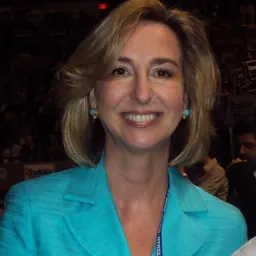
2020s In October 2022, Rogers joined the Council for Responsible Social Media project launched by Issue One to address the negative mental, civic, and public health impacts of social media in the United States. The council is co-chaired by former House Democratic Caucus Leader Dick Gephardt and former Massachusetts Lieutenant Governor Kerry Healey.
In May 2022, Rogers was appointed to the Board of Advisors at Talon Cyber Security.
Military decorations
Don’t just read it —
keep it.
Full-length biographies made to live with: read them, listen on the way to work, watch them tonight.
- E-book
- Audio
- Video
Instant download · yours to keep · every purchase keeps this site free
Important facts
People in Michael S. Rogers's life
Named in this biography and alive at the same time


Related people
Same field, nearest in time



Contemporaries
People whose lives overlapped Michael S. Rogers's

Frequently asked questions
Who is Michael S. Rogers?
U.S. Navy admiral and 17th director of the National Security Agency
When was Michael S. Rogers born?
Michael S. Rogers was born on 31 October 1959 in Chicago.
What is Michael S. Rogers's occupation?
Michael S. Rogers is an intelligence officer.
What nationality is Michael S. Rogers?
Michael S. Rogers is American.
Sources & further reading
· Wikipedia: Michael S. Rogers
Cite this page
APA: Biography.guide. (2026). Michael S. Rogers. https://biography.guide/michael-s-rogers/
MLA: "Michael S. Rogers." Biography.guide, https://biography.guide/michael-s-rogers/.
Chicago: "Michael S. Rogers." Biography.guide. https://biography.guide/michael-s-rogers/.
Data last updated: 2026-09-20 · Spot an error? Report a correction.
Page generated 2026-09-27 05:25 UTC