
About Michael Messner
Born 1952. Michael Messner is an American author and sociologist.
Michael Alan Messner (born 1952) is an American sociologist. His main areas of research are gender (especially men's studies) and the sociology of sports. He is the author of several books, he gives public speeches and teaches on issues of gender-based violence, the lives of men and boys, and gender and sports.
Since 1987, Messner has worked as a professor of sociology and gender studies at the University of Southern California. He was head of the department, and still retains his dual faculty appointment. He was the president of the Pacific Sociological Association in 2010–2011, and in 2011 the California Women's Law Center presented him with the Pursuit of Justice Award.
Biography Messner was born in Salinas, California.
Education Messner was educated from kindergarten to his Ph.D. in California's public schools. He has a bachelor's degree in social science and a master's degree in sociology from California State University, Chico. He obtained a Ph.D. in sociology in 1985 from the University of California, Berkeley with a dissertation titled Masculinity and Sports: An Exploration of the Changing Meaning of Male Identity in the Lifecourse of the Athlete.
In the late 1970s, he began to work with feminist theory and the construction of gender. He took part in one of the first ever classes about men and masculinity in the US, held by Bob Blauner in Berkeley.
Views
Comments regarding "fight clubs" In an article about a "fight club" in Menlo Park, California, Messner remarked that men involved in them "often carry bottled-up violent impulses learned in childhood from video games, cartoons and movies. [...] Boys have these warrior fantasies picked up from popular culture, and schools sort of force that out of them." In these fantasies: "The good guys always resort to violence, and they always get the glory and the women."
Sexuality and Gender Roles Messner establishes the emphasis society puts on sexuality and gender roles in various works upholding the notions that roles in society are predetermined by these categorizations. Gender role is the set of characteristics prescribed by a culture and expressed through direct communication and through media. These predetermined roles can lead to inequivalent advantages to people classified in certain categories over others. In many societies, this has become a systematic oppression. He discusses these ideas through various articles and explores different topics such as the participation of women in sports as well as what it means to be 100% straight.
Messner upholds the theory that sexuality is, "a constructed identity, a performance, and an institution". It is not necessary and it influences behaviors in society every day. He discusses this idea in depth in his article, "Becoming 100 percent Straight". In this article, he discusses how he as a teenager was influenced to become a jock because of his height and build and, as a result, repressed his sexual fluidity in fear of being outcast. He talks about his experience with basketball and his relationship with his friend because of his repressed romantic feelings for him. As a result of these feelings, he targets him as an external source of his frustrations and even goes as far as bullying him to express these frustrations. Although Messner does not identify as bisexual, he describes his experiences based on the Freudian model of bisexuality which states that most people go through a stage in life in which they are attracted to people of the same sex. Adult experiences eventually lead them to shift their sexual desires to people of the same sex. In order to dismantle the notion of soft essentialism, a coupled strategy of de-gendering boys sports along with a strategic categorization of women's sports can help break down gender based inequalities exhibited in society.
Gender also plays a key role in the development of gifted students. Gender identities in gifted students usually differ from those of their peers. For example, gifted girls are more like gifted boys than other girls. This complicates the development of their gender identity. Girls are more likely to underachieve because of stereotypes such as, "girls are bad at math" even though the math gap has shrunk significantly where the discrepancy between boys and girls used to be extreme. For this reason it is important for counselors to be practiced in understanding gender educational practices and support students.
Sports and education provide a look at the inequalities found based on gender in boys and girls, but it does not paint the picture of gender and sexuality relations in society as a whole. Messner's views of gender predetermining roles in society is seen in extreme ways when looking at other cultures such as the Congolese. For example, when Moore wrote of her experiences in the Congo with women's rights, she found disturbing evidence that women were only used to birth children. When a women's workshop was held demonstrating that it is wrong for a husband to beat his wife, one man asked, "But if we can't beat our wives what can we do when they won't have sex with us?" This shows a universal, somewhat exaggerated, example of how women are seen in society, as childbearers. Male entitlement to women's bodies has become a standard in societies such as these and reflects the values that feminists like Messner aim to change.
Sexuality is a powerful tool used to control nations especially when it is paired with orthodox religious thinking. Feki states, "If you want to understand a people, look in their bedrooms". Her hypothesis is correct when looking at societies such as Egypt. Governments and parents do not trust their children enough to learn about sex education. As a result, religious views of sexuality are established and followed strictly. Women are expected to remain virgins until marriage and chastity thereafter even though their sexuality is a family matter, usually determined by the patriarch on when and who she weds. It is this thinking that has kept women from leadership positions in the workplace and in politics. If women are not deemed responsible enough to control their own bodies, they will not be deemed capable of leading in any aspect. men gain much from integration of women into sports. He states that "these kinds of experiences can provide a commitment for men to take action with girls, women, and other men who are interested in building a more equitable and just world". Messner's research can be broken up into three main categories: gender and sport; sports media; and men, feminism and politics.
Gender and Sport Messner has written four books and over eleven articles on gender and sport. Through their research, Messner, Cooky, and Hextrum determined that sports media doesn't simply show what people want to see, but rather proliferates hegemonic gender asymmetries by contributing to a specific reception of sport that idealizes it as a man's world.
Men and Feminism In his research on both men and women's studies, Messner has analyzed the feminist movement from a male perspective since the 1970s. His research particularly focuses on men's personal, organizational and political responses to feminism. His most recent contribution to feminism is his co-authored book, Some Men: Feminist Allies and the Movement to End Violence Against Women, which was released in March 2015 through the Oxford University Press. As a general trend, Messner believes that it is in the best interest of men to support the feminist movement and the end of sexism. In his 2004 article "On Patriarchs and Losers: Rethinking Men's Interests", Messner explores the concept of "men's interests', deciding whether or not there exists a universal interest for men and how that plays into the role of feminism in the United States. Furthermore, he discusses the development of the scholarly focus on "men and masculinity", observing exactly how men's interests in the United States are being articulated both in commercial and political discourse. Messner believes that all men must be on board with feminism. In particular, he points out an example with a young white guy speeding by in a pick-up truck with a gun rack. He writes, "I want that guy in the men's movement… and to get him involved, we have to convince him that the masculinity he has learned is self-destructive and toxic, and that feminist change is in his interest". Messner argues that, at its core, feminism is in the best interest of every person because systemic, hegemonic oppression harms everyone, not just women.
Works (selection)
Books
Articles Pdf. Pdf.
Pdf. Pdf.
Pdf. Pdf. Pdf.
Pdf. Pdf. Pdf.
Pdf. Pdf. Pdf. Pdf. Pdf.
Don’t just read it —
keep it.
Full-length biographies made to live with: read them, listen on the way to work, watch them tonight.
- E-book
- Audio
- Video
Instant download · yours to keep · every purchase keeps this site free
Important facts
People in Michael Messner's life
Named in this biography and alive at the same time

Related people
Same field, nearest in time

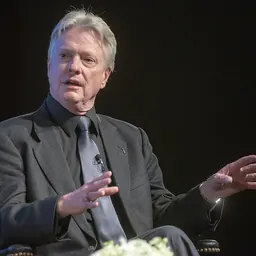

Contemporaries
People whose lives overlapped Michael Messner's




Frequently asked questions
Who is Michael Messner?
American sociologist
When was Michael Messner born?
Michael Messner was born in 1952 in Salinas.
What is Michael Messner's occupation?
Michael Messner is an author and sociologist.
What nationality is Michael Messner?
Michael Messner is American.
Sources & further reading
Cite this page
APA: Biography.guide. (2026). Michael Messner. https://biography.guide/michael-messner/
MLA: "Michael Messner." Biography.guide, https://biography.guide/michael-messner/.
Chicago: "Michael Messner." Biography.guide. https://biography.guide/michael-messner/.
Data last updated: 2026-09-20 · Spot an error? Report a correction.
Page generated 2026-09-27 05:00 UTC