
About Michael MccGwire
Lived 1924 – 2016 (aged 91). Michael MccGwire was a British diplomat and political scientist.
Naval intelligence In 1952 MccGwire joined GCHQ to develop naval intelligence on the Soviet Navy, then returned to sea. On the 1956 visit to Britain by Soviet leaders Nikolai Bulganin and Nikita Khrushchev in the lead up to the Suez Crisis, MccGwire was liaison officer on an accompanying Soviet destroyer. In 1956-58 he served as an assistant naval attaché at the British embassy in Moscow, accompanied by his family. Under constant surveillance, he still managed to travel within the USSR and provided various military intelligence before modern satellite data was available. He also started building up his knowledge of Soviet geopolitics. he undertook further study in the UK and USA. As a "war planner" he worked in the Supreme Allied Commander Atlantic (SACLANT) in the US. It was his time in the US, working on a multi-national staff, that opened MccGwire's eyes to what one can achieve when unconstrained by deeply ingrained service deference and loyalties. At that point he realised that he wanted to join an international organisation such as the UN.
Before leaving the Royal Navy, MccGwire wanted to head up the Soviet Naval Intelligence Section in the British Defence Intelligence Staff, which he felt needed serious restructuring. The UK was twenty years into the Cold War, yet when he got this job MccGwire was the first head of the section to know the language, to have worked in Russia, to have had experience of another agency and to be well acquainted with the Americans. He reshaped the intelligence effort. In the words of his successor as Head of the Soviet Naval Intelligence Section, Commander Peter Kimm, "it is my sincere belief that he [MccGwire] has succeeded in contributing something tangible to the security of the country and to the stability of the world in a way which is not given to many of us to do."
Academic career His colleagues were surprised when MccGwire quit his promising naval career and retired in 1967 aged 42, having just been told that a promotion to Captain was imminent.
His aim was to work in the Third World as a Resident Representative of the United Nations Development Programme, While at Aberystwyth he also started and ran the Interstate Journal of International Affairs, wrote a book on the Soviet Navy for the UK's Institute of Strategic Studies, spoke at numerous specialist conferences on this subject, and "in spite of his age, he experienced no difficulty in slipping into college life as a popular, if slightly formidable figure".
A new national quota system thwarted MccGwire's hopes of joining the UN. After a year as a lecturer in the postgraduate Strategic Studies programme at University of Wales, Aberystwyth, in 1970 he became Professor of Maritime and Strategic Studies at Dalhousie University, Canada, a post gained on the basis of his experience and previous publications. He stayed there until 1979, publishing three edited books and playing the leading role in founding the modern study of Soviet naval power.
In 1979 he became a Senior Fellow of the Brookings Institution, a highly respected think-tank in Washington DC, USA. It was here, at a time when the "second Cold War" was underway, that MccGwire wrote Military Objectives in Soviet Foreign Policy.
In January 1991, a year after the Berlin Wall came down, Brookings published MccGwire's follow-up book Perestroika and Soviet National Security, in which he was able to explain what led to perestroika and the resulting implications for future relations with Russia. Furthermore, whereas so many commentators assumed that perestroika was a direct result of the confrontational policies of the Reagan administration during the 1980s, MccGwire argued that Reagan almost certainly delayed the process.
MccGwire semi-retired in 1990, joining the University of Cambridge as a visiting professor for three years in their Global Security Programme. At Cambridge, he enlarged the terrain of security studies to include economic and social development, and environmental sustainability, while continuing to argue for an end to nuclear deterrents.
In 2006 MccGwire participated in the national debate on whether to replace the UK Trident submarines, debating the matter at the Royal Institute of International Affairs with Michael Quinlan and others, and to which the July 2006 issue of International Affairs was devoted. He continued publishing and commenting on world affairs.
Understanding Soviet strategy MccGwire was best known for the "MccGwire thesis" – that the Soviet military buildup during the Cold War was largely due to fear of attack, and was thus a defensive measure. He confirms this with extensive empirical analysis of military strategy, and by querying political motivations. He strongly challenged the prevailing Cold War view that Moscow was planning pre-emptive military aggression against the West. This view, he said, had been based on preconceptions, inadequate analysis and poor understanding of Soviet policy-making by Western intelligence, and could have had severe repercussions. His first article in the Naval Review argued against Britain's nuclear deterrent for this reason, and many other articles and two books later followed. For example, he argued that the type of armaments added to Soviet vessels in the 1950s showed that they were added to protect trade routes.
At Brookings, he challenged the Reagan military build-up as provocative and unnecessary. He was a frequent public commentator, including a televised debate against the leading neoconservative Richard Perle. By 1987, the threat of global war became downgraded and armed forces withdrew from Eastern Europe. At this point in time, prevention of global warfare became the primary aim in Moscow, where Gorbachev wanted to defuse tensions and downgrade military spending. In sum, MccGwire believed the end of the Cold War was due to Soviet initiatives rather than the manoeuvring of the Western powers.
Personal life Michael MccGwire was married to Helen (d. 2020), formerly an occupational therapist and author of a children's storybook. They lived in Dorset and had five children – the writer and adviser to Labour Party figures, Scarlett MccGwire, author/communication consultant Lucinda Neall, Citizens Advice Bureau adviser Katrina Higham, business publisher Rory MccGwire and corporate financier Paddy MccGwire.
Don’t just read it —
keep it.
Full-length biographies made to live with: read them, listen on the way to work, watch them tonight.
- E-book
- Audio
- Video
Instant download · yours to keep · every purchase keeps this site free
Important facts
People in Michael MccGwire's life
Named in this biography and alive at the same time



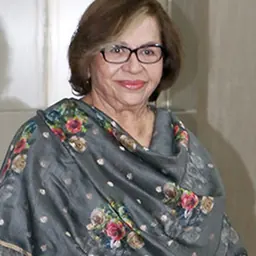

Related people
Same field, nearest in time

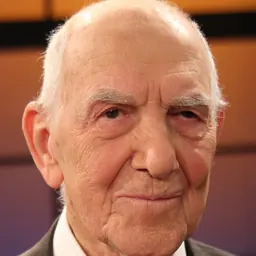
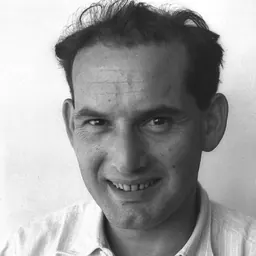
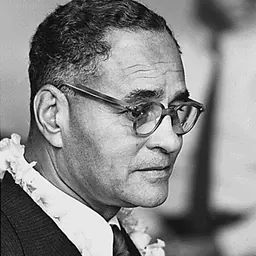
Contemporaries
People whose lives overlapped Michael MccGwire's


Frequently asked questions
Who was Michael MccGwire?
Royal Navy officer, academic
When was Michael MccGwire born?
Michael MccGwire was born on 9 December 1924 in Chennai.
When did Michael MccGwire die?
Michael MccGwire died on 26 March 2016 in Swanage.
What was Michael MccGwire's occupation?
Michael MccGwire was a diplomat and political scientist.
What nationality was Michael MccGwire?
Michael MccGwire was British.
Sources & further reading
Cite this page
APA: Biography.guide. (2026). Michael MccGwire. https://biography.guide/michael-mccgwire/
MLA: "Michael MccGwire." Biography.guide, https://biography.guide/michael-mccgwire/.
Chicago: "Michael MccGwire." Biography.guide. https://biography.guide/michael-mccgwire/.
Data last updated: 2026-09-20 · Spot an error? Report a correction.
Page generated 2026-09-27 05:16 UTC