
Michael Lapinsky
Russian neurologist and psychiatrist
About Michael Lapinsky
Lived 1862 – 1947 (aged 84–85).
Michael Lapinsky (; 18621947) was a Russian neurologist and psychiatrist. He was a professor at the Imperial University of Kiev and later founded the Department and Clinic for Nervous and Mental Diseases at the University of Zagreb. He authored over 150 scientific publications in Russian, French and German. and played a key role in shaping the early development of neurology education in Kiev. Lapinsky was widely regarded as one of the most prominent Russian neurologists of his time.
Biography Lapinsky was born on November 5, 1862 in the wealthy family of a college assessor in the village Smolygivka, province of Chernigov, northern Ukraine. He interned at the Charité clinic in Berlin and studied under the renowned psychiatrist Friedrich von Jolly. In 1897, he defended his doctoral dissertation titled "On Vascular Diseases in Afflictions of Primary Nerve Trunks or Peripheral Nerves." Afterward, he received a two-year assignment to study with leading German psychiatrists and neurologists.
In 1899, he was permitted to lecture at Kiev University as a privatdozent. He combined teaching with clinical practice at the university's clinic for nervous and mental diseases, serving as a resident and assistant. In 1901, he acquired the on Bulvarno-Kudryavskaya Street, where he established a physiotherapeutic sanatorium with a hydrotherapy facility, implementing his own methods of hydrotherapy.
In 1904, he was appointed extraordinary professor, and in 1908, full professor of psychiatry and neuropathology at Kiev University, a position he held until 1918. Lapinsky became the first head of the Department of Nervous Diseases at the Medical Faculty of the University of St. Volodymyr in Kyiv. During academic breaks, he regularly visited Berlin and Paris on assignments (1907–1914). In 1910, he participated in the International Congress on Radiology and Electricity in Brussels.
Besides his work at Kiev University, he taught at the Samaritan Women's Courses and the Women's Medical Courses, and headed the neurology department at the City Hospital of Tsarevich Alexander. He also served as deputy chairman of the Psychiatric Society at Kiev University (from 1912) and chairman of the Physical-Medical Society. He was an active member of the Kiev Club of Russian Nationalists.
Lapinsky taught at the University of Kyiv at the time when Mikhail Bulgakov was studying there. Some saw the prototype of Doctor Stravinsky from The Master and Margarita in the figure of Professor Lapinsky.
In 1919, he emigrated to Yugoslavia and settled in Zagreb. The University of Zagreb School of Medicine invited him to organize a department and clinic for nervous and mental diseases in 1920. In February 1921, he was appointed professor of this department. He retired in 1928, and was named professor emeritus and the interim lead of the clinic. His assistants Josip Breitenfeld, Đuro Vranešić and Viktor Ostrovidov took over the day-to-day running of the Clinic. He left for Belgrade in 1930 where he joined the University of Belgrade School of Medicine. In 1931 he joined the Russian Red Cross Clinic, before leaving for Argentina in 1934.
While in exile, he published in the journal "Notes of the Russian Scientific Institute in Belgrade" (1918–1937) and contributed several scientific reports to Soviet medical journals. He authored over 150 works on experimental and clinical neuropathology, including publications in French and German. He maintained connections with the German psychiatrist and neuropathologist Alois Alzheimer, and Soviet neurologists Grigory Rossolimo and Vladimir Bekhterev.
Michael Lapinsky died in 1947 in Argentina. 1927 Zur Frage über das Bestehen lokaler Gefäβzentren. (1927) Nervöse Symptome auf Grund von Gallenleiden und ihre Behandlung. Münch. med. Wschr 72, s. 1560, 1925 Über Irradiationen bei Erkrankung des Ostium abdominale tubae Fallopii oder Uterus masculinus. (1926) Ueber Meralgie. Deutsche Zeitschrift für Nervenheilkunde 94, ss. 293-311, 1926 Der Zustand der Reflexe in paralysirten Körpertheilen bei totaler Durchtrennung des Rückenmarkes. Archiv für Psychiatrie und Nervenkrankheiten (1906) Zur Frage über die Beteiligung der Nervenstamme der hinteren Extremität an der vasomotorischen Innervation der distalen Gebiete derselben und über die Veränderung der vasomotorischen Elemente sowie der Gefässe selbst der Hinterpfote nach Beschädigung des N. ischiadicus (1906) Über die Gefässinnervation der Hundepfote (1904) Zur Frage der spinalen Zentren einiger peripherer Nerven beim Hunde. 1903 Zur Frage der Veränderungen in den peripherischen Nerven bei der chronischen Erkrankung der Gefässe der Extremitäten (1898) Deux cas de dégénérescence trophique des vaisseaux consécutive à la névrite périphérique (dégénérescence dite névropathique). Archives de médecine expérimentale et d'anatomie pathologique 11 (1899) Ueber Veränderungen der Nerven bei acuter Störung der Blutzufuhr. Deutsche Zeitschrift für Nervenheilkunde 15 (1899) Ein Beitrag zur Kenntnis der anatomischen Veränderungen im Cerebralnervensystem bei cerebraler Kinderlähmung. (1900) Ueber acute ischämische Lähmung, nebst Bemerkungen über die Veränderungen der Nerven bei acuter Ischämie. Deutsche Zeitschrift für Nervenheilkunde (1900) Ueber den Ursprung des Halssympathicus im Rückenmark. (1900) Ueber den normalen Bau und über pathologische Veränderungen der feinsten Gehirncapillaren. 1894 К вопросу о просвете капилляров мозга. Университетские известия 10, 2, 1895 Zur Frage über den Zustand der kleinen Capillaren der Gehirnrinde bei Arteriosclerose der grossen Gefässe. Neurologisches Centralblatt 15, ss. 921-925, 1896
Don’t just read it —
keep it.
Full-length biographies made to live with: read them, listen on the way to work, watch them tonight.
- E-book
- Audio
- Video
Instant download · yours to keep · every purchase keeps this site free
Important facts
People in Michael Lapinsky's life
Named in this biography and alive at the same time
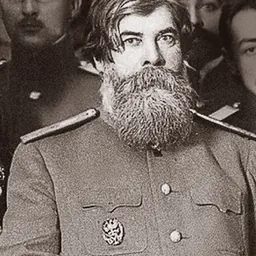
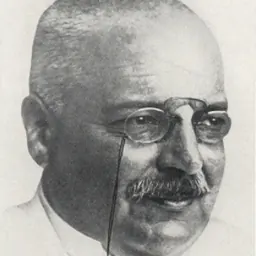

Contemporaries
People whose lives overlapped Michael Lapinsky's

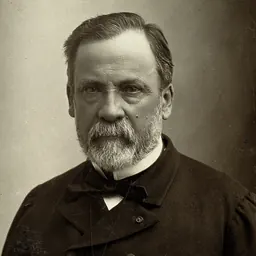




Frequently asked questions
Who was Michael Lapinsky?
Russian neurologist and psychiatrist
When was Michael Lapinsky born?
Michael Lapinsky was born on 5 November 1862.
When did Michael Lapinsky die?
Michael Lapinsky died in 1947.
Sources & further reading
Cite this page
APA: Biography.guide. (2026). Michael Lapinsky. https://biography.guide/michael-lapinsky/
MLA: "Michael Lapinsky." Biography.guide, https://biography.guide/michael-lapinsky/.
Chicago: "Michael Lapinsky." Biography.guide. https://biography.guide/michael-lapinsky/.
Data last updated: 2026-09-20 · Spot an error? Report a correction.
Page generated 2026-09-27 05:24 UTC