
Michael Fisher
English physicist, chemist and mathematician
About Michael Fisher
Lived 1931 – 2021 (aged 90). Michael Fisher was a British physicist, theoretical physicist, scientist, screenwriter, university teacher and mathematician, known for FKT algorithm and Phase transition.
Michael Ellis Fisher (3 September 1931 – 26 November 2021) was an English physicist, as well as chemist and mathematician, known for his many seminal contributions to statistical physics, including but not restricted to the theory of phase transitions and critical phenomena. He was the Horace White Professor of Chemistry, Physics, and Mathematics at Cornell University. He was appointed to the faculty as a lecturer the following year, becoming a full professor in 1965.
In 1966 he moved to Cornell University where he became professor of chemistry, physics, and mathematics, chairing the chemistry department from 1975 to 1978. In 1971, he became a Fellow of the Royal Society. In 1973, he and Jack Kiefer were the first two Cornell faculty elected as Horace White Professors. Fisher was elected Secretary of the Cornell University Senate. In 1983, he was elected a foreign associate of the United States National Academy of Sciences, chemistry section, as he had remained a citizen of the United Kingdom.
Since 1987 he was at the Institute for Physical Science and Technology, which is part of the University of Maryland College of Computer, Mathematical, and Natural Sciences. He retired in 2012.
Fisher lived in Ithaca, N.Y., and subsequently in Maryland, with his wife Sorrel. They had four children. Two of them are also theoretical physicists: Daniel S. Fisher is professor of Applied Physics at Stanford, while Matthew P. A. Fisher is professor of Physics at the University of California, Santa Barbara.
Wolf Prize
Fisher together with Kenneth G. Wilson and Leo Kadanoff won the Wolf Prize in 1980. The prize was awarded with the following comment: "Professor Michael E. Fisher has been an extraordinarily productive scientist, and one still at the height of his powers and creativity. Fisher's major contributions have been in equilibrium statistical mechanics, and have spanned the full range of that subject. He was mainly responsible for bringing together, and teaching a common language to chemists and physicists working on diverse problems of phase transitions."
Boltzmann Medal
In 1983, Fisher was awarded the Boltzmann Medal "for his many illuminating contributions to phase transitions and critical phenomena during the past 25 years"
Lars Onsager Prize Fisher won the Lars Onsager Prize in 1995 "for his numerous and seminal contributions to statistical mechanics, including but not restricted to the theory of phase transitions and critical phenomena, scaling laws, critical exponents, finite size effects, and the application of the renormalization group to many of the above problems" (official laudatio).
Award and honours Guggenheim Fellowship (1970) Irving Langmuir Prize of the American Physical Society (1971) Fellow of the American Academy of Arts and Sciences (1979) Guthrie Medal and Prize from the Institute of Physics (1980) Wolf Prize (1980) Michelson–Morley Award from Case Western Reserve University (1982) Boltzmann Medal of the International Union of Pure and Applied Physics (1983) Member of the American Philosophical Society (1993) Lars Onsager Prize of American Physical Society (1995) Royal Medal in physics (2005): 2009 BBVA Foundation Frontiers of Knowledge Award in Basic Sciences (co-winner with Richard Zare); see 2015 Rudranath Capildeo Prize for Applied Sciences and Technology-Gold, awarded by the Trinidad and Tobago's National Institute of Higher Education, Research, Science and Technology (NIHERST)
Don’t just read it —
keep it.
Full-length biographies made to live with: read them, listen on the way to work, watch them tonight.
- E-book
- Audio
- Video
Instant download · yours to keep · every purchase keeps this site free
Important facts
People in Michael Fisher's life
Named in this biography and alive at the same time
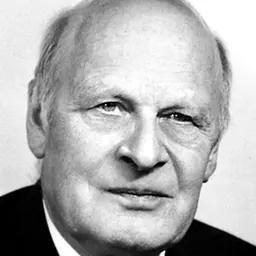

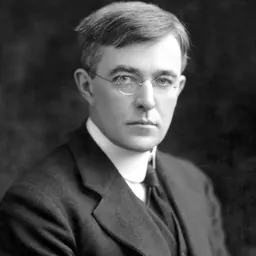
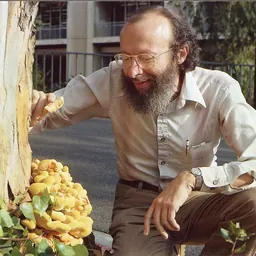


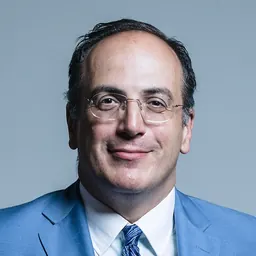

Related people
Same field, nearest in time
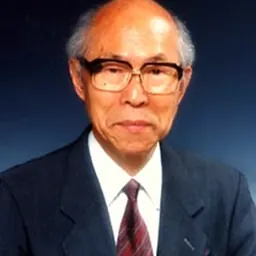


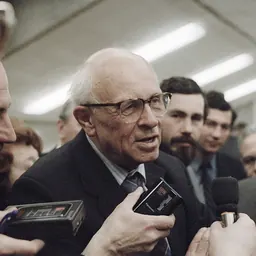
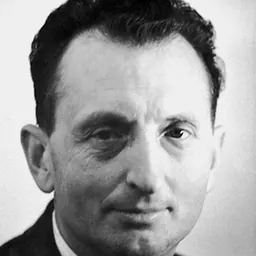
Contemporaries
People whose lives overlapped Michael Fisher's
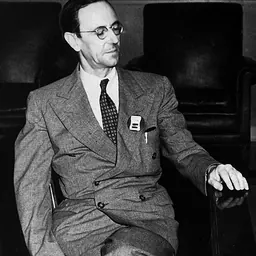

Frequently asked questions
Who was Michael Fisher?
English physicist, chemist and mathematician (1931–2021)
When was Michael Fisher born?
Michael Fisher was born on 3 September 1931 in Fyzabad.
When did Michael Fisher die?
Michael Fisher died on 26 November 2021.
What was Michael Fisher's occupation?
Michael Fisher was a physicist, theoretical physicist, scientist, screenwriter, university teacher and mathematician.
What was Michael Fisher known for?
Michael Fisher was known for FKT algorithm and Phase transition.
What nationality was Michael Fisher?
Michael Fisher was British.
Sources & further reading
Cite this page
APA: Biography.guide. (2026). Michael Fisher. https://biography.guide/michael-fisher-physicist/
MLA: "Michael Fisher." Biography.guide, https://biography.guide/michael-fisher-physicist/.
Chicago: "Michael Fisher." Biography.guide. https://biography.guide/michael-fisher-physicist/.
Data last updated: 2026-09-20 · Spot an error? Report a correction.
Page generated 2026-09-27 05:24 UTC