
About Michael Ellis DeBakey
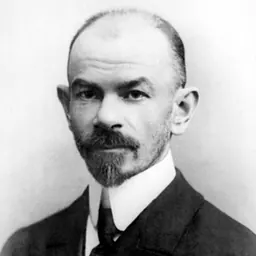
Lived 1908 – 2008 (aged 99). Michael Ellis DeBakey was an American cardiac surgeon, university teacher, surgeon, physician and cardiovascular surgeon.
Michael Ellis DeBakey (September 7, 1908 – July 11, 2008) was an American general and cardiovascular surgeon, scientist and medical educator who became Chairman of the Department of Surgery, President, and Chancellor of Baylor College of Medicine at the Texas Medical Center in Houston, Texas. His career spanned nearly eight decades.
Born to Lebanese immigrants, DeBakey was inspired to pursue a career in medicine by the physicians that he had met at his father's drug store, and he simultaneously learned sewing skills from his mother. He subsequently attended Tulane University for his premedical course and Tulane University School of Medicine to study medicine. At Tulane, he developed a version of the roller pump, which he initially used to transfuse blood directly from person to person and which later became a component of the heart–lung machine. Following early surgical training at Charity Hospital, DeBakey was encouraged to complete his surgical fellowships in Europe, before returning to Tulane University in 1937. During World War II, he worked in the Surgical Consultants Division of the Office of the Army Surgeon General, and later was involved in the establishment of the Veterans Administration.
DeBakey's surgical innovations included novel procedures to repair aortic aneurysms and dissections, the development of ventricular assist devices, and the introduction of prosthetic vascular substitutes. DeBakey received a number of awards, including the Albert Lasker Award, the Presidential Medal of Freedom, the National Medal of Science, and the Congressional Gold Medal. In addition, a number of institutions bear his name.
Early life and education Michael DeBakey was born Michel Dabaghi on September 7, 1908, in Lake Charles, Louisiana. His parents, Shiker and Raheeja Dabaghi (which was anglicized to DeBakey) were immigrants from Marjeyoun, Lebanon although they did not meet until both were living in the United States. Shiker, who had been a traveling salesman, settled in Lake Charles in the early 1900s and began to establish retail businesses, particularly general and drug stores. Both of them spoke French. Young Michael helped out with manual chores and keeping the books. DeBakey was the eldest of five children. His brother Ernest also became a physician, specializing in general and thoracic surgery. His sisters Lois and Selma were also scholarly, and eventually joined their eldest brother at Baylor College of Medicine as faculty members in medical communications. Another sister, Selena, died in 1952.
As a child, DeBakey learned to play the saxophone and was taught by his mother to sew, crochet, knit and tat. He could sew his own shirt by the age of 10. He also became intrigued with the Encyclopædia Britannica
Medical school
DeBakey attended Tulane University, where he enrolled in a six-year program that combined undergraduate and medical school. He was awarded a Bachelor of Science degree in 1930 and a M.D. in 1932.
During his final year in medical school at Tulane University,
Postgraduate surgical training
Between 1933 and 1935, DeBakey remained in New Orleans to complete his internship and residency in surgery at Charity Hospital, and in 1935, he received a MS for his research on stomach ulcers. As was the trend for ambitious training surgeons at the time, and as his mentors Rudolph Matas and Alton Ochsner had done before him, DeBakey was encouraged to complete his surgical fellowships at the University of Strasbourg, France, under Professor René Leriche, and at the University of Heidelberg, Germany, under Professor Martin Kirschner.
DeBakey hired surgeon Denton Cooley at Baylor College of Medicine in 1951. They collaborated until Cooley's resignation from his faculty position at the college in 1969.
Death of the Shah of Iran In 1980 DeBakey was a consultant in the care of Mohammad Reza Pahlavi, the exiled Shah of Iran, who was in the terminal stages of lymphoma. Due to hypersplenism, the Shah underwent splenectomy in Cairo on March 28, 1980, with DeBakey supervising a team of surgeons. At operation, the Shah was found to be harboring widely metastatic disease. Several complications developed during the surgery such as an injury to the tail of the pancreas that led to complications in the postoperative period, including a subphrenic abscess and pneumonia. He died due to complications after surgery. He antagonized animal rights and animal welfare advocates who oppose the use of animals in the development of medical treatment for humans when he claimed that the "future of biomedical research; and ultimately human health" would be compromised if shelters stopped turning over surplus animals for medical research. Responding to the need for animal research, DeBakey stated that "These scientists, veterinarians, physicians, surgeons and others who do research in animal labs are as much concerned about the care of the animals as anyone can be. Their respect for the dignity of life and compassion for the sick and disabled, in fact, is what motivated them to search for ways of relieving the pain and suffering caused by diseases."
Later surgical career
DeBakey continued to practice medicine until his death in 2008 at the age of 99. His contributions to the field of medicine spanned the better part of 75 years. DeBakey operated on more than 60,000 patients, including several heads of state. DeBakey and a team of American cardiothoracic surgeons, including George Noon, supervised quintuple-bypass surgery performed by Russian surgeons on Russian president Boris Yeltsin in 1996. On 29 April 1999, DeBakey oversaw an aorta-coronary bypass surgery of Azerbaijani president Heydar Aliyev in Cleveland, Ohio, during Aliyev's visit to the United States.
Health issues In late 2005, DeBakey suffered an aortic dissection. Years earlier, DeBakey had pioneered the surgical treatment that now bears his name to treat this condition. DeBakey initially resisted the surgical option, but as his health deteriorated and DeBakey became unresponsive, the surgical team opted to proceed with surgical intervention. In a controversial decision, Houston Methodist's ethics committee approved the operation; on February 9–10, 2006, DeBakey at age 97 became the oldest patient ever to undergo the surgery for which he was responsible. He was a Health Care Hall of Famer, a Lasker Luminary and a recipient of the United Nations Lifetime Achievement Award and the Presidential Medal of Freedom with Distinction. He was given the Lifetime Achievement Award of the Foundation for Biomedical Research and in 2000 was cited as a "Living Legend" by the Library of Congress. On April 23, 2008, he received the Congressional Gold Medal from President George W. Bush, Speaker of the House Nancy Pelosi and Senate Majority Leader Harry Reid. DeBakey's major awards include: US Army Legion of Merit (1945) American Medical Association Hektoen Gold Medal (1954 and 1970) Rudolph Matas Award in Vascular Surgery (1954) International Society of Surgery Distinguished Service Award (1958) René Leriche Prize from the International Surgical Society (1959) American Medical Association Distinguished Service Award (1959) Prix International Dag Hammarskjold Great Collar with Golden Medal (1967) American Heart Association Gold Heart Award (1968) Medal of Freedom with Distinction (1969) Eleanor Roosevelt Humanitarian Award (1969) Yugoslavian Presidential Banner and Sash (1971) Union of Soviet Socialist Republics Academy of Sciences 50th Anniversary Jubilee Medal (1973) Independence of Jordan Medal (1980) American Surgical Association Distinguished Service Award (1981) National Medal of Science (1987) Merit Order of the Republic of Egypt (1980) International Society of Surgery Distinguished Service Award (1981) National Medal of Science (1987) Theodore E. Cummings Memorial Prize for Outstanding Contributions in Cardiovascular Disease (1987) International Platform Association George Crile Award as the Trailblazer in Open Heart Surgery (1988) Thomas Alva Edison Foundation Award (1988)
Others awards include: Honorary Doctorate of Science from Universidad Francisco Marroquín (1989) Special Award for Space Technology Utilization (1997) MUSC Lindbergh-Carrel Prize (2002) Lomonosov Large Gold Medal, Russian Academy of Sciences (2003) The Denton A. Cooley Leadership Award (January 21, 2009)
Personal life and family DeBakey married Diana Cooper after returning from Europe in 1937, and they had four sons: Michael, Denis, Ernest and Barry. Former trainee Jeremy R. Morton described how “he could be sweet as dripping honey when it came to patients and medical students, but could be brutal with surgical residents." After lying in repose in Houston's City Hall, the first ever to do so, DeBakey received a memorial service at the Co-Cathedral of the Sacred Heart on July 16, 2008. He was granted ground burial at Arlington National Cemetery by the Secretary of the Army. On January 21, 2009, DeBakey became the first posthumous recipient of the Denton A. Cooley Leadership Award.
Michael E. DeBakey International Surgical Society In 1976, DeBakey's trainees students founded the Michael E. DeBakey International Cardiovascular Surgical Society, which later changed its name to the Michael E. DeBakey International Surgical Society. Every two years, the Michael E. DeBakey Surgical Award is given.
Lasker-DeBakey Clinical Medical Research Award The Albert Lasker Award for Clinical Medical Research, given by the Lasker Foundation since 1946, was renamed the Lasker-DeBakey Clinical Medical Research Award in DeBakey's honor in 2008.
Michael E. DeBakey Library and Museum In early 2008, DeBakey attended the groundbreaking for the new Michael E. DeBakey Library and Museum at Baylor College of Medicine in Houston, which honors his life, work and dedication to care and teaching. The museum officially opened on Friday, May 14, 2010.
DeBakey Medical Foundation In honor of DeBakey, the DeBakey Medical Foundation, in conjunction with Baylor College of Medicine, annually selects recipients of the Michael E. DeBakey, M.D., Excellence in Research Awards. The awards recognize faculty who have published outstanding scientific research contributions to clinical or basic biomedical research. The awards are funded by the DeBakey Medical Foundation and have funded researchers from the Center for Cell and Gene Therapy at Texas Children's Cancer Center.
The foundation helped to establish the Michael E. DeBakey, Selma DeBakey and Lois DeBakey Endowed Scholarship Fund in Medical Humanities at Baylor University. The scholarship designates award recipients as "DeBakey Scholars" in recognition of the legacy of the DeBakey family.
Other DeBakey institutes
The DeBakey High School for Health Professions, Houston Methodist DeBakey Heart & Vascular Center, and the Michael E. DeBakey Veterans Affairs Medical Center in Houston at the Texas Medical Center in Houston are named after DeBakey. He had a role in establishing the Michael E. DeBakey Heart Institute at the Hays Medical Center in Kansas. Several atraumatic vascular surgical clamps and forceps that DeBakey introduced also bear his name. The Michael E. DeBakey Institute at Texas A&M College of Veterinary Medicine & Biomedical Sciences, founded as a collaboration between Texas A&M, the Baylor College of Medicine and the UT Health Science Center at Houston for cardiovascular research, was named after DeBakey.
Selected publications DeBakey's writings are reflected in his authorship or co-authorship in more than 1,300 published medical articles, chapters, and books on various aspects of surgery, medicine, health, medical research, and medical education, as well as ethical, socio-economic and philosophic discussion in those fields. In addition to his scholarly writings, DeBakey co-authored popular works including The Living Heart, The Living Heart Shopper's Guide and The Living Heart Guide to Eating Out. His publications include:
"A Simple Continuous Flow Blood Transfusion Instrument", New Orleans Medical and Surgical Journal (1934) Cold Injury, Ground Type; Whayne, Tom F.; Michael E. DeBakey; and John Boyd Coates. Medical Department, United States Army in World War II. Washington, D.C.: Office of the Surgeon General, 1958. The living heart. Co-authored with Antonio M Gotto and Mediziner Italien, Charter Books (1977), The Living heart diet, New York: Raven Press (1984), New living heart. Co-authored with Antonio M Gotto, Holbrook (1997), The Living Heart in the 21st Century. Co-authored with Antonio Gotto and George P. Noon, Prometheus (2012),
DeBakey worked on his first book with Gilbert Wheeler Beebe after World War II:
Battle Casualties Incidence, Mortality, and Logistic Considerations, co-authored with G. W. Beebe, Springfield, Ill. : Charles C. Thomas (1952)
Don’t just read it —
keep it.
Full-length biographies made to live with: read them, listen on the way to work, watch them tonight.
- E-book
- Audio
- Video
Instant download · yours to keep · every purchase keeps this site free
Important facts
more
Dabaghi, M. DeBakey, DeBakey-ME, Michael E. DeBakey, M. Dabaghi, DeBakey ME, M. E. DeBakey, DeBakey, Michael E DeBakeyPeople in Michael Ellis DeBakey's life
Named in this biography and alive at the same time



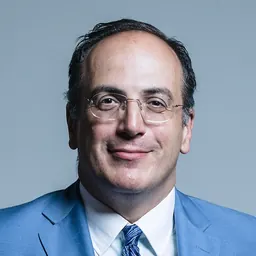
Related people
Same field, nearest in time


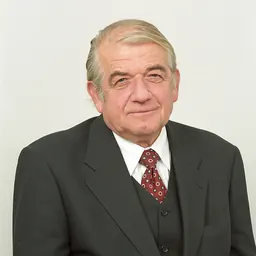
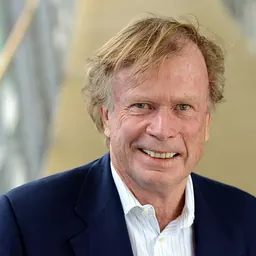

Contemporaries
People whose lives overlapped Michael Ellis DeBakey's
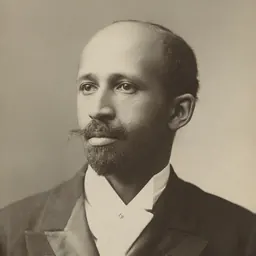
Frequently asked questions
Who was Michael Ellis DeBakey?
American cardiac surgeon (1908–2008)
When was Michael Ellis DeBakey born?
Michael Ellis DeBakey was born on 7 September 1908 in Lake Charles.
When did Michael Ellis DeBakey die?
Michael Ellis DeBakey died on 11 July 2008 in Houston.
What was Michael Ellis DeBakey's occupation?
Michael Ellis DeBakey was a cardiac surgeon, university teacher, surgeon, physician and cardiovascular surgeon.
What nationality was Michael Ellis DeBakey?
Michael Ellis DeBakey was American.
Sources & further reading
· Wikipedia: Michael Ellis DeBakey
Cite this page
APA: Biography.guide. (2026). Michael Ellis DeBakey. https://biography.guide/michael-ellis-debakey/
MLA: "Michael Ellis DeBakey." Biography.guide, https://biography.guide/michael-ellis-debakey/.
Chicago: "Michael Ellis DeBakey." Biography.guide. https://biography.guide/michael-ellis-debakey/.
Data last updated: 2026-09-25 · Spot an error? Report a correction.
Page generated 2026-09-27 05:11 UTC