
About Michael Cimino
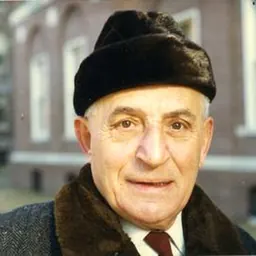
Lived 1939 – 2016 (aged 77). Michael Cimino was an American film director, screenwriter, film producer and director.
Michael Antonio Cimino ( , ; February 3, 1939 – July 2, 2016) was an American film director, screenwriter, producer and author. Notorious for his obsessive attention to detail and determination for perfection, Cimino achieved widespread fame with The Deer Hunter, which won five Academy Awards, including Best Picture and Best Director.
With a background in painting and architecture, Cimino began his career as a commercial director in New York before moving to Los Angeles in the early 1970s to take up screenwriting. After co-writing the scripts for both Silent Running (1972) and Magnum Force (1973), he wrote the preliminary script for Thunderbolt and Lightfoot (1974). The latter became his directorial debut and one of the highest-grossing films of that year.
The accolades received for co-writing, directing, and producing The Deer Hunter led to Cimino receiving creative control of Heaven's Gate (1980). The film became a critical failure and a legendary box-office bomb, which lost production studio United Artists an estimated $37 million. Its failure was seen by many observers as the end of the New Hollywood era, with studios next shifting focus from director-driven films toward high-concept, crowd-pleasing blockbusters. More recently, however, Heaven's Gate has undergone a dramatic reappraisal, even being named by BBC Culture as one of the greatest American films of all time.
Cimino made only four subsequent films and grew infamous for the number of projects left unfinished due to his uncompromising artistry. In 2002, Cimino claimed he had written at least 50 scripts overall. Several of his ambitious "dream projects" included adaptations of the novels Conquering Horse, The Fountainhead and Man's Fate as well as biopics on crime boss Frank Costello and Irish rebel Michael Collins.
Early life Cimino publicly shared few details of his early life and family background and is believed to have given false birth year information.
Cimino's presumed birth date was February 3, 1939. A third-generation Italian-American, Cimino and his two younger brothers, Peter and Edward, grew up with their parents in the town of Westbury, on Long Island. He was regarded as a prodigy in early private education, but rebelled as an adolescent by consorting with delinquents, getting into fights, and coming home drunk. Of this time, Cimino described himself as "always hanging around with kids my parents didn't approve of. Those guys were so alive. When I was fifteen I spent three weeks driving all over Brooklyn with a guy who was following his girlfriend. He was convinced she was cheating on him, and he had a gun, he was going to kill her. There was such passion and intensity about their lives. When the rich kids got together, the most we ever did was cross against a red light."
His father was a music publisher.
In Cimino's final year at Michigan State, he became art director, and later managing editor, of the school's humor magazine Spartan. Steven Bach wrote of Cimino's early magazine work: "It is here that one can see what are perhaps the first public manifestations of the Cimino visual sensibility, and they are impressive. He thoroughly restyled the Spartan s derivative Punch look, designing a number of its strikingly handsome covers himself. The Cimino-designed covers are bold and strong, with a sure sense of space and design. They compare favorably to professional work honored in, say, any of the Modern Publicity annuals of the late fifties and are far better than the routine work turned out on Madison Avenue. The impact and quality of his work no doubt contributed to his winning the Harry Suffrin Advertising Award at MSU and perhaps to his acceptance at Yale University." During this time, he also took ballet classes and studied under Lee Strasberg at the Actors Studio once every week in order to better understand how actors performed.
Career 1960s
Within eighteen months of directing TV ads, he was hired by Madison Pollack O'Hare to work on special assignments involving "graphic design concepts and unusual approaches to live film". While there, he handpicked the best cameramen MPO employed to shoot his commercials, including Gordon Willis and Owen Roizman, before either rose to fame. He directed ads for L'eggs hosiery, Kool cigarettes, Pepsi, Canada Dry and Maxwell House coffee, among others. Although the ads he made were considered among the most prestigious in the industry, they became increasingly costly. "The clients of the agencies liked Cimino," remarked Charles Okun, his production manager from 1964 to 1978. "His visuals were fabulous, but the amount of time it took was just astronomical. Because he was so meticulous and took so long. Nothing was easy with Michael."
At the height of his commercial career, Cimino met Joann Carelli, then a commercial director representative, and the two began to date. To be more prolific, Cimino sought out collaborators to work with, including poet Thomas McGrath and playwright Deric Washburn, who had produced a one-act play off-Broadway. Washburn later recalled that there was always a big distance, socially, between him and Cimino:
"I remember trying to get to know him a little better. A friend had a house in Poughkeepsie, and I invited him up for the weekend. He shows up in his Rolls-Royce, and he's not comfortable there. But he wanted something from me, I think. Mike and I got closest when we started talking about a story. Then it was amazing. It was like one person. It was like a dance. We could boil together."
Thomas McGrath and Cimino co-wrote two scripts together, Paradise and Kef. McGrath also gave Cimino a copy of the 1959 Frederick Manfred novel Conquering Horse, tracing the history of the Dakota Indians in America before the arrival of the white man, which Cimino would go on throughout the rest of his life to try and make into a film.
1970s By 1970, Cimino's agent Michael Gruskoff was approached with an offer from studio executive Ned Tanen to produce a slate of low-budget films for Universal Pictures, with Conquering Horse among them. The estimated budget for the film had gone far over what initially was projected, and would have cost Universal substantially more than their cut-off figure of $1 million to produce it. Moreover, Cimino wanted to shoot the film in black-and-white and use authentic Sioux dialogue, with subtitles. Shortly after the project was cancelled, Gruskoff assigned Cimino to help draft the script for a story outline by Douglas Trumbull for his science fiction film Silent Running, and he brought aboard Deric Washburn to help. The two morphed the script to be more countercultural. However, Steven Bochco was later brought in and rewrote the story to be less bleak and more "accessible" to a mainstream audience.
The following year, Cimino and Joann Carelli moved to Los Angeles where they rented a house in Hidden Hills that belonged to British director J. Lee Thompson. From this habit, the script for Thunderbolt and Lightfoot was born, which first began as a period story about the Irish outlaw folk heroes Capt. Thunderbolt and Capt. Lightfoot. Cimino gained representation from Stan Kamen of the William Morris Agency, who urged him to make it a contemporary story. Taking both their advice, Cimino took the spec script to Clint Eastwood, who loved it and wanted to direct it himself. In the film, Eastwood plays an aging Korean War veteran who, in the words of Cimino, "has lost his zest for life" and runs into an "exuberant, freedom-loving kid" (played by Jeff Bridges), who restores his youth.
George Kennedy and Geoffrey Lewis were also cast to star in the film, chosen for the primary reason that neither actor had ever done comedic roles before. Cimino had since compared their chemistry in the film to that of Laurel and Hardy. The film became a solid box office success at the time grossing $25 million and earned Bridges an Academy Award nomination for Best Supporting Actor. and his first choice to play the character of Howard Rourk was Clint Eastwood. Taking its cue from more than the novel, Cimino's modern-day adaptation was largely modeled off of architect Jørn Utzon's troubled building of the Sydney Opera House, as well as the construction of the Empire State Plaza in Albany, New York. "Making it a contemporary story meant that there was a lot of new work that had to be done [in adapting]," he said. According to Cimino, Eastwood turned the film down over concerns of being compared to his idol Gary Cooper, who had played the same character in the 1949 film adaptation. Over the years he continued to try to get it made, approaching different funding sources with copies of the script and each time rewriting it in the process. Cimino said they had come very close to doing it:
"We'd already shot two weeks of pre-production stuff, but because of various political machinations at the studio, the project fell through. This was just before David Picker left. He was the producer. There were internal difficulties, that's all. Nevertheless, I'd spent a year and a half of my life on something. It had been a difficult time. My father passed away while I was writing the screenplay. I kept working..." One film, Pearl, based on an unpublished book he wrote, was to be a musical biopic about singer-songwriter Janis Joplin. The film was made several years later under a rewritten script titled The Rose, with Joplin's name cut out after her family denied the producers the rights to her story. While Goldman received screenplay credit for his work, Cimino did not. Then, after meeting with James Toback, the two began work on The Life and Dreams of Frank Costello, a biopic chronicling four decades of the life of Mafia boss Frank Costello. Roy Scheider was initially considered for the lead role, but after he dropped out, Cimino took the script to Robert De Niro, who insisted that he accompany him for the location scouting. Because of the unstable political situation in Thailand and the subject matter of the material, Cimino had been warned not to fly the processed footage back in. winning five Oscars, including Best Picture and Best Director for Cimino.
The day after the Academy Awards, Cimino flew up to Kalispell, Montana to begin shooting his Western epic Heaven's Gate, which had been in pre-production for several months, finding locations, casting five hundred extras and building complicated sets. such as John Wayne, who turned down the lead role. Later, in 1978, after a print of The Deer Hunter was screened for the head of production at United Artists, they offered Cimino a two-picture deal. What he wanted to do was The Fountainhead, but UA showed disinterest. Instead, he resurrected his screenplay for The Johnson County War, which he promptly rewrote before it went into production in April 1979 with an assembled cast of Kris Kristofferson, Isabelle Huppert and Christopher Walken. Cimino gave UA the initial budget estimation of $7.8 million, even though the period detail required for the film was astronomical. Cimino, however, was intent on "painstakingly constructing his film according to photographs from the time" and immersing the audience into the world created in the film:
"I wanted you to feel what it was like to walk down a street in that period: to follow those noisy wagons, to cross all that activity, what you felt, what you heard. People made so much dust; my God, was it dusty! That makes the streets dirty... when hundreds of wagons go around, they raise dust. And very often, we took the time to record the background sound. In the store, for example, we recorded numerous conversations, with the intention of inserting them into the soundtrack later. This isn't general background noise; you hear people, in a corner, argue over the price of a knife, discuss the merits of a particular rifle... each of those people are engaged in a very specific activity and you hear them." removed in the 2012 restoration. "Afterward, we heard that terrible stuttering applause," said Bridges, "and it was that sinking feeling. We tried to tell ourselves, 'Well, maybe they liked it so much that they are stunned into silence.' " As a result, UA executive Steven Bach wrote an entire book devoted to the topic, Final Cut: Art, Money, and Ego in the Making of Heaven's Gate, the Film That Sank United Artists. Cimino referred to the book as "work of fiction" by a "degenerate who never even came on the set." Bach retorted when he told a reporter he didn't resent Cimino or wish the movie ill: "It would be like wishing ill of a corpse." The film, based on the Western novel written by Frederick Manfred, would have been a generational saga set in pre-white America that dealt with a young Sioux boy's rite of passage. "It's a story of the American Plains," said Cimino in 1982, "[taking] place in the Dakotas and Montana." with Buck Henry making revisions to the script. However, by 1981, Martin Scorsese had already entered negotiations to direct. According to Cimino, in his version he would have cast Andy Kaufman in the lead role as Rupert Pupkin. "I shot videotape of Andy for weeks," he said. His version was to have also starred Meryl Streep and Orson Welles.
Following Heaven's Gate, Joann Carelli quickly landed him a picture deal at CBS Theatrical Films to direct Nitty Gritty, described by The New York Times as "a black comedy about news reporting". The film was scheduled to be released in 1982, alongside a slate of films including Table for Five, however, Cimino's never went into production, just as with several of the other reported projects. It was later listed as a lost project of Cimino's by the Los Angeles Times, who reported that it had been retitled Live on Tape prior to being dropped by CBS. He also allegedly proposed his Frank Costello biopic, then retitled Proud Dreamer,
In early September 1982, Cimino approached short story writer Raymond Carver and his wife Tess Gallagher (both fans of Heaven's Gate ) to rework a screenplay based on the life of Fyodor Dostoevsky, in hopes that he would direct it. According to Carver, Cimino presented him an existing screenplay commissioned by the veteran Italian film producer Carlo Ponti. The first draft had been written by Russian novelist Aleksandr Solzhenitsyn, and then translated to English by two Italian writers. Heavily researched, and taking Dostoevsky's near-execution as the film's focal point, Carver and Gallagher opted to rewrite the entire script, delivering a 220-page draft to Cimino in November. Cimino was impressed with the results, but Ponti returned to Europe shortly thereafter, halting further development. Fragments were later published in 1985, by Capra Press.
tstyle = font-size:100% — Michael Cimino Producer Daniel Melnick warned him that if the film went over its budget of $7.5 million, Cimino would have to cover the expenses himself and he agreed. Cimino's proposed reimagination of the film, "a John Steinbeck inspired musical-comedy" set during the Great Depression, was to have followed a rich girl from Houston who falls in love with a dancer from a shanty town. Just when the film was to begin shooting, he asked Melnick to let him rewrite the screenplay for an additional $250,000 and to delay the start date. Melnick fired him, and Herbert Ross directed Footloose instead. According to Melnick, "It might have been a good film [if Cimino had directed], but it wasn't the film we wanted to make. It wasn't the film we came to the party with."
Several other unproduced projects followed, including a collaboration with Steven Spielberg and Gary David Goldberg on a script titled Reel to Reel, which he was going to direct for Columbia Pictures, and a second collaboration with Raymond Carver on a film which they gave the elliptical title of Purple Lake.
In August 1983, after Ronald F. Maxwell was dismissed as the director of The Pope of Greenwich Village, Cimino was named as a possible replacement. Cimino wanted to finesse its screenplay with some rewriting and restructuring, which would have taken beyond the mandated start date for shooting. Instead, as a favor to the producers who were on a deadline, Cimino generously went over his copious notes written on the script with the new director they hired, Stuart Rosenberg. According to MGM president Freddie Fields, Cimino's contributions to the film were invaluable; "He's been a terrific consultant."
In the summer of 1984, an old project Cimino had been attached to finally seemed to be moving toward production. The film was The Yellow Jersey, based upon a novel by Ralph Hurne about an aging, woman-chasing professional cyclist who nearly wins the Tour de France. The rights had been optioned back in 1973 by film producer Gary Mehlman, who then made a development deal with Columbia Pictures. In 1975, Cimino had been brought on board to direct the film and visited the Tour for the first time, for research. Over the next decade, the film generated expenses of nearly $2 million, and been in development with four studios and several independent production companies. Then, when Dustin Hoffman indicated an interest in starring in it, Mehlman took it back to Columbia in 1983. With Hoffman coming off the success of Columbia's Tootsie, "the film would have gone [into production] the moment he was ready," said Mehlman. By then, Colin Welland and Carl Foreman were brought aboard as scriptwriters, as well as Danish filmmaker Jørgen Leth (who had made the 1976 bicycle-racing documentary A Sunday in Hell), as Hoffman's research adviser. although multiple sources claim that the deal simply "fell apart with Cimino". Cimino finally accepted Dino De Laurentiis' offer to adapt Robert Daley's novel Year of the Dragon into a feature film, due to similarities in subject matter. "With Michael, it's a 24-hour day," Stone later said of working with Cimino. "He doesn't really sleep... he's truly an obsessive personality. He's the most Napoleonic director I ever worked with." but still managed to turn a profit at the box office. Afterwards, De Laurentiis signed a picture deal for Cimino to direct a film adaptation of the Truman Capote novella, "Handcarved Coffins". De Laurentiis had planned to release the film in 1986 following his purchase of Embassy Pictures.
In 1986, Cimino accepted the deal to direct the adaptation of the best-selling Mario Puzo novel The Sicilian, after Dino De Laurentiis cancelled the production of Hand Carved Coffins. The Sicilian had been offered previously to directors Francis Ford Coppola, Martin Scorsese and Brian De Palma, who all declined. At the time Cimino boarded the project, it initially had Michael Corleone set up as a character, but due to rights issues, all Godfather references were removed. There had already been a screenplay by Steve Shagan, but since Cimino felt the film needed more "political bite", he brought aboard novelist Gore Vidal to help rewrite the script. Around 80 pages of material were added to Shagan's initial draft, either by Cimino himself or Vidal, who later sued the Writers Guild for receiving no credit. During production, Cimino worked closely with Umberto Tirelli (a frequent collaborator of Luchino Visconti's, whom Cimino admired) on the period wardrobe required for the film. Cimino had specifically requested that he work with him directly during the fitting, much to Tirelli's chagrin, who exclaimed in rage, "Goddamn it! I promised myself when Luchino died that I would never work this hard again!" Cimino said this was the best backhanded compliment he ever received in his career. however due to the corporate meddling of Coca-Cola who wanted to go for something decidedly more mainstream, he would be forced to compromise his vision for the film. Instead, Cimino quit, and a separate script by Neil Jordan later resurfaced and was made into a film in 1996 starring Liam Neeson as Collins. Bolt later admitted he didn't know what came of the project or their script: "Yes, he [Cimino] fled back to America, and all of a sudden, that was that. I don't know what happened."
Less than three weeks after the Collins biopic was cancelled, Cimino started pre-production work on Santa Ana Wind, a contemporary romantic drama set in L.A. offered to him by Barry Spikings. Budgeted at roughly $15 million, the set start date for shooting was early December 1987. The screenplay was written by Floyd Mutrux and the film was to be bankrolled again by Nelson Entertainment. Cimino's representative added that the film was "about the San Fernando Valley and the friendship between two guys" and "more intimate" than Cimino's previous big-budget work like Heaven's Gate and the then unreleased The Sicilian. However, Nelson Holdings International Ltd. cancelled the project after disclosing that its banks, including Security Pacific National Bank, had reduced the company's borrowing power after Nelson failed to meet certain financial requirements in its loan agreements. A spokesman for Nelson said the cancellation occurred "in the normal course of business," but declined to elaborate. The film, also intended for distribution by Columbia, did not feature any major stars.
Cimino finished out his picture deal with Dino De Laurentiis in 1989 when Mickey Rourke suggested he direct the remake of the 1955 home invasion thriller The Desperate Hours. The film had been in preparation for several years with directors Christopher Cain and William Friedkin attached at different points. Since Alex Thomson was unavailable, Cimino enlisted the services of rookie cinematographer Doug Milsome, whom he got to know through Stanley Kubrick. While shot on 35 mm film, Desperate Hours is the first of Cimino's works not to be photographed in his preferred Anamorphic aspect ratio. Principal photography began in October 1989 at Trout Lake near Telluride, Colorado. From there, the production moved to Salt Lake City. Writers Guild arbitration established that since the first draft by Lawrence Konner and Mark Rosenthal (along with the original author Joseph Hayes), was the one Cimino agreed to, his name was removed from the credit. and awarded director John Harrison with the Grand Prix for his film Tales from the Darkside: The Movie.
Following the poor reception of Desperate Hours, Cimino wrote an original screenplay called Heaven Is a Sometime Thing which he began submitting to studios circa 1992. It was conceived with Joann Carelli and told the story of a New Mexico mine-worker named C.J. who becomes a brilliant golfer and is estranged from his working-class waitress girlfriend when he meets an heiress and is taken up by high society. F. X. Feeney, who helped him with the script, compared it to the triangle of Montgomery Clift, Shelley Winters and Elizabeth Taylor in A Place in the Sun. The Washington Post reported that Cimino had developed the project at Paramount. He was also writing a script for filmmaker John Woo based on his story titled Full Circle, which Woo claimed would "have a similar style to The Killer."
In the mid-90s, Oliver Stone encouraged producer Mario Kassar to help fund Cimino's ambitious Conquering Horse project. However, as Stone recalled, "He [Cimino] was too difficult to deal with. He was arrogant, and I don't know that he ever gave it up. He never could eat humble pie or didn't seem to."
tstyle = font-size:100% — Michael Cimino A spiritual road odyssey, the film stars Woody Harrelson as a Los Angeles doctor who is held at gunpoint by a teenage convict dying of abdominal cancer (played by Jon Seda), and forced to drive into Navajo Country in search of a sacred mountain lake with healing powers. The script by Charles Leavitt (which had been offered previously to Diane Keaton and Mel Gibson), was virtually rewritten by Cimino. Incorporating elements of his unproduced screenplays for both Conquering Horse and Purple Lake into it, the film had a personal resonance to Cimino; "When I was very young, I was lucky enough to spend some time... with the tribe of the Dakota Indians," he said. "I immersed myself so heavily in their culture that, in a way, it became my religion—a religion based on a very simple idea: a stone, a cloud, a rock, everything has spirit, is life. Sunchaser allowed me to return to this." Jack Nitzsche was the original composer but Cimino fired him after the two didn't get on well. Instead, he hired Maurice Jarre, who orchestrated a bombastic, old-school score. The Sunchaser made its debut at the 1996 Cannes Film Festival, where it screened in competition for the Palme d'Or. However, unsupported by its distributor, the film was released theatrically only in a few theaters in the southwest, where it played for a week, grossing roughly $30,000 on a budget of $31 million."
Cimino was to follow the film up with An American Dream in 1997, about the first Asian immigrant to join Al Capone's mob. Jason Scott Lee was attached to star and The Hollywood Reporter indicated that the film was to shoot in Chicago, San Francisco and South Korea. The planned budget was not revealed, however, it was Trimark's attempt to make a bigger-budgeted film than usual which is ultimately why it was never produced. According to Vaccaro, he and Cimino apparently collaborated on two projects in total together over a period of four years.
In July 1997, Cimino served as president of the international competition jury at the 42nd annual Taormina Film Fest.
As early as 1997, Cimino was attached as the director of a film called Brasil 1500, planned to debut in the United States under the title Gonçalo, after the main character. Variety magazine incorrectly referred to the film's title as 1500. This Brazilian-American co-production intended to portray the events of the day of the arrival of Pedro Álvares Cabral's flagship in Santa Cruz Cabrália on April 21, 1500. Written by first-time Brazilian scribe Fábio Fonseca, the film was to have been told through the eyes of a fictional character (similarly to Titanic), named Gonçalo, a Portuguese sailor from Cabral's fleet. Antonio Banderas was eyed as a possible star, with a supporting cast planned to be composed largely of Brazilian natives. Speaking at a press conference in Lisbon, Cimino said that unlike the films made about Christopher Columbus' discovery of the Americas, this film would follow a young man as its protagonist, "in a story very similar to that of Lawrence of Arabia," he said. Cimino began to work on writing his first novel, titled Big Jane. Set in 1951, and 173 pages in length, the story follows a "dynamite-looking, six-foot blonde who wears blue jeans, a Miss Universe of muscle," who travels by motorcycle across America and ends up fighting in the Korean War alongside a brigade of women. Cimino was then honored at Deauville, where he received the Prix littéraire Lucien-Barrière, an award that previously went to Norman Mailer and Gore Vidal. "Oh, I'm the happiest, I think, I've ever been!" he said in response. In what would be his last interview in March 2015, Cimino had said he still hoped to make the film someday.
Cimino was attached to produce the independent film The Silk Curtain about Empress Dowager Cixi, who ruled China for 47 years until 1908. Consulina Wong was to have directed from her own screenplay, and was to have starred as Cixi. Jason Scott Lee was also considered for a role. Cimino said he was drawn to The Silk Curtain by the strength of the characters and "the intimate story about their relationships played out against one of the most tumultuous periods in China's history." The film was to have been produced by COJODA Productions, and a private reading was held at the Kumu Kahua Theatre in Honolulu in 2002, but the project failed to pique interest from potential investors.
In 2003, Cimino published his second novel, a two-volume work; the first a partially fictitious memoir called Conversations en miroir (English translation: Shadow Conversations) which he co-authored with Francesca Pollock, and the other a short story called A Hundred Oceans. The latter of the two Cimino adapted from his pre-existing feature-length screenplay Heaven Is a Sometime Thing. Neither this, nor his first novel Big Jane were released in the states. Cimino has mentioned in interviews that he wrote a third book called Sailing to Byzantium (named after the poem by W. B. Yeats), about a dying tycoon who reflects on his life. He began writing it as early as 1997, Steven Soderbergh was eventually chosen as the film's director.
In 2007, Cimino was asked by Cannes director Thierry Frémaux to contribute a 3-minute short segment for the collective film To Each His Own Cinema, celebrating the 60th year of the Cannes Film Festival. The project consisted of 34 short films by 36 acclaimed directors. Representing five continents and 25 countries, the filmmakers were invited to express "their state of mind of the moment as inspired by the motion picture theatre". Cimino's segment depicts a cigar-smoking French filmmaker who films a Cuban pop star's music video in a movie theater. Later, when she is shown the footage, she is angered by his editing decisions and begins to strangle him. While spoken entirely in different languages, the film has no subtitles. But as its title, ("No Translation Needed") suggests, they are not necessary.
2010s In the early 2010s, French film producer Vincent Maraval worked on various projects with Cimino, none of which came to fruition. One film, an original screenplay by Cimino himself titled Cream Rises, followed the daily lives of two young female models, (whom Maraval compared to Paris Hilton and Nicole Richie) who are "completely disconnected from reality" and live a hedonistic life in Los Angeles filled with empty sex and boozing. Cimino wanted Taylor Swift to play one of the leads, but since she was unknown at the time, Maraval passed on it. Halfway through the film, the more timid of the two girls is murdered and the other heads to the countryside to find her uncle, "An old cowboy farmer with very Western values", whom Christopher Walken was to embody. "It was something very contemporary," Maraval explained, "About the world of today and its confrontation with the world of yesterday. As if the cinema of Cimino looked at the cinema of today. It was very moving."
Other projects Cimino worked on with Maraval later in his life include a feature adaptation of the Tennessee Williams short story "One Arm" as well as a film about the history of America from the point of view of the Native Americans.
At the persistence of Joann Carelli, Cimino meticulously supervised a restoration of Heaven's Gate frame-by-frame, for The Criterion Collection, where he restored the original film's color. After receiving the award, the following day Cimino took part in a discussion about his career in front of an audience in one of his last public appearances. When asked if he was working on another project, he replied, "Always. I never stop. If you stop, you die." No cause has been disclosed officially to the public. Since his death, many directors, actors, and other public figures paid tribute to him, including Robert De Niro, Thierry Frémaux, Edgar Wright, William Friedkin, Paul Rust, Christopher McQuarrie, Kelly Lynch, Jason Reitman, Mark Romanek, Jay Baruchel, Mark Harris and Sophie Marceau. Film critic F. X. Feeney, a close friend of Cimino's, wrote: "A few weeks before his death, Michael consulted a physician about a mild respiratory complaint but otherwise suffered no signs of ill health. When I last had lunch with him on June 19th, he was full of energy and plans. Nevertheless, because he was an intuitive man, I feel certain looking back that he had an inkling his life was drawing to a close. He took deliberate care to mend fences with as many people as he could in the last year of his life, and with me that last day he was more reflective than I'd ever known him to be about his early life. He was full of amused memories centered on his dad's fierce perfectionism. Friends and loved ones found him impossible to reach after the 28th of June, and – when the police entered his house after several days – the officer who found him tucked in his bed described him as "peacefully deceased." His heart had apparently stopped without trauma, in sleep. There was no funeral or public memorial thereafter, and he needs none. His monuments are onscreen."
His work has been lauded by such filmmakers as Stanley Kubrick, Martin Scorsese, Francis Ford Coppola, Spike Lee, Guillermo del Toro, Eric Roth, Steven Spielberg, Mark Romanek, Olivier Assayas, Greta Gerwig, Steven Soderbergh, Brett Ratner, David Gordon Green, James Gray and Quentin Tarantino.
The director was the subject of the 2021 documentary Michael Cimino, un mirage américain, featuring audio recordings conducted by French critic . Reflecting on the time he spent with him, Thoret said:
"I understood that he [Cimino] had a terrible time inhabiting the present, the reality of the life of every day. Physically but also in his way of thinking: he was always elsewhere. Not in an ethereal or disconnected way. He was in a very precise past and therefore also a bit in a fantasy... he fantasized about a relationship with America, with John Ford."
Joann Carelli and her daughter Calantha Mansfield have been the proprietors of Cimino's legacy following his death.
In the month before he gave the pitch for The Deer Hunter, Cimino was briefly attached to helm James A. Michener's adventure novel Caravans, set in contemporary Afghanistan. The film had spent roughly a decade in development before it was released.
In 1976, Cimino met Oliver Stone who offered him the chance to direct his script adaptation of Midnight Express (before the book had even been published), which he loved. A few years later, he met Stone again, who was optioning his screenplay for Born on the Fourth of July. Al Pacino was attached to star as Ron Kovic. At that time, Cimino was eager to make another film about Vietnam and the stories of returning veterans, even going as far as to offer to work for free.
Producer Dino De Laurentiis purchased the film rights to the horror novel The Dead Zone after Stanley Donen left the project as director, at Lorimar. De Laurentiis approached Cimino to direct, and was very briefly attached but author Stephen King pushed for him to be replaced after disagreements over the rewriting of the script when King attempted to adapt it himself.
For a period of time in 1984, Cimino agreed to produce Platoon for Oliver Stone, with Emilio Estevez attached at that time to star as Staff Sgt. Barnes. Stone then signed on to co-write Cimino's Year of the Dragon for Dino De Laurentiis under the condition that he would next finance Platoon as a result. Cimino moved on after the project fell through with De Laurentiis at MGM, and from there the script was passed to John Daly and released in 1986. According to Stone, it was Cimino who had encouraged him to bring back his script for the film when Stone had given up on it: "He said 'It's going to come back', and I'm glad he said that." Mickey Rourke was attached to play the gangster Legs Diamond, and had told the Chicago Tribune in 1985 that, "One side's waiting for a rewrite, the other side's waiting for the money for a rewrite," but felt that it still would be made eventually. Leonard Termo was also attached to the project, as Diamond's bodyguard.
One of Cimino's hopes since first arriving in Hollywood was to helm a big-budget, old-fashioned Hollywood musical loosely inspired by the Porgy and Bess opera. In a 1985 interview for Cahiers du cinéma, Cimino said that he wanted to reimagine it as a romantic tale of a young, black Gospel-singing girl from the South (loosely based on Eva Jessye) who falls for a white Juilliard concert pianist (loosely based on George Gershwin). Together, the two struggle to stage a Broadway production of Porgy and Bess. He has also praised the work of film director Vincente Minnelli and "his attention to detail, especially in the musicals."
The Leopard (Italy, 1963) They Were Expendable (USA, 1945) Ludwig (Italy/France, 1973) The Searchers (USA, 1956) La Strada (Italy, 1954) Children of Paradise (France, 1945) My Darling Clementine (USA, 1946) La Dolce Vita (Italy, 1960) Rocco and His Brothers (Italy, 1960) Seven Samurai (Japan, 1954)
Themes and style Cimino's films have been noted for their controversial subject matter and striking visual style. Cimino's films are also slowly paced, focusing less on story and more on characters, allowing the viewer to observe their nuances and the setting. Other trademarks include love triangles between main characters, sudden bursts of violence in seemingly tranquil or naturalistic settings and the casting of non-professional actors in supporting roles.
Public image Cimino developed a reputation for giving exaggerated stories about himself, his background, and his filmmaking experiences. "When I'm kidding, I'm serious, and when I'm serious, I'm kidding," said Cimino in a 2002 interview. "I am not who I am, and I am who I am not." Cimino's agent, Mike Wise, called him "the Howard Hughes of Hollywood." Beginning in 1997, a columnist with Variety magazine devoted an item to dispelling unspecified "reports" that he had changed his name to "Michelle" and his gender via surgery. Cimino explained that he had not had nor intended to have a sex change and that he was not a cross-dresser,
Filmography
Film YearTitleFunctioned asNotes Director Writer Producer 1974 Thunderbolt and Lightfoot 1978 The Deer Hunter Co-written with Deric Washburn 1980 Heaven's Gate 1985 Year of the Dragon Co-written with Oliver Stone 1987 The Sicilian Script revisions 1990 Desperate Hours 1996 The Sunchaser 2007 To Each His Own Cinema Segment: "No Translation Needed"
Writer only
Known commercials 1965: "Come Alive!" for Pepsi 1967: "Take Me Along" for United Airlines 1967: "Yesterdays" for Eastman Kodak 1968: "I Am the Soft Drink Expert" for Canada Dry 1969: "The Coffee Moment" for Maxwell House
Don’t just read it —
keep it.
Full-length biographies made to live with: read them, listen on the way to work, watch them tonight.
- E-book
- Audio
- Video
Instant download · yours to keep · every purchase keeps this site free
Important facts
People in Michael Cimino's life
Named in this biography and alive at the same time


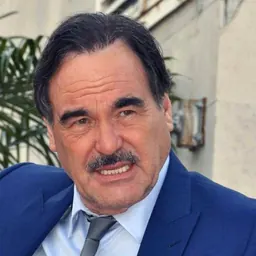

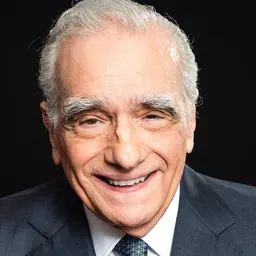


Related people
Same field, nearest in time

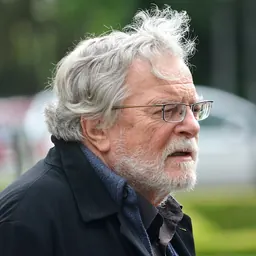
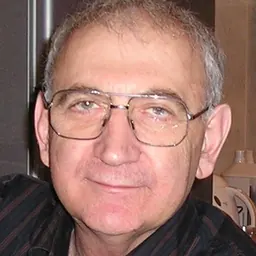

Contemporaries
People whose lives overlapped Michael Cimino's




Frequently asked questions
Who was Michael Cimino?
American film director (1939–2016)
When was Michael Cimino born?
Michael Cimino was born on 3 February 1939 in New York City.
When did Michael Cimino die?
Michael Cimino died on 2 July 2016 in Los Angeles.
What was Michael Cimino's occupation?
Michael Cimino was a film director, screenwriter, film producer and director.
What nationality was Michael Cimino?
Michael Cimino was American.
Sources & further reading
Cite this page
APA: Biography.guide. (2026). Michael Cimino. https://biography.guide/michael-cimino-film-director/
MLA: "Michael Cimino." Biography.guide, https://biography.guide/michael-cimino-film-director/.
Chicago: "Michael Cimino." Biography.guide. https://biography.guide/michael-cimino-film-director/.
Data last updated: 2026-09-22 · Spot an error? Report a correction.
Page generated 2026-09-27 05:25 UTC