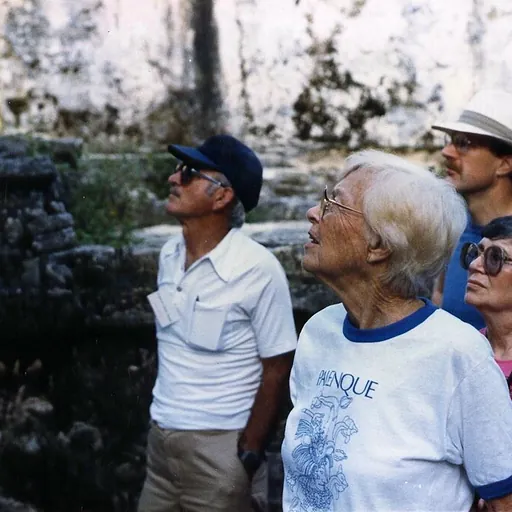
About Merle Greene Robertson
Lived 1913 – 2011 (aged 97). Merle Greene Robertson was an American archaeologist.
Merle Greene Robertson (August 30, 1913 – April 22, 2011 ) was an American artist, art historian, archaeologist, lecturer and Mayanist researcher, renowned for her extensive work towards the investigation and preservation of the art, iconography, and writing of the pre-Columbian Maya civilization of Central America. She is most famous for her rubbings of Maya carved stelae, sculpture, and carved stone, particularly at the Maya sites of Tikal and Palenque. She has received rewards and honors for her work in preserving Mayan cultural heritage.
Early life and education Robertson was born in 1913 in the small town of Miles City, Montana to Ada Emma Foote and Darrell Irving McCann. She moved to Great Falls, Montana as a small child. Here she became greatly interested in Native American culture and learned Indian sign language from Blackfoot Indian chiefs her father was close friends with. In Great Falls she met the artist Charles M. Russell, who spent many afternoons teaching Merle how to paint. She moved to Seattle, Washington, as a teenager, completed high school there, and attended the University of Washington.
Adulthood Robertson started working as a commercial artist and gold leaf window painter; during the summers she worked at Camp Tapawingo. Following her graduation, she married her college boyfriend Wallace McNeill Greene. The couple was married for thirteen years and had two children, David and Barbara. However, the marriage dissolved when Robertson found out her husband had been having multiple affairs throughout the years. After the divorce, she and her children moved to California, where she began teaching at San Rafael Military Academy. There, she met Bob Robertson, the dean, who she would later marry. The Robertsons traveled to El Salvador to visit cadets Quiñónez, Escalon, and Sagrera, and learn about Salvadoran archeology. She later decided to go back to school, and moved to San Miguel de Allende, Mexico.
Robertson earned her Master's of Fine Arts from the University of Guanajuato, where she studied watercolors, oils, photography, and mural painting from one of Mexico's top artists, James Pinto. She spent three summers drawing the architecture of the Central Acropolis. She also started her famous rubbings at this time, making the art form a way to document and preserve the information on Maya relief sculptures.
Contribution to Maya studies
Rubbings
Initially trained as an artist, Robertson pioneered the technique of taking rubbings from Maya monumental sculptures and inscriptions, making over 4,000 of these over a career spanning four decades (2,000 being monuments). In many cases these rubbings have preserved features of the artworks which have since deteriorated or even disappeared, through the actions of the environment or looters. This method was first used by the ancient Chinese, but Robertson further developed and refined the process. She developed two techniques using two different types of ink on rice paper. The ink was chosen was based on the environmental conditions and the nature of the item being recorded.
Robertson, along with Mayanist Tatiana Proskouriakoff and Edith Ricketson, paved the way for women to enter the field of Maya archaeology. She was the first woman to join the Tikal Project, at a time when women generally did not work on archaeological projects.
Robertson is most well known for her work at Palenque. In the 1980s, she undertook a project to document and record in detail all the sculptural art. Not only did she record the hieroglyphic and iconographic inscriptions, she also interpreted the work through the eyes of the authors. This showed her unique perspective as an artist rather than a formally trained archaeologist. This Instituto de Nacional de Anthropologia e Historia (INAH) also presented her with the Order of the Aztec Eagle and named her Honorary President of the Palenque Round Tables, which have since continued.
Don’t just read it —
keep it.
Full-length biographies made to live with: read them, listen on the way to work, watch them tonight.
- E-book
- Audio
- Video
Instant download · yours to keep · every purchase keeps this site free
Important facts
People in Merle Greene Robertson's life
Named in this biography and alive at the same time
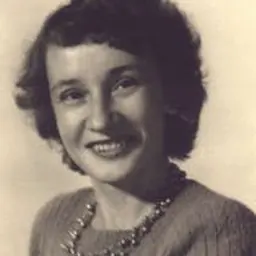
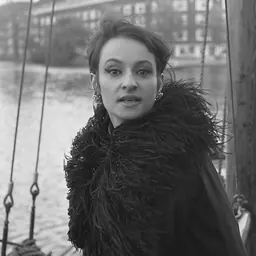


Related people
Same field, nearest in time
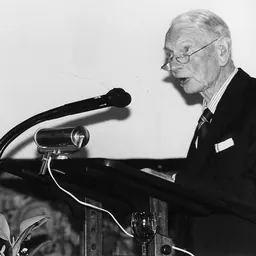
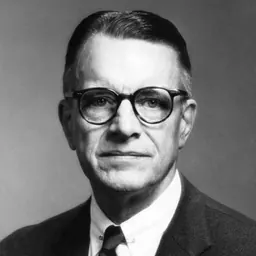
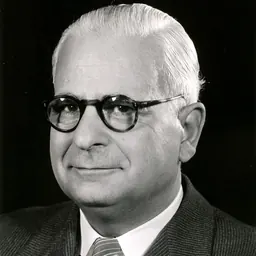
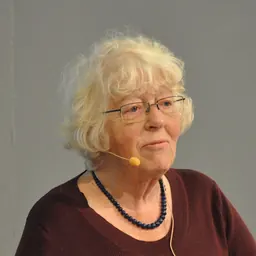
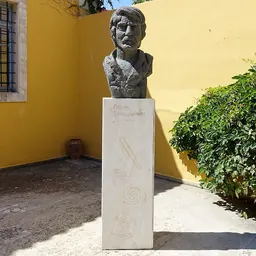
Contemporaries
People whose lives overlapped Merle Greene Robertson's





Frequently asked questions
Who was Merle Greene Robertson?
American Mesoamericanist (1913-2011)
When was Merle Greene Robertson born?
Merle Greene Robertson was born on 30 August 1913 in Miles City.
When did Merle Greene Robertson die?
Merle Greene Robertson died on 22 April 2011 in San Francisco.
What was Merle Greene Robertson's occupation?
Merle Greene Robertson was an archaeologist.
What nationality was Merle Greene Robertson?
Merle Greene Robertson was American.
Sources & further reading
· Wikipedia: Merle Greene Robertson
· DBpedia: Merle Greene Robertson
Cite this page
APA: Biography.guide. (2026). Merle Greene Robertson. https://biography.guide/merle-greene-robertson/
MLA: "Merle Greene Robertson." Biography.guide, https://biography.guide/merle-greene-robertson/.
Chicago: "Merle Greene Robertson." Biography.guide. https://biography.guide/merle-greene-robertson/.
Data last updated: 2026-09-20 · Spot an error? Report a correction.
Portrait: Wikimedia Commons · author & licence
Page generated 2026-09-27 04:57 UTC