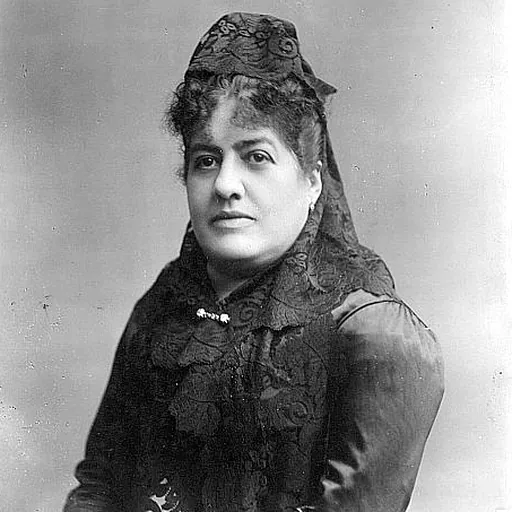
About Mercedes Cabello
Lived 1845 – 1909 (aged 64). Mercedes Cabello was a Peruvian novelist, essayist, women's rights activist and writer.
Mercedes Cabello Llosa de Carbonera (Moquegua, February 7, 1845 – Lima, October 12, 1909) was a Peruvian writer. Influenced by positivism and naturalism, she was one of the main initiators of literary realism in Peruvian novels. She wrote six novels of social content and critical importance, the most successful being Blanca Sol, Las consecuencias (1890) and El conspirador (1892). She also wrote numerous articles and essays published in Peruvian newspapers on literary and social topics. She especially advocated the emancipation of women, and was one of the first Peruvian feminists. She was a contemporary of Manuel González Prada, who, like Cabello, was a sui generis positivist; and an attendee of Juana Manuela Gorriti's tertulias, which provided her an opportunity to meet other female writers and discuss literature and feminist ideologies. Her literary works Sacrificio y recompensa, Blanca Sol, Las consequencias and El conspirador contain a recurrent theme of women portrayed as "helpless, suffering creatures or as fallen heroines." This is another one of the most prominent themes in her writings. Another common topic is her criticism of the Peruvian bourgeoisie, Lima's social elites, between 1860 and 1880.
Associations
Cabello de Carbonera is usually associated with female Peruvian writers like Carolina Freine de Jaimes and Juana Manuela Gorriti.
Cabello's pseudonym was Enriqueta Pradel, which she used to publish her work in the periodicals El Album and El Recreo.
Early years
Mercedes Cabello de Carbonera was born in Moquegua to a wealthy family that provided her with an education. The Department of Moquegua, where she lived during her childhood, was one of the areas affected by the presence of Chilean troops, which would later be a feature of her novel El Conspirador. She thus learned French in her early years, which later allowed her to read contemporary European writers fluently, without having to depend on translations. But Cabello de Carbonera's own educational development was not due to regular schooling. Due to the lack of available education for women, her parents hired private tutors to keep her properly educated in subjects approved for young ladies of the bourgeoisie; but she mostly taught herself and was very fond of reading.
Later years At the age of twenty two, Cabello de Carbonera moved to Lima where she would marry a doctor and develop her career as a writer. Cabello de Carbonera was widowed at a very young age, which had the effects that she had enough liberty to escape from any patriarchal control and that she did not have any children.
Partial list of works
Novels Sacrificio y recompensa (Lima, 1886), premiada por el Ateneo de Lima. Eleodora (Madrid, 1887), later rewritten as Las consecuencias. Los amores de Hortensia (1886 and 1887) Blanca Sol (novela social) (1888, 1889 and 1894) Las consecuencias (1890) El conspirador (autobiografía de un hombre público) (1892 and 1898)
Essays Influencia de las Bellas Letras en el progreso moral y material de los pueblos (1887), awarded a gold medal by the Municipalidad de Lima. La novela realista Importancia de la literatura Estudio comparativo de la inteligencia y la belleza de la mujer Perfeccionamiento de la educación y la condición social de la mujer La novela moderna (1892), awarded the Rosa de Oro in the Concurso Interamericano de Ensayo promoted by the Academia Literaria de Buenos Aires. La religión de la humanidad (1893) El conde León Tolstoi (1896)
Don’t just read it —
keep it.
Full-length biographies made to live with: read them, listen on the way to work, watch them tonight.
- E-book
- Audio
- Video
Instant download · yours to keep · every purchase keeps this site free
Important facts
People in Mercedes Cabello's life
Named in this biography and alive at the same time

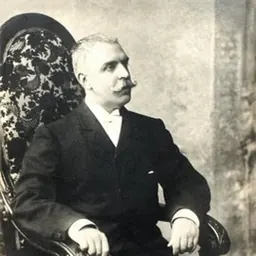
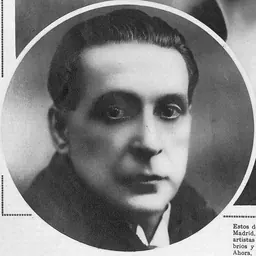
Related people
Same field, nearest in time




Contemporaries
People whose lives overlapped Mercedes Cabello's


Frequently asked questions
Who was Mercedes Cabello?
Peruvian writer (1845–1909)
When was Mercedes Cabello born?
Mercedes Cabello was born on 7 February 1845 in Moquegua.
When did Mercedes Cabello die?
Mercedes Cabello died on 12 October 1909 in Hospital de la Misericordia, Lima.
What was Mercedes Cabello's occupation?
Mercedes Cabello was a novelist, essayist, women's rights activist and writer.
What nationality was Mercedes Cabello?
Mercedes Cabello was Peruvian.
Sources & further reading
· DBpedia: Mercedes Cabello de Carbonera
Cite this page
APA: Biography.guide. (2026). Mercedes Cabello. https://biography.guide/mercedes-cabello/
MLA: "Mercedes Cabello." Biography.guide, https://biography.guide/mercedes-cabello/.
Chicago: "Mercedes Cabello." Biography.guide. https://biography.guide/mercedes-cabello/.
Data last updated: 2026-09-23 · Spot an error? Report a correction.
Portrait: Wikimedia Commons · author & licence
Page generated 2026-09-27 05:05 UTC