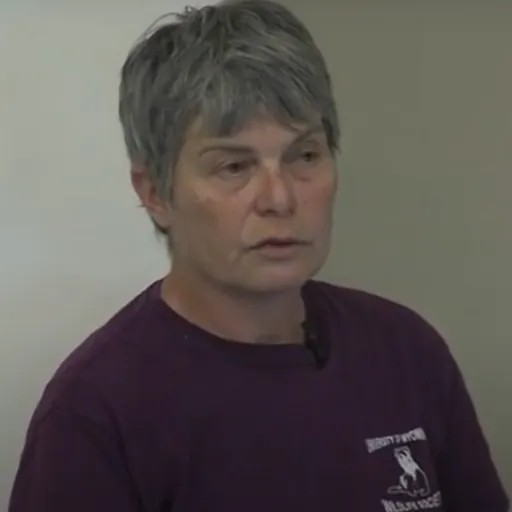
About Merav Ben-David
Born 1959. Merav Ben-David is an Israeli ecologist.
Merav Ben-David (; born 17 January 1959) is an Israeli-American ecologist, zoologist, and politician who is the chair of the Department of Zoology and Physiology at the University of Wyoming. She was the Democratic nominee in the 2020 United States Senate election in Wyoming, losing to former Congresswoman Cynthia Lummis in the general election. She ran for state representative from Wyoming's 46th District in 2022.
Early life and education Ben-David was born to a Jewish family in Rehovot, and raised on a farm near Rishon LeZion.
Career Ben-David emigrated from Israel to the United States due to worsening job prospects in Israel in the early 1990s as a result of the 1990s post-Soviet aliyah. After earning her PhD at the University of Alaska Fairbanks, Ben-David remained there as an ecologist. She was fascinated by local marine ecosystems, which included otters, mink, marten, polar bears, and the salmon they fed on.
In 2000, Ben-David became an associate professor at the University of Wyoming. As of January 2020 she was head of the Department of Zoology and Physiology at the University of Wyoming.
Her work mostly centers around carnivores and their behavior in ecosystems. She has published more than 110 scientific papers that analyze the impact of climate change, invasive species, logging and pollution on animals, often using innovative research techniques. Among her most-cited works are studies applying stable isotope analysis to animal ecology to document changes in the diet of generalist predators; exploring the impact of flooding, predation, and salmon runs on vegetation in the Alexander Archipelago; and examining the effects of the 1989 Exxon Valdez oil spill on otters in Prince William Sound. She has helped to study the effects of the Exxon and BP spills in terms of both immediate and long-term effects. Her work was included in the Exxon Valdez Oil Spill Restoration Project Final Report, which assessed damage and potential for remediation, and was a basis for fining Exxon and BP after their respective oil spills of 1989 and 2010.
Ben-David has focused deeply on the river otter (Lontra canadensis), examining it in its role as a sentinel species and also using it as a model for predicting effects of pollutants on the rarer and more difficult to study sea otter (Enhydra lutris). She has carried out work with Alaskan otters for over 30 years. Her field studies of chemical bioaccumulation have gained international attention.
She began studying the impact of human activity and climate change on polar bears in 2001. One of the behavioral patterns she has observed via satellite tracking is that polar bears show high fidelity to the local area of ocean in which they live. As sea ice is thinning, it drifts faster, requiring polar bears to walk farther each day on the ice to retain their position. This increases the energy requirements of the bears while decreasing their available time to hunt. Models project that polar bear populations may collapse by 2080.
Ben-David has received a variety of awards for her work including the Barrett-Hamilton distinguished ecologist award from the University of Manitoba in 2012 and the Excellence in Wildlife Education award from The Wildlife Society in 2016. She was selected as a Wildlife Fellow of the Wildlife Society in 2017.
Personal life Ben-David has resided in Laramie, Wyoming, since 2000, and was naturalized as a United States citizen in 2009.
Politics Ben-David announced her candidacy for the 2020 U.S. Senate election at the 2020 Wyoming Women's March in Cheyenne, Wyoming, on 18 January 2020. On 18 August 2020, she placed first in a field of six candidates to become the Democratic nominee.
Ben-David's platform centered on 'future-proofing' Wyoming's economy through diversification, including public investments in reclaiming old mines, capping oil and gas wells, and building wildlife crossings.
She lost the general election to Republican Cynthia Lummis, gaining just 27% of the vote.
She was the Democratic nominee for state representative from Wyoming's 46th District in 2022, running against Republican incumbent Ocean Andrew.
Electoral history
2020
2022
Don’t just read it —
keep it.
Full-length biographies made to live with: read them, listen on the way to work, watch them tonight.
- E-book
- Audio
- Video
Instant download · yours to keep · every purchase keeps this site free
Important facts
People in Merav Ben-David's life
Named in this biography and alive at the same time
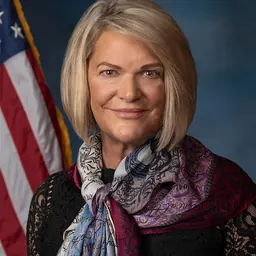


Related people
Same field, nearest in time

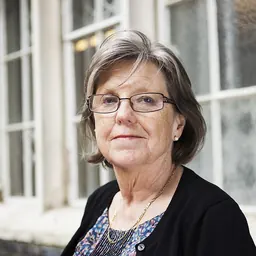




Contemporaries
People whose lives overlapped Merav Ben-David's



Frequently asked questions
Who is Merav Ben-David?
Israeli-American ecologist (born 1959)
When was Merav Ben-David born?
Merav Ben-David was born on 17 January 1959 in Nachlat Yehudah.
What is Merav Ben-David's occupation?
Merav Ben-David is an ecologist.
What nationality is Merav Ben-David?
Merav Ben-David is Israeli.
Sources & further reading
Cite this page
APA: Biography.guide. (2026). Merav Ben-David. https://biography.guide/merav-ben-david/
MLA: "Merav Ben-David." Biography.guide, https://biography.guide/merav-ben-david/.
Chicago: "Merav Ben-David." Biography.guide. https://biography.guide/merav-ben-david/.
Data last updated: 2026-09-22 · Spot an error? Report a correction.
Portrait: Wikimedia Commons · author & licence
Page generated 2026-09-27 05:01 UTC