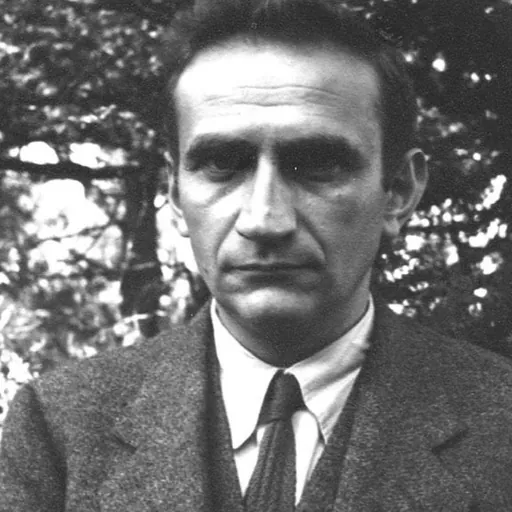
About Menke Katz
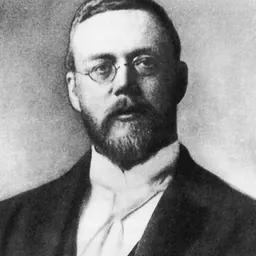
Lived 1906 – 1991 (aged 85). Menke Katz was an American poet.
Menke Katz (Yiddish: מעינקע קאַץ; ; April 12, 1906 – April 24, 1991) was an award-winning Yiddish-language and English-language poet and writer of Lithuanian-Jewish descent. He was one of few Yiddish poets based in the United States whose original English poetry also gained prominence. He was an experimentalist of form and an opponent of rhyme, particularly in his English writing. He was the father of Dovid Katz.
Biography Early life On the second night of Passover in 1906, Menke Katz was born in present-day Švenčionys in Lithuania, approximately 50 miles northeast of Vilnius, to father Hirshe-Dovid Katz and mother Badonna Gubersky. In 1914, his father immigrated alone to the United States through Ellis Island. During World War I, his family lived in Micháleshik (now Mikulishki, Belarus). His early poetic inspiration developed while in Micháleshik, influenced by his wartime struggles, the death of his eldest brother, and his near-death visions caused by the Spanish flu. These events provided the impetus for his remaining family to immigrate to New York City in 1920. Soon, his family was reunited with his father in Passaic, New Jersey.
As a teenager, he moved with a cousin to New York City's Lower East Side where he lived and worked for decades.
Life and career Katz published his first poem in Spartak, a publication edited by Vladimir Mayakovsky. He later joined the leftist Yiddish writers' group that became Proletpen (Yiddish: פּראָלעטפּען). In 1932, he was expelled from the group for publishing his first book, a poetic drama with erotic themes, titled Dray shvester (Yiddish: דרײַ שװעסטער; "Three sisters"). In 1938, he published his two-volume epic, Brenendik shtetl (Yiddish: ברענענדיק שטעטל; "Burning village"), that featured descriptions of shtetl life and its lack of appreciation for socialist realism. His epic also described the experiences of immigration to New York City. He soon published a manifesto titled Der braver pakhdn (Yiddish: דער בראַװער פּחדן; "The brave coward"), advocating for nonpartisan Yiddish poetry.
Beginning in 1944, he started writing in more universal themes, notably with his book Inmitn tog (Yiddish: אינמיטן טאָג; "Midday") in 1954. It was around this time he began writing in English. In 1956, he published A Patched Window in Commentary. He also began publishing frequently in The Atlantic Monthly, The New York Times, and Poet Lore, alongside some other English publications.
In 1959, he was arrested in Israel for speaking Yiddish to his son in public.
In 1965, he published his first English book titled Land of Manna that spoke to the nature of both American city life and shtetl life.
He founded and was the longtime editor of Bitterroot Quarterly Poetry Magazine which sought unknown talent in poetry.
He published 18 books—9 in Yiddish and 9 in English. His works have been featured in 21 languages, including French, Greek, Hebrew, Italian, Japanese, Kannada, and Lithuanian. In 2005, Benjamin and Barbara Harshav translated his 9 Yiddish books into English in Menke: The Complete Yiddish Poems of Menke Katz.
He also worked as a Yiddish instructor. In 1978, he left New York City with his wife and moved to a mountain cabin in Spring Glen, New York where he lived for the remainder of his life.
Awards and nominations In 1965, his book of poetry Land of Manna was nominated for a Pulitzer Prize.
Works Yiddish: Dray shvester (1932, the first of two editions through 1993) Der mentsh in togn (Yiddish: דער מענטש אין טאָגן; "Humanity at dawn") (1935) Brenendik shtetl (1938) S'hot dos vort mayn bobe Moyne (Yiddish: ס'האָט דאָס װאָרט מײַן באָבע מױנע; "Grandmother Mona takes the floor") (1939) Tsu dertseyln in freydn (Yiddish: צו דערצײלן אין פֿרײדן; "To tell it in happy times") (1941) Der posheter kholem (Yiddish: דער פּשוטער חלום; "The simple dream") (1947) Inmitn tog (1954) Tsfas (Yiddish: צפֿת; "Safed") (1979) Meynke sonetn (Yiddish: מעינקע סאָנעטן; "Menke sonnets") (1993)
English: Land of Manna (1965, the first of two editions through 2009) Rockrose (1970) Burning Village (1972) Forever and Ever and a Wednesday (1980) Two Friends (with Harry Smith) (1981) A Chair for Elijah (1985) Two Friends II (with Harry Smith) (1988) Nearby Eden (1990) This Little Land (1992)
Don’t just read it —
keep it.
Full-length biographies made to live with: read them, listen on the way to work, watch them tonight.
- E-book
- Audio
- Video
Instant download · yours to keep · every purchase keeps this site free
Important facts
Family & relationships
People in Menke Katz's life
Named in this biography and alive at the same time



Related people
Same field, nearest in time


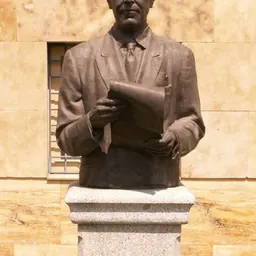
Contemporaries
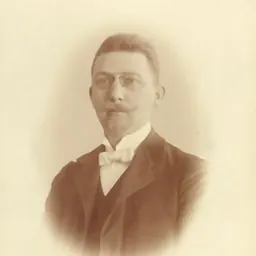
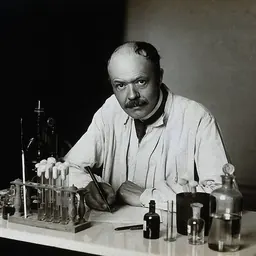
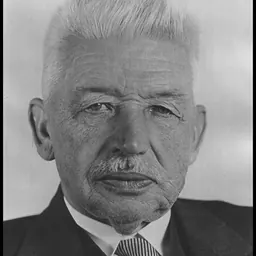
People whose lives overlapped Menke Katz's


Frequently asked questions
Who was Menke Katz?
American poet
When was Menke Katz born?
Menke Katz was born on 11 April 1906 in Švenčionys.
When did Menke Katz die?
Menke Katz died on 24 April 1991 in New York.
What was Menke Katz's occupation?
Menke Katz was a poet.
What nationality was Menke Katz?
Menke Katz was American.
Sources & further reading
Cite this page
APA: Biography.guide. (2026). Menke Katz. https://biography.guide/menke-katz/
MLA: "Menke Katz." Biography.guide, https://biography.guide/menke-katz/.
Chicago: "Menke Katz." Biography.guide. https://biography.guide/menke-katz/.
Data last updated: 2026-09-23 · Spot an error? Report a correction.
Portrait: Wikimedia Commons · author & licence
Page generated 2026-09-27 05:05 UTC