
About Mendel Grossman
Lived 1913 – 1945 (aged 31). Mendel Grossman was a Polish photographer.
Mordka Mendel Grossman, commonly known as Mendel Grossman, (born on 27 June 1913 in Gorzkowice, Piotrków Governorate, Russian Empire, today Poland), was a Polish Jewish photographer known for documenting life in the Łódź Ghetto, known as Litzmannstadt Ghetto by the Germans, during the Holocaust. While employed in the Statistical Department of the Judenrat, he produced official photographs and also secretly photographed the conditions of daily life of the Jewish people. Before the ghetto’s liquidation in 1944, he hid thousands of negatives. Some of his photographs survived and are held by institutions including the Ghetto Fighters’ House and Yad Vashem. He died on 30 April 1945, during the death marches.
Youth and job in Łódź (1918–1939) He was born in Gorzkowice to a Jewish Hasidic family as a son of Szmul Dawid Grossman and Hanna. After the First World War, his family settled at 58 Wschodnia Street in Łódź. As a child, Grossman began drawing portraits and scenes from Jewish life. He started to take photographs, at first as an amateur, then as a professional. He also colored photographs using aniline dyes. In the 1930s, Grossman became associated with the Jewish Theatre in Łódź, photographing performances, actors, and actresses. He also knew a number of writers, poets, musicians, and painters. Shortly before the outbreak of the Second World War, he photographed performances by Habima Theatre during its visit to Łódź. Grossman photographed the performances backstage on his own initiative. The results were the wonderfully inspired forerunner for all of his work in the ghettos and camps ~ Man in Motion ~ leading to the reverent archive of photos more aptly named as a collection ~ Motion Towards Death.
Photographic work in the Łódź Ghetto (1939–1944) The Nazis put him and his family in the Łódź Ghetto in 1939, where he found work as a photographer, making identification cards and documenting the work that his fellow inmates did in the ghetto. The ghetto administration used these photographs to document labour and productivity as an argument for trying to convince the Nazis to treat them better. Together with fellow photographers, Ross, Maliniak, and Ben Menachem, Grossman produced 27 albums with photos, collages, graphics, text, and modern design depicting the ‘great productivity’ of the Łódź ghetto.
Grossman also photographed the deportations from the Łódź Ghetto to the Chełmno extermination camp in 1942 and 1944. His surviving photographs include images of columns of Jews being marched toward Radegast station and of deportees boarding trains guarded by German personnel and Jewish ghetto police. According to later testimony, friends concealed Grossman in a cement storeroom, allowing him to photograph one deportation scene through a hole in a board. Grossman took these photographs at great risk to his life, not only because the Gestapo suspected him, but also because of his weak heart.
Some of his photographs assisted people in identifying the graves of their loved ones. His negatives became part of the surviving visual documentation of the Holocaust. Grossman distributed many of his photographs; those he was unable to pass, he tried to hide. In August 1944, shortly before the final liquidation of the Litzmannstadt Ghetto, he hid approximately 10,000 negatives showing scenes from the Ghetto. In the ghetto, he lived together with his family at 55 Marynarskiej street.
Death Deported to a labor camp in Koenigs Wusterhausen, he stayed there until 16 April 1945. Ill and exhausted, he was shot by Nazis during a forced death march, still holding on to his camera.
Archive and survival of photographs Only a fraction of Grossman’s photographic work survived the war. During the final months of the Łódź Ghetto, before his deportation, he tried to protect the material by separating it into different forms of safekeeping: some prints were left with friends, while other photographs and negatives were hidden in the ghetto. Pinchas Shaar recalled that Grossman concealed his negatives and prints in clay jars buried in an abandoned bunker. His assistant, Ben-Menachem, gave a different version, placing the material in tin cans inside a wooden box hidden behind a window sill in Grossman’s apartment. After the war, Shaar and Grossman’s sister recovered some of the archive and brought it to Israel, where many of the surviving materials were eventually lost during the 1948 Arab–Israeli War. A further group of Grossman-related material survived through Nachman “Natek” Zonabend, another friend from the Łódź Ghetto. In 1948, Zonabend donated a large collection of ghetto materials to the YIVO Institute for Jewish Research. The donation comprised more than 2,000 items in Polish, Yiddish and German, including photographs, photo albums, newspapers, maps, identity documents and other records from the ghetto.
The wartime series feature daily life in the Łódź ghetto, including family members, street scenes, deportations, and activities of Zionist youth groups such as Noʻar ha-Tsiyoni. These photographs are now located in the Museum of Holocaust and Resistance at the Ghetto Fighters House in Kibbutz Lohamei Hagetaot, Israel, as well as Yad Vashem in Jerusalem.
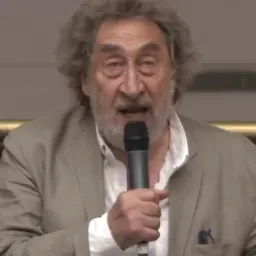
Editions of Grossman's photos M. Grossman, With the Camera in the Ghetto, Tel-Aviv 1970: Ghetto Fighters' House and Hakibutz Hameuchad Publishing House (published in English, French and Hebrew). Second Edition 1972 H. Loewy, "Fotogeschichte" 1991, Heft 38. My Secret Camera: Life in the Lodz Ghetto, photographs by Mendel Grossman, text by Frank Dabba Smith, introduction by Howard Jacobson, , Great Britain 2000: Frances Lincoln Ltd.
Don’t just read it —
keep it.
Full-length biographies made to live with: read them, listen on the way to work, watch them tonight.
- E-book
- Audio
- Video
Instant download · yours to keep · every purchase keeps this site free
Important facts
People in Mendel Grossman's life
Named in this biography and alive at the same time
Related people
Same field, nearest in time



Contemporaries
People whose lives overlapped Mendel Grossman's





Frequently asked questions
Who was Mendel Grossman?
Polish photographer (1913-1945)
When was Mendel Grossman born?
Mendel Grossman was born on 27 June 1913 in Staszów.
When did Mendel Grossman die?
Mendel Grossman died on 30 April 1945 in Königs Wusterhausen.
What was Mendel Grossman's occupation?
Mendel Grossman was a photographer.
What nationality was Mendel Grossman?
Mendel Grossman was Polish.
Sources & further reading
Cite this page
APA: Biography.guide. (2026). Mendel Grossman. https://biography.guide/mendel-grossman/
MLA: "Mendel Grossman." Biography.guide, https://biography.guide/mendel-grossman/.
Chicago: "Mendel Grossman." Biography.guide. https://biography.guide/mendel-grossman/.
Data last updated: 2026-09-20 · Spot an error? Report a correction.
Page generated 2026-09-27 05:23 UTC