
About Menahem ben Saruq
Lived 920 – 970 (aged 49–50). Menahem ben Saruq was a poet, lexicographer, philosopher, grammarian and writer.
Early career Menahem was a native of Tortosa of an impoverished family, born around 920 CE, but maybe have been born as early as 910 CE. It is believed that his father was a teacher and that he educated him. At an early age, he went to Cordoba at the behest of Hasdai ibn Shaprut, minister of trade in the court of the Caliph in Córdoba, where he found a patron in Hasdai's father, Isaac ben Ezra. At Isaac's death Menahem eulogized his protector's virtues in an inscription placed in the synagogue which had been built by Isaac at Cordoba. He wrote also elegies on him, which were universally recited during the period of mourning. Menahem then returned to his native city, where he engaged in business.
Hasdai ibn Shaprut, however, recalled Menahem to Cordoba and encouraged him to complete his life-work, a dictionary of the Hebrew language. In other ways also his new patron availed himself of his protégé's literary talents. On his mother's death, Hasdai requested that Menahem compose a dirge; and when Hasdai addressed his questions to the king of the Khazars, Menahem was commissioned to write the letter, which has become an important historical document. Menahem even included both his patron's and his names in an acrostic including the first letter of each line. Menahem, however, carried on his work amid great privations, as Hasdai did not prove a liberal patron.
Dispute with Dunash The dictionary had scarcely been completed when an opponent to its author arose in Dunash ben Labrat, who had come to Spain from Fez, Morocco, and who wrote a criticism on the work, which he prefaced by a eulogistic dedication to Hasdai. Dunash roused Menahem's enemies, who began to complain to Hasdai of Menahem's alleged wrongs against them. The slanders of his personal enemies likewise seem to have aroused Hasdai's anger against Menahem to such a pitch that the latter, at the command of the powerful statesman, suffered bodily violence, being cast out of his house on the Sabbath day, shamed, and imprisoned. In a touching, and at some points audacious letter to Hasdai (a valuable source from which most of this information has been taken) Menahem, who probably died shortly afterward, complained of the wrong done him and sharply criticized Hasdai. He seems to have made some impression on his patron. Menahem is said to have written another work in answer to the criticisms of Dunash, of which only an excerpt has survived, quoted by Rabbi Profiat Duran. Rashi's grandson, Jacob b. Meïr Tam, composed a work for the special purpose of vindicating Menahem against the attacks of Dunash; and (about 1140) Menahem ben Solomon composed in Italy a dictionary which was based for the most part on the "Mahberet."
Regarding the grammatical importance of Menahem ben Saruq's work, it may be noted that, although he had no systematic knowledge of the forms of the language, yet he recognized throughout his lexicon that there are inviolable laws underlying the language, and that its forms and phenomena are subject to definite rules. This insight, which appears in the terminology he employs, bridges the apparent chasm between him and his pupil Hayyuj. As Menahem composed his work in Hebrew, he could not use the terminology of the Arabic grammarians; yet he tacitly adopted some of their terms, translating them into Hebrew, and explained some words, although without acknowledging it, on the analogy of kindred Arabic expressions.
Editions Menahem ben Saruq's dictionary was edited by Filipowski (London, 1854), and addenda from the Bern manuscript of the "Mahberet" were published by D. Kaufmann in "Z. D. M. G." xl. 367-409. The defense by Menahem's pupils was edited by S. G. Stern in "Liber Responsionum" (Vienna, 1870), where Menahem's letter to Hasdai ibn Shaprut (first edited by Luzzatto in "Bet ha-Ozar") is reprinted (pp. xxiii-xxxvii).
This edition, already previously supplanted by Saenz-Badillos, Angel. Menahem Ben Saruq: Mahberet [Hebrew and Spanish]. Granada: Universidad de Granada, Unversidad Pontificia de Salamanca, 1986, has now itself been supplanted by Maman, Aaron, and Mirsky, Hananel. The Maḥberet of Menaḥem Ben Saruq : Annotated Critical Edition. Jerusalem: Academy of Hebrew Language, 2023.
Don’t just read it —
keep it.
Full-length biographies made to live with: read them, listen on the way to work, watch them tonight.
- E-book
- Audio
- Video
Instant download · yours to keep · every purchase keeps this site free
Important facts
People in Menahem ben Saruq's life
Named in this biography and alive at the same time
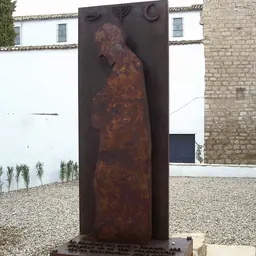

Related people
Same field, nearest in time
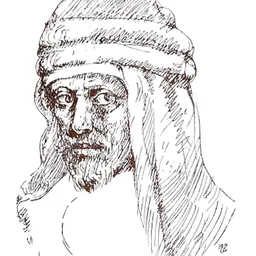




Contemporaries
People whose lives overlapped Menahem ben Saruq's

Frequently asked questions
Who was Menahem ben Saruq?
Spanish-Jewish philologist
When was Menahem ben Saruq born?
Menahem ben Saruq was born in 920 in Tortosa.
When did Menahem ben Saruq die?
Menahem ben Saruq died in 970.
What was Menahem ben Saruq's occupation?
Menahem ben Saruq was a poet, lexicographer, philosopher, grammarian and writer.
What nationality was Menahem ben Saruq?
Menahem ben Saruq's recorded nationality: al-Andalus.
Sources & further reading
· Wikipedia: Menahem ben Saruq
Cite this page
APA: Biography.guide. (2026). Menahem ben Saruq. https://biography.guide/menahem-ben-saruq/
MLA: "Menahem ben Saruq." Biography.guide, https://biography.guide/menahem-ben-saruq/.
Chicago: "Menahem ben Saruq." Biography.guide. https://biography.guide/menahem-ben-saruq/.
Data last updated: 2026-09-20 · Spot an error? Report a correction.
Page generated 2026-09-27 05:21 UTC