
About Melvin Tumin
Lived 1919 – 1994 (aged 75). Melvin Tumin was an American sociologist and educator, known for Social stratification.
Melvin Marvin Tumin (February 10, 1919 – March 3, 1994) was an American sociologist who specialized in race relations. He taught at Princeton University for much of his career.
Early life Tumin was born and grew up in Newark, New Jersey. His mother, Rose Yawitz Tumin, raised him and his two brothers on her own after the death of his father when Tumin was in his very early teens. He was the middle brother; Edward Tumin was his younger brother, and Israel Tumin was his older brother. He earned his undergraduate degree in psychology from University of Wisconsin–Madison in 1939. He received his Ph.D. in sociology and anthropology from Northwestern University in 1944.
According to Tumin, as told to his sons, Bellow incorporated words from a conversation he had at some point into Bellow's first novel, Dangling Man. Like Tumin, Bellow received a degree in sociology and anthropology from Northwestern. In the early 1940s, Tumin did field work for his doctoral thesis in Guatemala; this was later published as his first book, Caste in a Peasant Society. To ensure his safety while in Guatemala (a dictatorship at that time), he obtained and carried on him a letter from the then head of internal security warning that no harm was to be done to him.
Career After graduating, Tumin taught at Wayne State University and served on the Mayor's Commission on Race Relations in Detroit. Tumin received a Guggenheim Fellowship in 1969.
Tumin directed a task force of the U.S. National Commission on the Causes and Prevention of Violence and was an author of three volumes of its 1970 report Crimes of Violence. Tumin took Davis–Moore to imply that social stratification was mostly inevitable and provided a positive function for society. He analyzed the arguments of Davis and Moore and found them wanting in a number of respects. In a reply to Tumin's paper, Davis stated that his ideas seek to explain inequality, rather than justify it. Davis also accused Tumin of a number of errors. Tumin's 1967 book Social Stratification: The Forms and Functions of Inequality was widely used as a textbook and was re-issued in 1985.
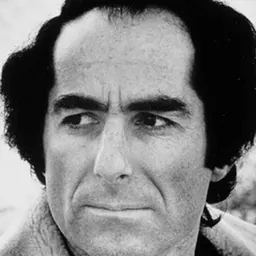
Inspiration for The Human Stain Tumin's friend, the author Philip Roth, said that his novel The Human Stain (2000) was inspired by an incident in which Tumin inquired about two students who had not attended his class all semester, asking, "Does anyone know these people? Do they exist or are they spooks?" Unbeknownst to Tumin, both students were African American. As spooks can be a racial slur for black people (in addition to meaning ghosts or spies), the university subjected him to an inquiry into possible hate speech, described by Roth as a "witch hunt." Tumin eventually emerged blameless.
Selected publications Moore, Wilbert E; Tumin, Melvin (1949). Some social functions of ignorance. American Sociological Review Vol. 14, No. 6 (Dec., 1949), pp. 787–795 Tumin, Melvin (1953). Some principles of stratification: A critical analysis. American Sociological Review Vol. 18, No. 4 (Aug., 1953), pp. 387–394 Tumin, Melvin (1957). Some unapplauded consequences of social mobility in a mass society. Social Forces Vol. 36 p. 32 ff. (1957-1958) Tumin, Melvin (1958). Desegregation: Resistance and Readiness Princeton University Press, Tumin, Melvin (1961). Social Class and Social Change in Puerto Rico. Tumin, Melvin (1967). Social Stratification: The Forms and Functions of Inequality. Prentice-Hall, Tumin, Melvin (1975). Caste in a Peasant Society: A Case Study in the Dynamics of Caste. Greenwood Press,
Don’t just read it —
keep it.
Full-length biographies made to live with: read them, listen on the way to work, watch them tonight.
- E-book
- Audio
- Video
Instant download · yours to keep · every purchase keeps this site free
Important facts
People in Melvin Tumin's life
Named in this biography and alive at the same time
Related people
Same field, nearest in time






Contemporaries
People whose lives overlapped Melvin Tumin's



Frequently asked questions
Who was Melvin Tumin?
American sociologist
When was Melvin Tumin born?
Melvin Tumin was born on 10 February 1919 in Newark.
When did Melvin Tumin die?
Melvin Tumin died on 3 March 1994 in Princeton.
What was Melvin Tumin's occupation?
Melvin Tumin was a sociologist and educator.
What was Melvin Tumin known for?
Melvin Tumin was known for Social stratification.
What nationality was Melvin Tumin?
Melvin Tumin was American.
Sources & further reading
Cite this page
APA: Biography.guide. (2026). Melvin Tumin. https://biography.guide/melvin-tumin/
MLA: "Melvin Tumin." Biography.guide, https://biography.guide/melvin-tumin/.
Chicago: "Melvin Tumin." Biography.guide. https://biography.guide/melvin-tumin/.
Data last updated: 2026-09-22 · Spot an error? Report a correction.
Page generated 2026-09-27 05:32 UTC