
Melania the Younger
Christian saint
About Melania the Younger
Lived 383 – 439 (aged 55–56).
Melania the Younger ( 383 – 31 December 439) is a Christian saint, Desert Mother, and ascetic who lived during the reign of Emperor Honorius, son of Theodosius I. She is the paternal granddaughter of Melania the Elder.
The Feast of Melania the Younger is held on 31 December (the Julian calendar's 31 December falls on 13 January on the Gregorian calendar).
Life Rome
Melania was the only child of the rich and powerful Valerius Publicola (son of Melania the Elder) and his wife Caeionia Albina, both Christians, of the senatorial Valeria gens family of ancient lineage which was the pride of Rome. Her paternal and maternal relatives had held the highest offices of state with great distinction during the whole of the century, and Melania could even boast of a long line of imperial blood, most recently through Valerius Romulus (r. 308-309).
She was married to her paternal cousin, Valerius Pinianus, at the age of fourteen despite her protests. The 5th-century Melaniae Junioris Vita ("Life of Melania the Younger") says:
Melania often pleaded for Pinianus to conform to asceticism so she could maintain her purity for the lord, but Pinianus desired to rather continue the family line. Melania's husband wanted two children, yet they both did not survive. These deaths took a toll on the married couple and encouraged the choice of asceticism. This was especially difficult due to Roman societal standards and the familial patrimony present in Melania and Piniasus's life. Knowing that Melania wanted to practice a celibate lifestyle, her father, near death, asked for forgiveness for pushing the unwanted marriage years prior. who had also travelled from Jerusalem and held strong ascetic beliefs. Ascetics, and early Christian leaders believed that denying oneself worldly pleasures and desires was essential for spiritual growth and closeness to God. Such actions were the result of asceticism.
The villa of the Valerii was supposedly of enormous size, as it was large enough to lodge the immense number of people whom Melania took with her from Rome. This, as we gather from bishop Palladius, This caused surprise and contempt amongst the Roman aristocracy who regarded the couple as lunatics. Some of their relatives considered that they now had an opportunity to enrich themselves extravagantly by taking advantage of the simplicity and inexperience of the couple. Melania's appeal to "Queen" Serena and Emperor Honorius led him to order every province that their possessions should be sold at the responsibility of the governors and public administrators, and that they be responsible for the remittance of the price to the couple. a storm forced the ship to an unnamed island (probably Lipari) that had been ravaged by pirates who held inhabitants for ransom. Melania ransomed the islanders with her own money. Finally, they continued directly to Africa, where they befriended the great Augustine of Hippo and devoted themselves to a life of piety and charitable works.
Rather than in a city such as Carthage or Hippo, they chose to live in relative calm at their estate, near Tagaste in present Algeria. The estate was of such extent and importance as to include two episcopal sees, one belonging to the Catholic Church, the other to the Donatists. Some of the rooms of the villa were "filled with gold". Alypius was the famous bishop there with whom they became friends and had close relations with Paulinus and Augustine. Alypus had helped establish Augustine's first monastery in Africa. The church in Tagaste had been very poor but Melania furnished it with gold and silver cups, and with altar-cloths richly embroidered in gold and thickly sewn with pearls. She endowed this church with extensive property including a large part of the town itself. On the advice of the principal bishops Augustine, Alypius, and Aurelius of Carthage, she was also generous to the other churches and monasteries in Africa She assigned a regular income to make them independent of precarious alms-giving.
They stayed for seven years and founded a convent for the consecrated virgins who were once her slaves, yet treated as her sisters. Melania became Mother Superior, and also founded a cloister of which Pinianus took charge.
In the so-called Pinain affair, Melania's mother Albina wrote to Augustine asking him to visit them, but he would not leave his church. As a result, Albina, Alypus, Melania and Pinianus travelled to him in Hippo. Once there, the frenzied congregation demanded that Pinianus be ordained as priest of Hippo and forced him to swear that he would remain there. Augustine threatened that he would leave as bishop.
She practiced severe penance and wore haircloth, and at night she snatched brief rest on the hard ground as her bed. Her diet consisted of herbs or vegetables prepared with a little oil.
Palestine
In 417, they travelled to Palestine by way of Alexandria. In Palestine, they lived in a hermitage near the Mount of Olives, where Melania founded a second convent. After the death of Pinianus c. 420, Melania built a cloister for men, and a church, where she spent the remainder of her life.
Properties
Melania had "vast domains in Sicily" and also held land in Britain which she disposed of only a year or two before the Roman legions were withdrawn. She also owned grand estates in Iberia, Africa, Numidia, Mauretania and Italy. Gerontius describes her estate in Sicily as follows:
Legacy Today, the town of Sainte-Mélanie in Canada is named in her honour.
Hagiography
An account of Melania's pursuit of the ascetic life survives in a hagiography or biography, written by Gerontius c. 452.
Further, there is an account of her life by Palladius (d. A.D. 431) as well.
Ancestry
Don’t just read it —
keep it.
Full-length biographies made to live with: read them, listen on the way to work, watch them tonight.
- E-book
- Audio
- Video
Instant download · yours to keep · every purchase keeps this site free
Important facts
People in Melania the Younger's life
Named in this biography and alive at the same time

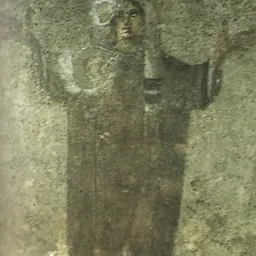
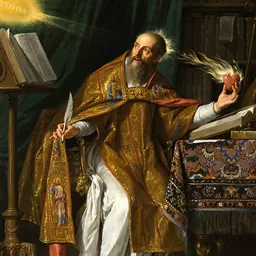

Contemporaries
People whose lives overlapped Melania the Younger's


Frequently asked questions
Who was Melania the Younger?
Christian saint
When was Melania the Younger born?
Melania the Younger was born in 383 in Rome.
When did Melania the Younger die?
Melania the Younger died on 31 December 439 in Jerusalem.
Sources & further reading
· Wikipedia: Melania the Younger
· DBpedia: Melania the Younger
Cite this page
APA: Biography.guide. (2026). Melania the Younger. https://biography.guide/melania-the-younger/
MLA: "Melania the Younger." Biography.guide, https://biography.guide/melania-the-younger/.
Chicago: "Melania the Younger." Biography.guide. https://biography.guide/melania-the-younger/.
Data last updated: 2026-09-26 · Spot an error? Report a correction.
Page generated 2026-09-27 05:14 UTC