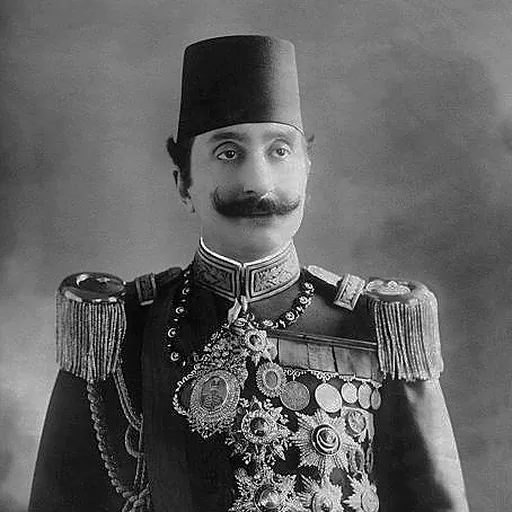
About Mehmed Selim Efendi
Lived 1870 – 1937 (aged 67). Mehmed Selim Efendi was a Turkish politician and statesperson.
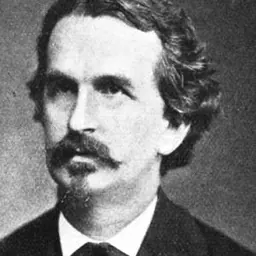
Şehzade Mehmed Selim Efendi (; 11 January 1870 – 5 May 1937) was an Ottoman prince, the eldest son of Sultan Abdul Hamid II and his consort Bedrifelek Kadın.
Early life Şehzade Mehmed Selim was born on 11 January 1870 in the Dolmabahçe Palace. His father was Sultan Abdul Hamid II, son of Sultan Abdulmejid I and Tirimüjgan Kadın. His mother was Bedrifelek Kadın, daughter of Prince Kerzedzh Mehmed Bey. He was the eldest son, and second child born to his father, and the eldest child of his mother. He had a sister, Zekiye Sultan, two years younger than him, and a brother Şehzade Ahmed Nuri, eight years younger than him. after Abdul Hamid moved there on 7 April 1877. His circumcision took place on 17 December 1883, together with Şehzade Mehmed Ziyaeddin, eldest son of Sultan Mehmed V, Şehzade Ibrahim Tevfik, grandson of Sultan Abdulmejid I, and Abdulmejid II, Şehzade Mehmed Şevket and Şehzade Mehmed Seyfeddin, sons of Sultan Abdulaziz. Halil Bey Efendi carried out Selim's circumcision.
Abdülhamid and Mehmed Selim had a turbulent relationship. They did not like each other and notoriously disagreed. This also damaged Abdülhamid's relationship with Bedrifelek and her other children, because, in order not to see Mehmed Selim, he avoided visiting them in their rooms.
Selim's early education took place in the Prince's School, Yıldız Palace, together with his younger half-brother, Şehzade Mehmed Abdülkadir, and Sultan Abdulaziz's son Abdulmejid. His tutor was Baha Efendi. Ahmed Mazharüddin taught him Persian, and Mehmed Nuri taught him French. After graduating from the Prince's School, he was enrolled in the Ottoman Military College. He held the rank of Brigradier of the infantry regiment in the Imperial Ottoman Army, and was later promoted to the rank of General. He had been allocated a villa on the grounds of the Yıldız Palace.
Personal life Selim's first wife was Iryale Hanım. She was born in 1870 in Sukhumi. Her real name was Daryal Marshania. She was the daughter of Prince Ali Hasan Bey Marshania and Princess Fatma Horecan Aredba. Her elder sister, Nazikeda Kadın, was married to Sultan Mehmed VI. She was taken up for service in the Yıldız Palace in 1882, and married Selim in 1886. She was the mother of Şehzade Mehmed, born in 1887, and Emine Nemika Sultan, born in 1888. She died in 1904, and was buried in Yahya Efendi Cemetery.
His second wife was Pervin Hanım. She died in Jounieh, Lebanon. His third wife was Eflakyar Hanım. She was born in Batumi. Her father was Gazi Muhammed Bey. A painter by avocation, she died in Jounieh, Lebanon. His fourth wife was Nilüfer Hanım, an Abkhazian. She was a Circassian from the Karzeg family, She was born in Sivas. Her father was Osman Bey. They married on 16 September 1918. She died on 1 February 1951 in Beirut, Lebanon. Some other wives were Gülnaz Hanım, a Circassian, Selim, however, remained in Istanbul. Initially, Mehmed Selim was chosen as successor, but this would have required an amendment to the law of succession and for this, along with political reasons, he was discarded in favor of Mehmed V, the younger half-brother of Abdülhamid II. Abdul Hamid's whole family was expelled from Yıldız Palace, and most of them didn't even have a place to live in. Selim, and his younger brother, Şehzade Ahmed, initially settled in the mansion of their sister Zekiye Sultan, until Selim was allocated a mansion in Serencebey.
After Thessaloniki fell to Greece in 1912, Abdul Hamid returned to Istanbul, and settled in the Beylerbeyi Palace. In February 1918, Selim's uncle, Sultan Mehmed learnt that there was no hope for Sultan Abdul Hamid and sent a message to Selim, saying that their father had a fatal disease, and to see him immediately. However, when Selim, and his brother Şehzade Ahmed came, their father ordered them to wait for a while. He gave out his last breath at the moment that he invited Selim inside. Neither Selim nor the other princes and princesses saw his last moment. With Abdülhamid there were his two favorite consorts, Müşfika Kadın and Saliha Naciye Kadın.
After Mehmed's death in July 1918, his younger brother Sultan Mehmed VI, ascended the throne, and Selim became second in line to the throne. In 1919, rumors were circulating that a plot was afoot for the removal or assassination of Sultan Mehmed, and replacing him with Selim himself.
Life in exile At the exile of the imperial family in March 1924, Selim and his family first settled in Damascus, then under French rule, and later in Jounieh, Lebanon. France prevented the rebellion from spreading to Syria, where Selim was very popular. However, the prince had nothing to do with the event. He was highly respected in Syria and was referred to by the people as Sultan Selim. The house where he stayed was called Kasrü'l-Melik (House of the Ruler).
In 1930, princes descended from Sultan Abdul Hamid undertook initiative and approached the British Petroleum Company (BP) to obtain a share of the oil recovered from the Mosul wells registered in the name of Abdul Hamid and filed lawsuits one after another to reclaim ownership of some land in Palestine that had belonged to the sultan. This was led by Selim. But Abdulmejid II had made similar contacts and eventually this dual approach led to disagreement between the two of them. Former French president Alexandre Millerand represented him in court to regain his confiscated properties.
In 1934, his heirs approached the Land Court in Jaffa, requesting the court to order the rectification of the new register on the ground that their rights to the land in question had been omitted in the register. The heirs produced an old, pre-1908 title deed to the property in the name of their father. At the time, Selim was resident in Syria.
Death Mehmed Selim died at the age of sixty-seven on 5 May 1937 in Jounieh, Greater Lebanon, and was buried in the cemetery of the Sulaymaniyya Takiyya, Damascus, Syria. Order of Glory, Jeweled Imtiyaz Medal in Gold born and died in Yıldız Palace; buried in Yahya Efendi Cemetery
Ancestry
Don’t just read it —
keep it.
Full-length biographies made to live with: read them, listen on the way to work, watch them tonight.
- E-book
- Audio
- Video
Instant download · yours to keep · every purchase keeps this site free
Important facts
Family & relationships
People in Mehmed Selim Efendi's life
Named in this biography and alive at the same time



Related people
Same field, nearest in time




Contemporaries
People whose lives overlapped Mehmed Selim Efendi's

Frequently asked questions
Who was Mehmed Selim Efendi?
Ottoman noble (1870–1937)
When was Mehmed Selim Efendi born?
Mehmed Selim Efendi was born on 11 January 1870 in Istanbul.
When did Mehmed Selim Efendi die?
Mehmed Selim Efendi died on 4 May 1937 in Beirut.
What was Mehmed Selim Efendi's occupation?
Mehmed Selim Efendi was a politician and statesperson.
What nationality was Mehmed Selim Efendi?
Mehmed Selim Efendi was Turkish.
Sources & further reading
· Wikipedia: Mehmed Selim Efendi
· DBpedia: Şehzade Mehmed Selim
Cite this page
APA: Biography.guide. (2026). Mehmed Selim Efendi. https://biography.guide/mehmed-selim-efendi/
MLA: "Mehmed Selim Efendi." Biography.guide, https://biography.guide/mehmed-selim-efendi/.
Chicago: "Mehmed Selim Efendi." Biography.guide. https://biography.guide/mehmed-selim-efendi/.
Data last updated: 2026-09-20 · Spot an error? Report a correction.
Page generated 2026-09-27 05:10 UTC