
About Mehdi Hashemi
Lived 1944 – 1987 (aged 42–43). Mehdi Hashemi was an Iranian politician and cleric.
Mehdi Hashemi (1944 – 28 September 1987) was an Iranian Shia cleric who after the 1979 Iranian Revolution became a senior official in the Islamic Revolutionary Guards. He was defrocked by the Special Clerical Court and executed by the Islamic Republic in 1987. Officially he was guilty of sedition, murder, and related charges, but others suspect his true crime was opposition to the regime's secret dealings with the United States within the Iran–Contra affair.
Background Hashemi was born in Qahderijan, near Isfahan, in 1944 to a well-established clerical family. In addition, he was a close confidant of Ayatollah Montazeri's son, Mohammad. as a "religious hero." He followed Montazeri's visions on the interpretation and implementation of the Islamic revolution during a time of contradictory and increasingly fractious understandings within the ruling elite which sought to circumscribe Montazeri's influence in Lebanon and tighten the Iranian government's grip on its Lebanese Shi'a clients. This led to factional conflicts, as different Iranian factions promoted Hezbollah or Amal, other sources say he was in charge of the "Bureau of Assistance to the Islamic Movements in the World", which was tasked with spreading the Islamic Revolution throughout the Middle East.
Opposition to arms dealing with the US Hashemi opposed the Iranian government's efforts to obtain scarce weapons and spares for the Iran–Iraq War from the United States and Israel, and provide assistance to the Reagan Administration in releasing US citizens held hostage by Hezbollah in Lebanon. He leaked news of the dealings to the Lebanese news magazine Ash-Shiraa. The appearance of the story in the magazine's 3 November 1986 issue triggered a scandal along with 40 associates including his brother Hadi Hashemi. He was stripped of his Hujjat al-Islam title. His prosecution was handled by the Mohammad Reyshahri, the former judge of the military tribunals who had recently been appointed minister of intelligence. According to Reysharhri's Political Memoirs, Hashemi had powerful patrons, and after a month-long investigation, all the interrogators "had obtained was a taped interview in which the wise guy [Mehdi Hashemi] had cleverly planted deviant ideas." Specifically, according to Reyshahri, that meant raiding and abetting the Mojahedin having an ongoing relationship with SAVAK, smuggling opium from Afghanistan and eliminating one of Montazeri's rivals by "inducing the spread of cancer through his body." At the same time, Reyshahri took the opportunity to deny the "insidious notion" that Hashemi was being punished because of his opposition to the McFarlane visit: "Those spreading this false rumor are helping the Black House [the White House]."
Evidence that Hashemi was tortured to confess comes from an unsympathetic source. An anonymous Iranian author of a prison memoir described how all political prisoners in Iran at that time were under intense pressure to denounce their former political beliefs and comrades and as a result, they often "carefully scrutinized" the numerous video confessions of other prisoners prison officials played for the prisoners "to figure out which speakers had capitulated without much resistance and which had resisted to their utmost." Though mortal ideological enemies of Hashemi, when the author and her fellow leftists saw Hashemi on video, they "spontaneously said to themselves, 'He must have suffered unbearable tortures.'"
Execution Hashemi was executed in Tehran in September 1987 before his verdict was announced. This was reportedly done to preclude the intervention on Hashemi's behalf by Montazeri, according to prosecutor Reyshahri. The execution was a blow to Ayatollah Montazeri, who had pleaded with Ayatollah Khomeini on Hashemi's behalf saying he had "known him inside out since our childhood. He is a devout Muslim, a militant revolutionary, and a great admirer of the Imam." On another note, one of Hashemi's few dozen co-defendants, Omid Najafabadi, who was a Revolutionary Court judge and the religious jurisprudent, or Hakem-e-Shaar, of Esfahan, was also executed; the others were all pardoned or given light sentences.
Don’t just read it —
keep it.
Full-length biographies made to live with: read them, listen on the way to work, watch them tonight.
- E-book
- Audio
- Video
Instant download · yours to keep · every purchase keeps this site free
Important facts
People in Mehdi Hashemi's life
Named in this biography and alive at the same time
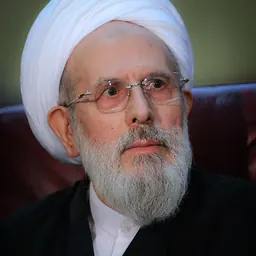

Related people
Same field, nearest in time


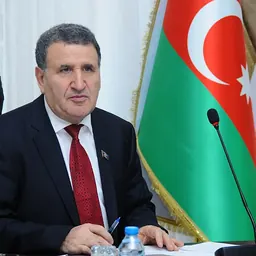



Contemporaries
People whose lives overlapped Mehdi Hashemi's

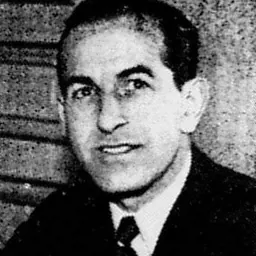

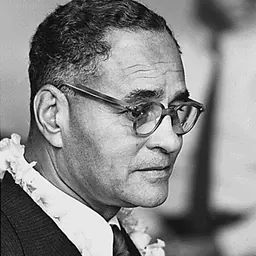

Frequently asked questions
Who was Mehdi Hashemi?
Iranian politician
When was Mehdi Hashemi born?
Mehdi Hashemi was born in 1944 in Isfahan.
When did Mehdi Hashemi die?
Mehdi Hashemi died on 28 September 1987 in Tehran.
What was Mehdi Hashemi's occupation?
Mehdi Hashemi was a politician and cleric.
What nationality was Mehdi Hashemi?
Mehdi Hashemi was Iranian.
Sources & further reading
Cite this page
APA: Biography.guide. (2026). Mehdi Hashemi. https://biography.guide/mehdi-hashemi/
MLA: "Mehdi Hashemi." Biography.guide, https://biography.guide/mehdi-hashemi/.
Chicago: "Mehdi Hashemi." Biography.guide. https://biography.guide/mehdi-hashemi/.
Data last updated: 2026-09-20 · Spot an error? Report a correction.
Page generated 2026-09-27 05:15 UTC