
McAllister Hull
American theoretical physicist
About McAllister Hull
Lived 1923 – 2011 (aged 87). McAllister Hull was an American physicist, nuclear physicist and university teacher.
McAllister Hull (September 1, 1923 – February 9, 2011) was a North American theoretical physicist who took part in the creation of the atomic bomb that was dropped over Nagasaki in 1945, ending World War II.
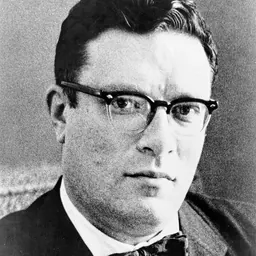
Early years Hull was born on September 1, 1923, in Birmingham, Alabama. In his memoir, he describes how, in his boyhood, he read Isaac Asimov, Robert Heinlein, and other science-fiction writers, and discovered physics and Albert Einstein while doing school projects.
In a 2004 letter to the New York Review of Books, Hull wrote that his father had "tried to enlist" in General John J. Pershing's expedition to bring Pancho Villa to justice, "but needed his mother’s permission, which was not given. In 1917, he did enlist, and went to France with Pershing in the 4th Alabama, where he was in combat until wounded at Soissons, and in hospital service until 1919."
In the autumn of 1941, Hull entered Mississippi State University to study physics. After his freshman year, according to a 2007 newspaper profile, "he quit school and became a draftsman for an ordnance plant, where he was trained to test explosives to see if they were pure enough to be used for shells."
Personal Hull was married for 65 years to Mary Muska Hull, who survived him. They had two children, John Hull and Wendy McCabe, and three grandchildren, Isaac Hull, Damaris McDonald and Ursula McCabe.
During the months when he worked on the project to create Fat Man, the atomic bomb that would be dropped over Nagasaki, he was not told explicitly that he was working on a bomb. "But I knew enough physics to figure out what was going on." His work, which lasted until the summer of 1945, was considered so dangerous that the lab where he worked with his team was 15 miles from the other scientists' labs. "We actually used a candy kettle ... to melt the explosives and then poured them into the mold to make the lenses," Hull told MSNBC in an interview. An article in the Bulletin of the Atomic Scientists tells the story this way: "One of Hull's early assignments was to figure our how to eliminate air bubbles in the explosive lenses. Remembering his experience making milk shakes as a waiter at college, he devised a stirrer that could be drawn up through the molten mixture, effectively bringing the bubbles to the surface."
In 1995, on the 50th anniversary of the atom bomb, Hull told CBS: "We were pouring two--two-speed explosives: a slow explosive called baritar, which was barium nitrate and TNT, mainly, and then a faster explosive called Comp-B, which had TNT in it and the rest of it either classified or I don't remember. It was--it was fast." Asked by a CBS reporter whether there had been "white coats" or a "lab atmosphere," Hull replied: "Oh, Lord, no."
Hull later recalled "the day that J. Robert Oppenheimer, the director of Los Alamos, brought Gen. Leslie Groves out to the lab. While looking at the mold for the lens, Groves accidentally stepped on and disconnected a hot water line. A stream of extremely hot water came out of the socket behind him, hitting him squarely in the rear. Hull succeeded – just barely – in stifling his laughter, but only until Oppenheimer turned to him and remarked that the incident "just goes to show you the incompressibility of water." There was no way Hull could contain himself after that. (Hull was relieved that Groves did not recognize him at the Trinity test several months later.)"
"Different kinds of people worked on the Manhattan Project, from the greatest scientist in the world to the ordinary people doing ordinary things," Hull said in a 2006 interview. He also said that "nyone who works on weapons has a responsibility for people who are killed with those weapons....As a consequence, I have a personal responsibility for some of those people who were killed in Nagasaki." Still, as he told a 1985 interviewer, "my colleagues and I were very pleased that our efforts had not failed....We had no idea about the tactics or the strategy of using both bombs. And today, it is still controversial whether the second bomb should have been used or whether either bomb should have been used. But that's hindsight."
Asked in a 1995 interview on CBS News Sunday Morning whether, if he could go back in time, he would participate again in the creation of the bomb, Hull said: "I would again do whatever was necessary to defend our way of life, to save the life of this country and this society, which, as difficult, as fragile and as—as flawed as it is, it's still the best the world has ever seen. That I'd—that I'd do it again. Sorry."
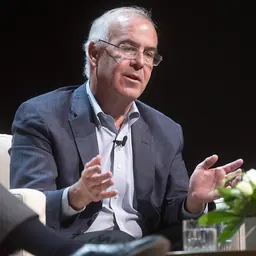
Hull said in 2007 that he had never met any survivors of Hiroshima or Nagasaki. "I have had Japanese students in my courses, perhaps children of survivors, in which I discussed the bombings," he said. "The students seemed to accept the bombings as justified by the Japanese aggression." In a letter the same year to the New York Times, reacting to a column about college education by David Brooks, Hull wrote: "The humanities without the sciences are incomplete, and the sciences without the humanities dangerous."
Books His memoir, Rider of the Pale Horse: A Memoir of Los Alamos and Beyond, co-authored with Amy Bianco, was published in 2006 by UNM Press. The title of the memoir refers to Revelation 6:8: "Behold a pale horse: and his name that sat on him was Death, and Hell followed with him."
Don’t just read it —
keep it.
Full-length biographies made to live with: read them, listen on the way to work, watch them tonight.
- E-book
- Audio
- Video
Instant download · yours to keep · every purchase keeps this site free
Important facts
People in McAllister Hull's life
Named in this biography and alive at the same time





Related people
Same field, nearest in time


Contemporaries
People whose lives overlapped McAllister Hull's

Frequently asked questions
Who was McAllister Hull?
American theoretical physicist
When was McAllister Hull born?
McAllister Hull was born on 1 September 1923 in Birmingham.
When did McAllister Hull die?
McAllister Hull died on 9 February 2011.
What was McAllister Hull's occupation?
McAllister Hull was a physicist, nuclear physicist and university teacher.
What nationality was McAllister Hull?
McAllister Hull was American.
Sources & further reading
Cite this page
APA: Biography.guide. (2026). McAllister Hull. https://biography.guide/mcallister-hull/
MLA: "McAllister Hull." Biography.guide, https://biography.guide/mcallister-hull/.
Chicago: "McAllister Hull." Biography.guide. https://biography.guide/mcallister-hull/.
Data last updated: 2026-09-20 · Spot an error? Report a correction.
Page generated 2026-09-27 05:26 UTC