
Maynard Solomon
American music executive and musicologist; co-founder of Vanguard Records, music producer, and writer on music
About Maynard Solomon
Lived 1930 – 2020 (aged 90). Maynard Solomon was an American record producer, music historian, biographer, musicologist, music executive and talent manager.
Maynard Elliott Solomon (January 5, 1930 – September 28, 2020) was an American music executive and musicologist. In his career in the music industry, he was a co-founder of Vanguard Records as well as a music producer. Later, he took up musicology, becoming well known for his biographical studies of Viennese Classical composers, specifically Beethoven, Mozart, and Schubert.
Education Having attended New York's High School of Music & Art, Solomon graduated Phi Beta Kappa from Brooklyn College, CUNY, with a BA in 1950, subsequently pursuing graduate studies at Columbia University from 1950 to 1952. In 1979 he became adjunct associate professor at the Graduate School, CUNY, and between 1988 and 1994 held visiting professorships at SUNY Stony Brook, Columbia University, Harvard University and Yale University, joining the graduate faculty of the Juilliard School of Music in 1998.
Career in the recording industry Maynard Solomon founded Vanguard Records jointly with his brother Seymour Solomon in 1950. They started the business with a $10,000 loan from their father, Seymour becoming company president and Maynard, the younger brother, vice president. The label was one of the prime movers in the folk and blues boom for the next fifteen years, as well as being a major classical label. As well as producing many albums, Solomon was a prolific writer of liner notes; a foreshadowing of his later career as music scholar.
His nascent venture's first disc was of J.S. Bach's 21st cantata, "Ich hatte viel Bekümmernis, BWV 21" ("I had much grief"), with Jonathan Sternberg conducting Hugues Cuénod and other soloists, chorus and orchestra. "What speaks for the Solomons' steadfastness in their taste and their task", wrote a Billboard journalist in November 1966, "is that this record is still alive in the catalogue (SC-501). As Seymour says, it was a good performance, not easy to top. Of the whole Vanguard/Bach Guild catalogue, numbering about 480 issues, 30 are Bach records..."
A number of these research projects suggest Solomon relished detective work. The data he used were in general not new to scholarship, but he attempted to sift through the facts in novel ways: things like the details of mail coach schedules, close interpretation of letters, study of slang terms used by gay people, and so on, were marshaled to make the case for the surprising conclusion.
Solomon's efforts almost always provoked pushback from other scholars, both on general grounds and against the specific claims made. For instance, Tellenbach describes his work as involving "anachronistic assumptions and a lack of understanding of eighteenth- and nineteenth-century German." For reaction to his portrayal of Leopold Mozart, see Head (1999). For a post-Solomon view of the "Immortal Beloved" that admits Antonie Brentano merely as a possibility, see Swafford (2020:585-589). For a harsh critique of Solomon's use of Freudian psychology, see Stafford (2003).
The "Schubert as gay" controversy It was the suggestion that Schubert was gay that gave rise to the greatest controversy, attracting sufficient attention to be reported in the New York Times. The musicologist Rita Steblin conducted an extended counter-campaign with several scholarly articles. Her position is summarized in the last sentences of Steblin (1993:27):
To put it bluntly, there is no evidence that Schubert or the members of his circle were homosexuals. Solomon has mistranslated several key documents, quoted selected passages out of context, and misrepresented the cultural and artistic context of society in Biedermeier Vienna. It does not speak well of our critical faculties that we are blind to the deficiencies of his argument. Schubert deserves better.
Solomon's viewpoint, however, was defended in print, among others by the mainstream musicologist Robert Winter, by music scholar Charles Rosen, and by New York Times music critic Donal Henahan. The 1989 Solomon paper continues to attract citations and scholarly attention.
Collaborations and later career
Solomon's concentration on the life and work of Beethoven resulted in close collaboration with German scholars; in 1996 he was made a scholarly adviser to the Beethoven-Archiv in Bonn, in addition to becoming a member of the editorial committee for the Neue Ausgabe Beethovens Briefe (the New Edition of Beethoven's letters, Munich, 1996–1998).
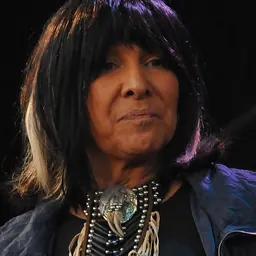
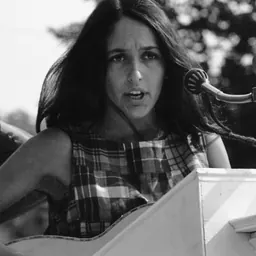
Selected discography of records produced by Solomon "Best of the Vanguard Years" (2000) (The Clancy Brothers) "Best of the Vanguard Years" (2000) (Tom Paxton) "Best of the Vanguard Years" (1998) (Ian & Sylvia) "Best of the Vanguard Years" (2004) (The Rooftop Singers) "Best of the Vanguard Years" (2003) (Buffy Sainte-Marie) "Best of John Hammond" (1989) (John Hammond) "Best of Eric Andersen" (1970) (Eric Andersen) "Vanguard Sessions: Baez Sings Dylan" (1998) (Joan Baez) "Reunion at Carnegie Hall, 1963, Pt 1" (2001) (The Weavers) "Reunion at Carnegie Hall, 1963, Pt 2" (2001) (The Weavers)
Don’t just read it —
keep it.
Full-length biographies made to live with: read them, listen on the way to work, watch them tonight.
- E-book
- Audio
- Video
Instant download · yours to keep · every purchase keeps this site free
Important facts
People in Maynard Solomon's life
Named in this biography and alive at the same time





Related people
Same field, nearest in time


Contemporaries
People whose lives overlapped Maynard Solomon's
Frequently asked questions
Who was Maynard Solomon?
American music executive and musicologist; co-founder of Vanguard Records, music producer, and writer on music (1930-2020)
When was Maynard Solomon born?
Maynard Solomon was born on 5 January 1930 in Manhattan.
When did Maynard Solomon die?
Maynard Solomon died on 28 September 2020 in Manhattan.
What was Maynard Solomon's occupation?
Maynard Solomon was a record producer, music historian, biographer, musicologist, music executive and talent manager.
What nationality was Maynard Solomon?
Maynard Solomon was American.
Sources & further reading
Cite this page
APA: Biography.guide. (2026). Maynard Solomon. https://biography.guide/maynard-solomon/
MLA: "Maynard Solomon." Biography.guide, https://biography.guide/maynard-solomon/.
Chicago: "Maynard Solomon." Biography.guide. https://biography.guide/maynard-solomon/.
Data last updated: 2026-09-20 · Spot an error? Report a correction.
Page generated 2026-09-27 05:01 UTC