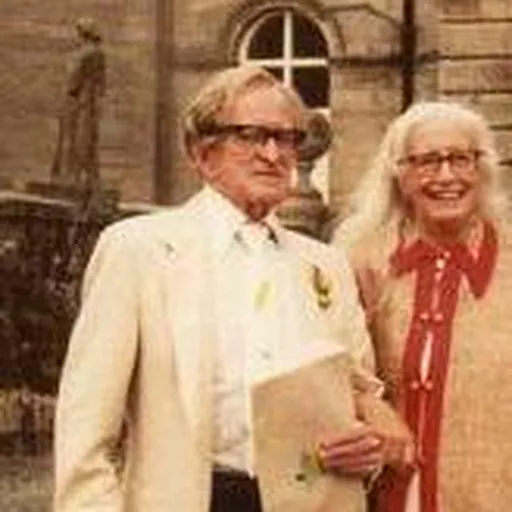
About Maxwell Fry
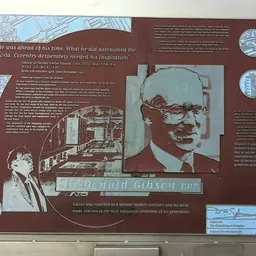
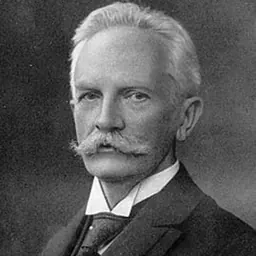
Lived 1899 – 1987 (aged 88). Maxwell Fry was a British architect, writer and painter.
Edwin Maxwell Fry, CBE, RA, FRIBA, FRTPI (2 August 1899 – 3 September 1987) was an English modernist architect, writer and painter.
Originally trained in the neo-classical style of architecture, Fry grew to favour the new modernist style, and practised with eminent colleagues including Walter Gropius, Le Corbusier and Pierre Jeanneret. Fry was a major influence on a generation of young architects. Among the younger colleagues with whom he worked was Denys Lasdun.
In the 1940s, Fry designed buildings for West African countries that were then part of the British Empire, including Ghana and Nigeria. In the 1950s, he and his wife, the architect Jane Drew, worked for three years with Le Corbusier on an ambitious development to create the new capital city of Punjab at Chandigarh.
Fry's works in Britain range from railway stations to private houses to large corporate headquarters. Among his best known works in the UK is the Kensal House flats in Ladbroke Grove, London, designed with Walter Gropius, which was aimed at providing high quality low cost housing, on which Fry and Gropius also collaborated with Elizabeth Denby to set new standards.
Fry's writings include critical and descriptive books on town planning and architecture, notably his Art in a Machine Age. His last book was the Autobiographical Sketches of his life from boyhood up to the time of his marriage to Jane Drew.
Biography
Early years Fry was born in Liscard, Cheshire (now Merseyside). He describes his father, Canadian-born Ambrose Fry, as a "business man with all sorts of irons in the fire – chemicals, electricals, old property..."; he mentions living in a terrace house converted by his father overlooking Liverpool Cathedral; and his first job was working in his father's factory, the Liverpool Borax Co. in Edge Street. His mother was Lydia (Lily) Thompson. He had two older sisters, Muriel and Nora, and a younger brother Sydney. To his family and friends he was known as Maxi or Max.
Fry was educated at the Liverpool Institute High School. He served in the King's Liverpool regiment at the end of the First World War. After the war he received an ex-serviceman's grant that enabled him to enter Liverpool University school of architecture in 1920, where he was trained in "the suave neo-Georgian classicism" of Professor Charles Reilly. where in 1924–1926 he worked on three neo-classically styled railway stations, at Margate, Ramsgate and Dumpton Park,
In 1926, he married his first wife Ethel Leese (née Speakman). She was a divorcee, previously married to Lancashire cricketer Charles Leese (1889–1947), and aged 38 when they married. The marriage was not happy: Max described her as "a too well-bred wife without a frolic in her nature ... with the same determination [as her mother] to be well thought of without trying", and he also noted that she was a chain smoker. They had one daughter, Ann Fry.
He returned to Adams and Thompson in 1930 as a partner.
Fry was one of the few modernist architects working in Britain in the thirties who were British; most were immigrants from continental Europe, where modernism originated. Among them was Walter Gropius, former director of the Bauhaus, who fled from Nazi Germany in 1934 and with whom Fry set up a practice in London in the same year. The partnership lasted until 1936, when Gropius, receiving offers of work from Harvard University, decided to emigrate to the US. Gropius wanted Fry to go with him, saying "your country will be at war", but though Fry agreed, he "could not face the prospect of being a refugee, however honourably accompanied". Among their joint works was Impington Village College, Cambridgeshire: Gropius created the original design, and Fry revised it and supervised construction after Gropius's departure.
Fry first met pioneering social reformer Elizabeth Denby in 1934, whom he described as "a small dynamic woman", at a party in Henry Moore's studio. Denby had a sponsor, Lady Mozelle Sassoon, for the flats – R. E. Sassoon House – they had designed as part of a working-class estate around the Pioneer Health Centre in Peckham, London. As pleasant social housing at minimum cost, Sassoon House became his first collaboration with Denby. He worked again with Denby to create Kensal House, in Ladbroke Grove, London, on a disused corner of land belonging to the Gas Light and Coke Company between the Grand Union Canal and the railway. The project was completed in 1937. Fry opportunistically planned the blocks of flats to curve in front of the site of a disused gasholder which then included a nursery school, and his simple design won the competition for this project. The result was a spacious estate for working-class people with modern shared amenities, which set new standards for its time.
Among Fry's well-known buildings of the 1930s are the Sun House, Frognal Lane, Hampstead (1936), His obituarist for The Times wrote of this period that "places in Fry's office were much sought after by the eager young men of the profession. Many who later distinguished themselves passed through it and have never forgotten Fry's early influence on them."
From 1937 to 1942, Fry worked as secretary, with Arthur Korn as chairman, on the governing committee of the MARS group plan for the redevelopment of postwar London, the results of which were outlined in his 1944 work Fine Building. The plan was described by Dennis Sharp, one of Fry's collaborators, as "frankly Utopian and Socialistic in concept."
Both Fry and Drew often collaborated with and were close friends of Ove Arup, the founder of the engineering firm Arup. As Fry, Drew and Partners, the pair's major British commission was the headquarters of Pilkington Glass in St. Helens, Lancashire.
On his retirement in 1973, Fry and his wife moved from London to a cottage in Cotherstone, County Durham, where he died in 1987 at the age of 88. in collaboration with Elizabeth Denby – Grade II Listed 1935 Flats on St. Leonard's Hill, Windsor (with Walter Gropius) – never built, owing to lack of funding. 1935 The Sun House, 9 Frognal Way, Frognal, Hampstead, London – Grade II* Listed 1936 Shop front to 115 Cannon Street, City of London (with Walter Gropius) – Grade II Listed 1936 Levy House, 66 Old Church Street, Chelsea, London (with Gropius) – Grade II Listed 1936 Little Winch, House at Chipperfield Common, Hertfordshire – Grade II* Listed 1936 Miramonte, house in Coombe, New Malden, Kingston, Surrey 1937 Kensal House, Ladbroke Grove, Kensington, London, in collaboration with Elizabeth Denby 1938 Showrooms for Central London Electricity, Regent Street, London 1938 Flats at 65 Ladbroke Grove, London – Grade II Listed 1939 Impington Village College, Cambridge (with Gropius) – Grade I Listed 1949–60 University of Ibadan, Nigeria 1950 St. Francis College, Ho Hoe, Togoland 1951 Work for the Festival of Britain 1951 Adisadel College, Ghana 1951–54 Housing in Chandigarh, India 1951–54 Ramsay Hall, London 1952 Passfield House and other flats in Lewisham, south-east London 1953 School at Mawuli, Ghana 1954 School and College at Aburi, Ghana 1955–58 Design of the Usk Street Housing Estate at Bethnal Green, London (with Denys Lasdun) – Grade II Listed 1956 Co-operative Bank at Ibadan, Nigeria 1958 Teacher Training College in Wudil, Nigeria 1958 Oriental Insurance Building, Calcutta, India 1959 Schools in Lagos, Nigeria 1960 Pilkington Bros. (Glass), office and social housing, St. Helens, Lancashire 1960 BP office in Lagos, Nigeria 1960 Office building for Dow Agrochemicals Ltd., King's Lynn, Norfolk 1965-7, Kingston House, Kingston upon Hull 1970 Crematorium at Coychurch, Mid-Glamorgan
Don’t just read it —
keep it.
Full-length biographies made to live with: read them, listen on the way to work, watch them tonight.
- E-book
- Audio
- Video
Instant download · yours to keep · every purchase keeps this site free
Important facts
People in Maxwell Fry's life
Named in this biography and alive at the same time







Related people
Same field, nearest in time

Contemporaries
People whose lives overlapped Maxwell Fry's
Frequently asked questions
Who was Maxwell Fry?
British architect (1899-1987)
When was Maxwell Fry born?
Maxwell Fry was born on 2 August 1899 in Wallasey.
When did Maxwell Fry die?
Maxwell Fry died on 3 September 1987 in Cotherstone.
What was Maxwell Fry's occupation?
Maxwell Fry was an architect, writer and painter.
What nationality was Maxwell Fry?
Maxwell Fry was British.
Sources & further reading
Cite this page
APA: Biography.guide. (2026). Maxwell Fry. https://biography.guide/maxwell-fry/
MLA: "Maxwell Fry." Biography.guide, https://biography.guide/maxwell-fry/.
Chicago: "Maxwell Fry." Biography.guide. https://biography.guide/maxwell-fry/.
Data last updated: 2026-09-22 · Spot an error? Report a correction.
Portrait: Wikimedia Commons · author & licence
Page generated 2026-09-27 05:03 UTC