
About Maxine Feibelman
Born 1952. Maxine Feibelman is an American tailor, art collector and dancer.
Maxine Feibelman (born 1952) was married for several years to Elton John's long-term collaborator Bernie Taupin. Her romance, marriage, and break-up with Taupin influenced some of Taupin's and John's songs, Taupin and Feibelman married in Lincolnshire, U.K., on March 27, 1971, with John as the best man, and the bride given away by her father, retired US air force Lt. Col. Max Feibelman. They divorced in October 1977, and after their divorce, Taupin said he remained friends with Feibelman, saying: "She's very happy with my bassist." (The bassist, Kenny Passarelli, was Bernie's best friend at the time.)
Songs influenced "Tiny Dancer" "Tiny Dancer" is the first track on Elton John's album Madman Across the Water (1971). During the early stages of Taupin's and Feibelman's courtship, Taupin wrote the lyrics of "Tiny Dancer" to celebrate his feelings for her, including literal details about Feibelman. She served as seamstress for the Elton John band, traveling with John's entourage during his first U.S. tour and making repairs when needed to the band's clothing. In 1973, Taupin was asked directly whether the song is about Feibelman, and he answered: "That's true, yes." In 1974, Taupin said: "I've never written a song meaning something more than it says." Later, Taupin observed that the song also captured the spirit of those years with all of the women he got to know when he moved to California.
"I Feel Like a Bullet (In the Gun of Robert Ford)" When Taupin's and Feibelman's marriage began to deteriorate prior to 1976, the breakdown of their relationship motivated the creation of the song "I Feel Like a Bullet (In the Gun of Robert Ford)", with music by Elton John and lyrics by Bernie Taupin, which was the fifth track on John's album Rock of the Westies. Taupin's lyrics for the song may be interpreted as an apologetic message from Taupin to Feibelman. In the song, Taupin takes much of the blame for the situation, comparing himself to the fatal bullet with which outlaw Jesse James was shot in the back, through lyrics such as, "I'm low as a paid assassin is / You know I'm cold as a hired sword / I'm so ashamed / Can't we patch it up?" Music historians consider the song to be inspired by how Taupin felt when he discovered that Feibelman was having an affair with the Elton John band's bass player, Kenny Passarelli. The title refers to the age difference between Bernie and Feibelman, because he was 20 years old when he met her, and she was 17. One biographer describes the song as "a thinly veiled rebuke to [Taupin's] estranged wife, Maxine, now sharing the bed of Kenny Passarelli, who was playing on this very track", despite limited airplay because of reluctance to broadcast the word "bitch". The song's title and repeated refrain was a direct quote of Feibelman, who said "the bitch is back" whenever John was in a bad mood. "Mellow" has been interpreted as a reflection on Taupin's and Feibelman's happiness with life as a married couple in their mansion in Lincolnshire. Taupin's lyrics appear to speak directly to Feibelman: "I love your Roman nose, the way you curl your toes."
Blue Moves album The breakup of Bernie Taupin's marriage to Feibelman was reflected sharply, according to music historians, through the melancholy mood of Elton John's Blue Moves album. A biographer writes that Taupin was at a low point personally by mid-1976, mainly because of marital difficulties, and that Taupin's "almost exclusively downbeat lyrics about doomed relationships, unrequited love, and hurt also suited Elton's own fragile state".
"Lovesick" The song "Lovesick", by Elton John with lyrics by Bernie Taupin, appears as a bonus track – the 15th track – on John's 1978 album A Single Man. Despite the liveliness of the melody, the unhappy lyrics by Taupin were written near his divorce from Feibelman during the sessions for the album Blue Moves, and along with songs on that album it reflects Taupin's moods in full marital crisis.
"I Cry at Night" "", a song by Elton John with lyrics by Bernie Taupin, is the 14th track (a bonus track) on the remastered edition of Elton John's 1978 album A Single Man,
Distinct stage costume style Elton John credited Feibelman, as his band's seamstress, with starting him on the road toward his distinctive stage-costume style. In 1973, John told an interviewer: "Maxine had gone out and said [imitating Maxine], 'Oooh, I've found these mauve tights, I bet you wouldn't wear them onstage.
Don’t just read it —
keep it.
Full-length biographies made to live with: read them, listen on the way to work, watch them tonight.
- E-book
- Audio
- Video
Instant download · yours to keep · every purchase keeps this site free
Important facts
People in Maxine Feibelman's life
Named in this biography and alive at the same time

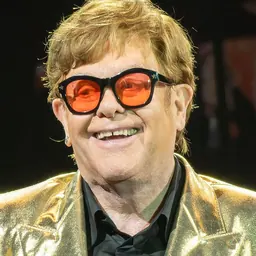



Related people
Same field, nearest in time


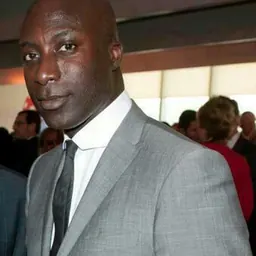


Contemporaries
People whose lives overlapped Maxine Feibelman's
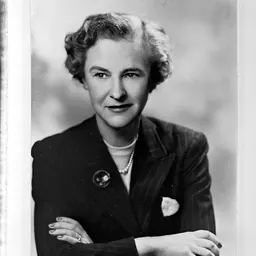

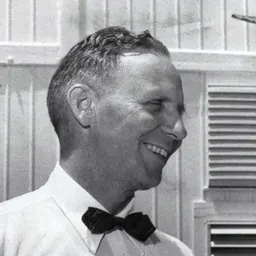


Frequently asked questions
Who is Maxine Feibelman?
American seamstress and art collector
When was Maxine Feibelman born?
Maxine Feibelman was born in 1952.
What is Maxine Feibelman's occupation?
Maxine Feibelman is a tailor, art collector and dancer.
What nationality is Maxine Feibelman?
Maxine Feibelman is American.
Sources & further reading
Cite this page
APA: Biography.guide. (2026). Maxine Feibelman. https://biography.guide/maxine-feibelman/
MLA: "Maxine Feibelman." Biography.guide, https://biography.guide/maxine-feibelman/.
Chicago: "Maxine Feibelman." Biography.guide. https://biography.guide/maxine-feibelman/.
Data last updated: 2026-09-24 · Spot an error? Report a correction.
Page generated 2026-09-27 05:02 UTC