
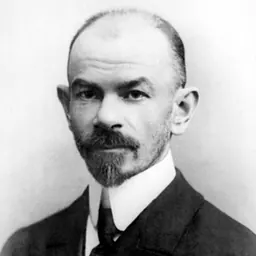
Maximos V Hakim
Melkite Greek Catholic Patriarch of Antioch
About Maximos V Hakim
Lived 1908 – 2001 (aged 93). Maximos V Hakim was an Egyptian catholic priest and catholic bishop.
Maximos V Hakim (; born George Selim Hakim; May 18, 1908 – June 29, 2001) was a Melkite Greek Catholic hierarch, who served as the Melkite Catholic Patriarch of Antioch from 1967 to 2000. He guided the Church through turbulent changes in the Middle East and rapid expansion in the Western hemisphere.
Life He was born George Selim Hakim at Tanta, Egypt, on May 18, 1908, to parents who were originally from Aleppo. He was educated locally and at Le Collège de la Sainte Famille (High School of the Holy Family) Jesuit school in Cairo. After completing his studies at St. Anne of Jerusalem, he was ordained a priest in the Basilica of St. Anne by Maximos IV Sayegh, then Archbishop of Tyre, on July 20, 1930. As a young priest he taught for a year in the patriarchal school in Beirut before returning to Cairo in 1931.
Episcopate He was appointed eparch on March 13, 1943, and consecrated Eparch of St. John of Acre, Haifa, Nazareth and all Galilee, in Cairo on June 13, 1943, by Patriarch Cyril IX Moghabghab, assisted by the Archbishops Dionysius Kfoury, Titular bishop of Tarsus dei Greco-Melkiti, and Pierre Medawar, Titular bishop of Pelusium dei Greco-Melkiti, patriarchal auxiliaries. On November 18, 1964, Hakim became Archeparch. He was elected Patriarch by the Holy Synod at Ain Traz on November 22, 1967, and his election was confirmed on November 26 of the same year.
As a priest, he distinguished himself by his running of the Patriarchal College in Cairo and by the launching and publication of the review Le Lien. Later, as an archbishop, he built schools, a junior seminary, an orphanage, a home for the elderly and several churches. He took particular care for the clergy and for the religious and secular orders and he brought in several groups of Europeans come to integrate themselves into the Church. As archbishop he spearheaded efforts to provide relief for Palestinians during the 1948 exodus.
Under his guidance as patriarch, a minor seminary was established at Damascus and later a major seminary for the formation of priests was opened at Raboueh in Lebanon. He later funded numerous scholarships for needy seminarians during the Lebanese Civil War. He also oversaw the growth of the Melkite church in North and South America as many of the faithful emigrated to the West.
Maximos condemned the violence that pitted Muslim against Christian in Lebanon, where Greek Catholics constitute 4% of the population.
In the 1950s, while he was Archbishop of Akka, the future patriarch was involved in the fate of the Palestinians of the two depopulated Christian villages of Kafr Bir'im and Iqrit. He alerted the Vatican and other Christian authorities about the expulsion of the villagers, and lobbied for their return. He said "the Arab League had issued orders exhorting the people to seek a temporary refuge in neighboring countries." The Israeli diplomat Abba Eban told the U.N. Special Political Committee in 1957 that Hakim said:The refugees had been confident that their absence from Palestine would not last long; that they would return within a few days [or] within a week or two; their leaders had promised them that the Arab armies would crush the 'Zionist gangs' very quickly and that there would be no need for panic or fear of a long exile.
Erskine Childers investigated the claims made about Hakim and the mass emigration of Arab Christians from Israel, and published in The Spectator on May 12, 1961, a letter from Hakim addressing the allegations: There is nothing in this statement to justify the construction which many propagandists had put on it, namely, that it established the allegation widely disseminated by partisan sources that the Arab leaders had urged the Arab inhabitants of Palestine to flee. As far as I can recollect, the aforesaid statement was intended to voice the strong feeling of resentment and revulsion felt by the refugees. They were convinced by what they had heard and read that the defeat of the Jewish armed forces, the re-establishment of peace and order throughout the country, and the institution of Arab rule, would be achieved within a short time. Instead of such achievements the Arab States had twice agreed to a truce, and the Arab armies were inactive. Hence the strong feeling of disappointment and frustration among the file and rank of refugees.
At no time did I state that the flight of the refugees was due to the orders, explicit or implicit, of their leaders, military or political, to leave the country and seek shelter in the adjacent Arab territories. On the contrary, no such orders were ever made by the military commanders, or by the Higher Arab Committee, or indeed, by the Arab League or Arab States. I have not the least doubt that any such allegations are sheer concoctions and falsifications... as soon as hostilities began between Israel and the Arab States, it became the settled policy of the Government to drive away the Arabs. The causes of the 1948 Palestinian expulsion and flight are still a subject of contentious debate among historians. However, findings since the 1980s by the 'New Historians', most prominently Benny Morris, cast doubt on the predominance of foreign, Arab-instigated mass evacuation as portrayed in the official Israeli account.
Works A prolific writer, Maximos is best remembered for his Arabic work Al Rabita and French works Message de Galiléerenc and Pages d'Évangile lues en Galilée.
Distinctions Founder and first Grand Master of the Patriarchal Order of the Holy Cross of Jerusalem
Don’t just read it —
keep it.
Full-length biographies made to live with: read them, listen on the way to work, watch them tonight.
- E-book
- Audio
- Video
Instant download · yours to keep · every purchase keeps this site free
Important facts
People in Maximos V Hakim's life
Named in this biography and alive at the same time

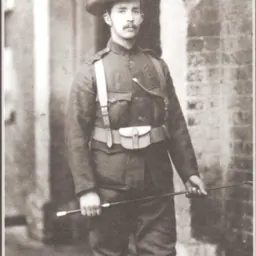
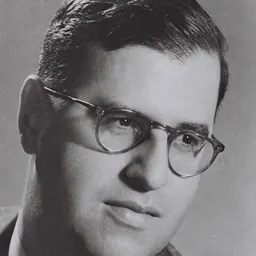


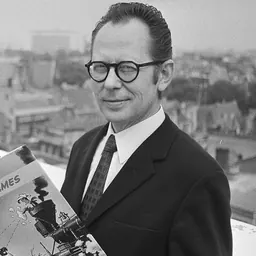

Related people
Same field, nearest in time

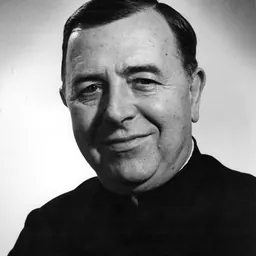
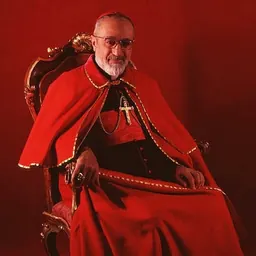
Contemporaries
People whose lives overlapped Maximos V Hakim's


Frequently asked questions
Who was Maximos V Hakim?
Melkite Greek Catholic Patriarch of Antioch (1908–2001)
When was Maximos V Hakim born?
Maximos V Hakim was born on 18 May 1908 in Tanta.
When did Maximos V Hakim die?
Maximos V Hakim died on 19 June 2001 in Beirut.
What was Maximos V Hakim's occupation?
Maximos V Hakim was a catholic priest and catholic bishop.
What nationality was Maximos V Hakim?
Maximos V Hakim was Egyptian.
Sources & further reading
Cite this page
APA: Biography.guide. (2026). Maximos V Hakim. https://biography.guide/maximos-v-hakim/
MLA: "Maximos V Hakim." Biography.guide, https://biography.guide/maximos-v-hakim/.
Chicago: "Maximos V Hakim." Biography.guide. https://biography.guide/maximos-v-hakim/.
Data last updated: 2026-09-20 · Spot an error? Report a correction.
Page generated 2026-09-27 05:33 UTC