
About Benny Morris
Born 1948. Benny Morris is an Israeli historian, journalist and university teacher, known for New Historians.
Benny Morris (; born 8 December 1948 ) is an Israeli historian. He was a professor of history in the Middle East Studies department of Ben-Gurion University of the Negev in the city of Beersheba, Israel. Morris was initially associated with the group of Israeli historians known as the "New Historians", a term he coined to describe himself and historians Avi Shlaim, Ilan Pappé and Simha Flapan.
Morris's 20th century work on the Arab–Israeli conflict and especially the Israeli–Palestinian conflict has won praise and criticism from both sides of the political divide. Despite regarding himself as a Zionist, he writes, "I embarked upon the research not out of ideological commitment or political interest. I simply wanted to know what happened." One of Morris's major works is the 1989 book The Birth of the Palestinian Refugee Problem, 1947–1948 which, based on then recently declassified Israeli archives, demonstrated that the 1948 exodus of Palestinian refugees was in large part a response to deliberate expulsions and violence by forces loyal to Israel, rather than the result of orders by Arab commanders as had often been historically claimed.
Scholars have perceived an ideological shift in Morris's work starting around 2000, during the Second Intifada. Morris's perspective has been described as having become more conservative and more negative towards Palestinians, viewing the 1948 expulsions as a justified act.
His father, Ya'akov Morris, was an Israeli diplomat, historian, and poet, while his mother, Sadie Morris, was a journalist. According to The New Yorker, Benny Morris "grew up in the heart of a left-wing pioneering atmosphere."
Morris served in the 1982 Lebanon War as an army reservist, taking part in the Siege of Beirut in a mortar unit. He also covered the war as a correspondent for The Jerusalem Post. The related news reports were also published in The Jerusalem Post in 1983.
He lives in Srigim (Li On) and is married with three children.
Israeli government In July 2019, Morris has sharply criticized the restrictions under the Netanyahu government of access to historical documents related to the 1948 Palestinian Arab exodus, referring to them as "totalitarian." At the same time, Morris pointed out that much of the criticism of this policy is hypocritical, because the archives of the Arab states remain entirely closed.
In August 2023, Morris was one of more than 1,500 U.S., Israeli, Jewish and Palestinian academics and public figures who signed an open letter stating that Israel operates "a regime of apartheid" and calling on US Jewish groups to speak out against the occupation in Palestine. In an October 2023 interview, he stated that he does not consider Israel an "apartheid state", but that when signing the letter mentioned above he meant to refer to Israel's occupation of the West Bank as "an apartheid regime based on nationalism".
Morris is critical of the Israeli settlements, calling it "counterproductive" because it will not assure Israel's security. He called some of the settlers "right-wing fanatics", who are violent towards their Palestinian neighbors. According to him, Israel should have withdrawn from the West Bank immediately after the Six-Day War, allowed the Jordanians to reoccupy the territory. In an interview with the Austrian newspaper Der Standard in May 2008, Morris argued that a pre-emptive nuclear strike on Iran may have to be used as a last resort to stop the Iranian nuclear program. Morris reiterated this view in an op-ed in Haaretz in June 2024, writing, "If Israel proves incapable of destroying the Iranian nuclear project using conventional weaponry, then it may not have any option but to resort to its nonconventional capabilities."
Israel's future In a 2019 interview with Haaretz, Morris took a pessimistic view of Israel's future, arguing that the Palestinians would not compromise and that ultimately "a situation in which we rule an occupied people that has no rights cannot persist in the 21st century, in the modern world". He claimed that as soon as the Palestinians did have rights, Israel would no longer be a Jewish state, and that it would descend into intercommunal violence with Jews ultimately becoming a persecuted minority and those who could emigrating. According to Morris, "the Palestinians look at everything from a broad, long-term perspective. They see that at the moment, there are five-six-seven million Jews here, surrounded by hundreds of millions of Arabs. They have no reason to give in, because the Jewish state can't last. They are bound to win. In another 30 to 50 years they will overcome us, come what may."
Published works
The Birth of the Palestinian Refugee Problem, 1947–1948
In his 1988 book, Morris retraces the stages of the 1948 Palestinian expulsion and flight. He meticulously examines the fate of each abandoned Palestinian village, the reason for its depopulation, and its subsequent fate. Morris also considers Israel's decision to bar the refugees' return and the international context. This book laid the foundation for Morris's reputation as the preeminent historian of the 1948 War. He suggests the possibility of something like a three-state solution in the form of a Palestinian confederation with Jordan.
The Thirty-Year Genocide, Turkey's Destruction of its Christian Minorities, 1894-1924
The book describes the Ottoman/Turkish destruction of the Armenian, Greek and Assyrian communities by the successive Ottoman, Young Turks' and Atatürk regimes, in which some two million Christians were murdered by their Muslim neighbors.
Reception Morris has won praise and criticism from both sides of the political divide.
Avi Shlaim Avi Shlaim, retired professor of international relations at the University of Oxford, and himself a New Historian, writes that Morris investigated the 1948 exodus of the Palestinians "as carefully, dispassionately, and objectively as it is ever likely to be", and that The Birth of the Palestinian Refugee Problem is an "outstandingly original, scholarly, and important contribution" to the study of the issue. Shlaim writes that many of Morris's critics cling to the tenets of "Old History", the idea of an Israel born untarnished, a David fighting the Arab Goliath. He argues that these ideas are simply false, created not by historians but by the participants in the 1948 war, who wrote about the events they had taken part in without the benefit of access to Israeli government archives, which were first opened up in the early 1980s.
However, Ben-Ami criticised Morris's drawing of an "awkward symmetry" between the Palestinian refugee crisis and the "forced emigration" of Jews from the Arab world. Like Yoav Gelber, he was also unconvinced by Morris's characterization of the 1948 conflict as an Islamic Jihad.
Yezid Sayigh, professor of Middle East Studies in the Department of War Studies at King's College London, writes of Karsh's criticism, "his is not the first time that Efraim Karsh has written a highly self-important rebuttal of revisionist history. He is simply not what he makes himself out to be, a trained historian (nor political/social scientist)." (Karsh responds that he has an undergraduate degree in modern Middle Eastern history, and Arabic language and literature, and a doctorate in political science and international relations.) Sayigh urges academics to compose "robust responses [to Karsh] that make sure that any self-respecting scholar will be too embarrassed to even try to incorporate the Karsh books in his/her teaching or research because they can't pretend they didn't know how flimsy their foundations are".
Morris responds that Karsh's article is a "mélange of distortions, half-truths, and plain lies that vividly demonstrates his profound ignorance of both the source material (his piece contains more than fifty footnotes but is based almost entirely on references to and quotations from secondary works, many of them of dubious value) and the history of the Zionist–Arab conflict. It does not deserve serious attention or reply." Anita Shapira, Dean of Tel Aviv University, argues "thirty of [Karsh's] references actually refer to writings by Shlaim and Morris, and fifteen others cite primary sources, and the rest refer to studies by major historians...."
Morris elsewhere argues that Karsh "belabor minor points while completely ignoring, and hiding from his readers, the main pieces of evidence" and argued, "... Karsh, while claiming to have 'demolished' the whole oeuvre, in fact deal with only four pages of Birth. These pages tried to show that the Zionist leadership during 1937–38 supported a 'transfer solution' to the prospective Jewish state's 'Arab problem. Commenting on the Revisited version of Morris'work, Karsh states that in "an implicit acknowledgement of their inaccuracy, Morris has removed some of The Birth s most inaccurate or distorted quotations about transfer."
Norman Finkelstein and Nur Masalha
Morris has also been criticised by Norman Finkelstein and Nur Masalha. They argue that Morris's conclusions have a pro-Israeli bias, in that he has not fully acknowledged that his work rests largely on selectively released Israeli documentation, while the most sensitive documents remain closed to researchers, and has more broadly treated the evidence in Israeli documents in an uncritical way, and not taking into account that they are, at times, apologetic. In relations to specific work on the 1948 Palestinian expulsion and flight, they assert that Morris minimised the number of expulsions, with Finkelstein writing that many events classified by Morris as "abandonment" or "military assault on settlement" were actually expulsions, and that when the conclusions of Morris's evidence are harsh for the Israelis he has tended to give them a less incriminating spin.
In a reply to Finkelstein and Masalha, Morris answers he "saw enough material, military and civilian, to obtain an accurate picture of what happened", that Finkelstein and Masalha draw their conclusions with a pro-Palestinian bias, and that with regard to the distinction between military assault and expulsion they should accept that he uses a "more narrow and severe" definition of expulsions. Morris holds to his conclusion that there was no transfer policy.
Ilan Pappé Benny Morris wrote a review critical of Ilan Pappé's 2004 book A History of Modern Palestine for The New Republic. Morris called Pappé's book "truly appalling". He says it subjugates history to political ideology, and "contains errors of a quantity and a quality that are not found in serious historiography". reviewing the first edition of Morris's book on Palestinian refugees, criticises Morris's decision, which Palumbo thinks characteristic of Israeli revisionist historians generally, to rely mainly on official, "carefully screened" Israeli sources, especially for radio transcripts of Arab broadcasts, while disregarding unofficial Israeli sources such as transcripts from the BBC and CIA, many of which point to a policy of expulsion. He says Morris failed to supplement his work in Israeli archives, many still classified, by U.N., American, and British archival sources that Palumbo considers objective on such issues as IDF atrocities, as well as oral testimonies of Palestinians and Israelis, which can be reliable if their substance can be independently verified. Palumbo commendsMorris' regard for documentation is indeed commendable, were it not for his tendency to choose sources which support his views, while avoiding those document collections which contain information inconsistent with his principal arguments. His decision not to use the testimony of Israeli veterans is unfortunate, since some of them have spoken candidly about Israeli atrocities and expulsion of civilians at Deir Yassin, Lydda–Ramle and Jaffa.
Baruch Kimmerling
In an article in HNN, Baruch Kimmerling discusses Morris's 2004 Haaretz interview in which Morris states:if he was already engaged in expulsion, maybe he should have done a complete job. I know that this stuns the Arabs and the liberals and the politically correct types. But my feeling is that this place would be quieter and know less suffering if the matter had been resolved once and for all. If Ben-Gurion had carried out a large expulsion and cleaned the whole country—the whole Land of Israel, as far as the Jordan River. It may yet turn out that this was his fatal mistake. If he had carried out a full expulsion—rather than a partial one—he would have stabilized the State of Israel for generations... Even the great American democracy could not have been created without the annihilation of the Indians. There are cases in which the overall, final good justifies harsh and cruel acts that are committed in the course of history.
Kimmerling describes Morris's views as "shocking" and says that Morris "has abandoned his historian's mantle and donned the armor of a Jewish chauvinist who wants the Land of Israel completely cleansed from Arabs" He criticizes the analysis of Morris as misunderstanding the impact of the refugee problem on the current conflict, and the magnitude of an even larger refugee population.
Yoav Gelber Yoav Gelber has praised Morris's 2008 book on the origins of the 1948 Israeli–Arab war, stating that "In general, however, 1948 is a praiseworthy achievement of research and analysis, the work of a historian unwilling to rest on his already considerable laurels." On the other hand, Gelber criticised Morris for granting too much importance to the militant Islamic rhetoric of the period.
Awards and recognition 2008: National Jewish Book Award in the History category for 1948: A History of the First Arab–Israeli War
List of publications The Birth of the Palestinian Refugee Problem, 1947–1949, Cambridge University Press, 1988. Israel's Secret Wars: A History of Israel's Intelligence Services, with Ian Black, New York, Grove Weidenfeld, 1991. Israel's Border Wars 1949–1956: Arab Infiltration, Israeli Retaliation, and the Countdown to the Suez War, Oxford, Clarendon Press, 1993. 1948 and after; Israel and the Palestinians, Clarendon Press, Oxford, 1994. Righteous Victims: A History of the Zionist–Arab Conflict, 1881–1999. New York: Alfred A. Knopf. 2001 [Original in 1999] Correcting a Mistake: Jews and Arabs in Palestine/Israel, 1936-1956, Am Oved Publishers, 2000. The Road to Jerusalem: Glubb Pasha, Palestine and the Jews. New York: I.B. Tauris, 2003. The Birth of the Palestinian Refugee Problem Revisited, Cambridge University Press, 2004. Making Israel (ed), University of Michigan Press, 2008. 1948: A History of the First Arab–Israeli War, Yale University Press, 2008. One State, Two States: Resolving the Israel/Palestine Conflict, Yale University Press, 2009. The Thirty-Year Genocide: Turkey's Destruction of Its Christian Minorities, 1894-1924 (co-authored with Dror Ze'evi), Harvard University Press, 2019. Sidney Reilly: Master Spy, Yale University Press, 2022.
Don’t just read it —
keep it.
Full-length biographies made to live with: read them, listen on the way to work, watch them tonight.
- E-book
- Audio
- Video
Instant download · yours to keep · every purchase keeps this site free
Important facts
People in Benny Morris's life
Named in this biography and alive at the same time
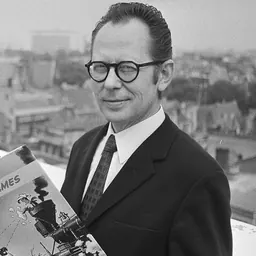
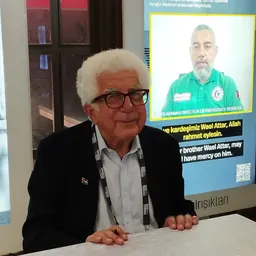






Related people
Same field, nearest in time
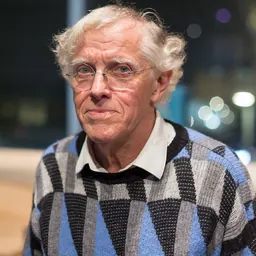
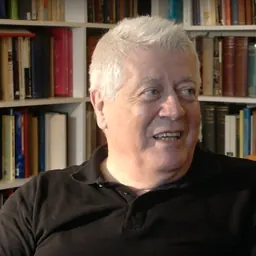



Contemporaries
People whose lives overlapped Benny Morris's


Frequently asked questions
Who is Benny Morris?
Israeli historian (born 1948)
When was Benny Morris born?
Benny Morris was born on 8 December 1948 in Ein HaHoresh.
What is Benny Morris's occupation?
Benny Morris is a historian, journalist and university teacher.
What is Benny Morris known for?
Benny Morris is known for New Historians.
What nationality is Benny Morris?
Benny Morris is Israeli.
Sources & further reading
Cite this page
APA: Biography.guide. (2026). Benny Morris. https://biography.guide/benny-morris/
MLA: "Benny Morris." Biography.guide, https://biography.guide/benny-morris/.
Chicago: "Benny Morris." Biography.guide. https://biography.guide/benny-morris/.
Data last updated: 2026-09-22 · Spot an error? Report a correction.
Page generated 2026-09-27 05:28 UTC