
About Max Weil
Lived 1869 – 1944 (aged 74–75). Max Weil was an American conductor, violinist, musician and composer.
Max Weil. Photo published in the May 1927 issue of Musical West and Northwest Musician. Max Weil (November 21, 1869 — February 18, 1944) was an American violinist, conductor, composer, and music educator. He is chiefly remembered for his contributions to music in the city of Halifax, Nova Scotia in Canada. His parents were Samuel Weil and Bertha Weil (née Simon). His family was Jewish. There he was a pupil of violinists Adolf Brodsky and Hans Sitt.
After returning to the United States, Weil gave his first public performance at the Reform Congregation Keneseth Israel (RCKI) in Philadelphia where he played as a soloist during religious services in September 1890. and that same month performed violin duo works with Harry Herzberg in the RCKI's chamber music concert series. He continued to perform regularly during concerts, religious services, and public events such as funerals and weddings at the RCKI in 1891.
On March 12, 1891, Weil made his New York recital debut at Steinway Hall. His repertoire in that concert included violin concertos by Louis Spohr and the Polonaise de Concert, Op. 4 by Henryk Wieniawski. He also performed songs with tenor Henry Duzensi in that concert and with pianist Max Liebling. In June 1891 he was the violin soloist in a concert given at Philadelphia's Mercantile Hall at 847 N. Franklin St in which he performed with the band of the 3rd U.S. Infantry Regiment under conductor Herman Solomon. On October 21, 1891, he performed in concert with contralto Weda Cook (1867–1937), pianist Maurits Leefson (1861-1926), and cellist Rudolph Hennig (1845-1904) at the Pennsylvania Academy of the Fine Arts.
At the end of October 1891 Weil left Philadelphia to begin a position as violinist in the New York Symphony Orchestra under conductor Walter Damrosch. He played with that orchestra for two years. He also concurrently taught violin in Philadelphia, operating a violin studio at 1796 Chestnut St, and was the second violinist in George Lehmann's string quartet whose other members included violist Paul Stoeving (1861-1948) and cellist Franz Meyer. With this latter group he performed in 26 weeks of chamber music concerts in the 1892-1893 season.
Music educator, violinist, and conductor in Halifax The Canadian Encyclopedia states that Max Weil was appointed head of the violin department at the Halifax Conservatory of Music in c. 1892. That same paper reported that he remained in Philadelphia until mid-September 1893 when he left for Halifax, Nova Scotia to take a new position as a music instructor at the "Women's College of Halifax". When returning to the United States for a vacation in September 1894, it was reported that Weil would return to his post as "director and instructor of music at the Ladies' College in Halifax, Nova Scotia."
The Halifax Ladies' College was closely affiliated with Halifax Conservatory of Music, and was managed by the same governing board from the time both institutions were concurrently co-established in 1887 by the minister Robert Laning until 1952. While some sources refer to them as separate but related entities, Given the discrepancy between sources in relation to the schools being a single unified institution, and two separate institutions, its possible Weil worked for one or both institutions. However, multiple sources indicate Weil was the head of the violin faculty at the Halifax Conservatory of Music in the 1890s until his resignation in 1900. He left the school to establish his own music school in Halifax, the Weil School of Music, which he operated from 1900-1908. Weil also conducted and produced operas in Halifax, beginning with a production of Friedrich von Flotow's Martha in 1896. Other operas he produced and conducted in the city included Charles Gounod's Faust and Michael William Balfe's The Bohemian Girl. During that time he also was the second violinist in the Sansone Quartet, a string quartet based in Saint Paul, Minnesota that was founded by the Naples born composer and violinst (b. 1859).
In late 1912 he returned to Canada when he was appointed conductor of the Calgary Symphony Orchestra, making his debut with the orchestra in a concert on January 27, 1913. In August 1914 World War I began, and soon after Weil left Canada for Los Angeles; a decision which The Canadian Encyclopedia attributed to his German heritage;
He died in that city on February 18, 1944, at the age of 74.
Don’t just read it —
keep it.
Full-length biographies made to live with: read them, listen on the way to work, watch them tonight.
- E-book
- Audio
- Video
Instant download · yours to keep · every purchase keeps this site free
Important facts
People in Max Weil's life
Named in this biography and alive at the same time

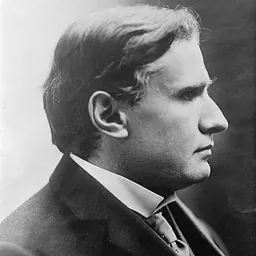


Related people
Same field, nearest in time

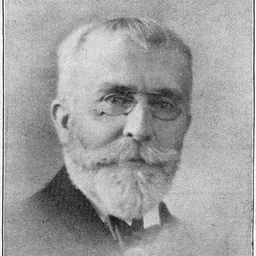

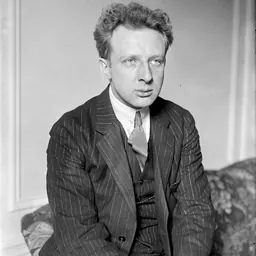

Contemporaries
People whose lives overlapped Max Weil's




Frequently asked questions
Who was Max Weil?
American violinist, conductor, composer and music educator
When was Max Weil born?
Max Weil was born in 1869.
When did Max Weil die?
Max Weil died in 1944.
What was Max Weil's occupation?
Max Weil was a conductor, violinist, musician and composer.
What nationality was Max Weil?
Max Weil was American.
Sources & further reading
Cite this page
APA: Biography.guide. (2026). Max Weil. https://biography.guide/max-weil/
MLA: "Max Weil." Biography.guide, https://biography.guide/max-weil/.
Chicago: "Max Weil." Biography.guide. https://biography.guide/max-weil/.
Data last updated: 2026-09-20 · Spot an error? Report a correction.
Page generated 2026-09-27 05:27 UTC