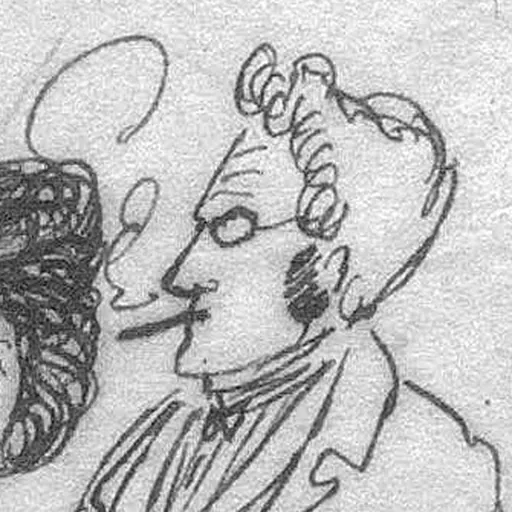
About Max Stirner
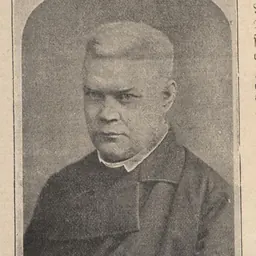
Lived 1806 – 1856 (aged 49). Max Stirner was a German philosopher, journalist, translator, writer, educator and professor of philosophy.
Philosophy
Stirner, whose main philosophical work was The Unique and Its Property, is credited as a major influence in the development of nihilism, existentialism and post-modernism as well as individualist anarchism, post-anarchism and post-left anarchy. He also influenced illegalists, feminists, nihilists and bohemians, as well as fascists, right-libertarians and anarcho-capitalists. Stirner was opposed to communism for the same reasons he opposed christianity, capitalism, humanism, liberalism, property rights and nationalism, seeing them as forms of unacceptable authority over the individual. Stirner also influenced anarcho-communists and post-left anarchists. The writers of An Anarchist FAQ report that "many in the anarchist movement in Glasgow, Scotland, took Stirner's 'Union of egoists' literally as the basis for their anarcho-syndicalist organising in the 1940s and beyond." Similarly, the noted anarchist historian Max Nettlau states that "n reading Stirner, I maintain that he cannot be interpreted except in a socialist sense." Stirner was anti-capitalist and pro-labour, attacking "the division of labour resulting from private property for its deadening effects on the ego and individuality of the worker" and writing that free competition "is not 'free,' because I lack the things for competition. [...] Under the regime of the commonality the labourers always fall into the hands of the possessors of the capitalists [...]. The labourer cannot realise on his labour to the extent of the value that it has for the customer. [...] The state rests on the slavery of labour. If labour becomes free, the state is lost." For Stirner, "Labor has an egoistic character; the laborer is the egoist."
Egoism
Stirner's egoism argues that individuals are impossible to fully comprehend, as no understanding of the self can adequately describe the fullness of experience. Stirner has been broadly understood as containing traits of both psychological egoism and rational egoism. Unlike the self-interest described by Ayn Rand, Stirner did not address individual self-interest, selfishness, or prescriptions for how one should act. He urged individuals to decide for themselves and fulfill their own egoism. He advocates egoism and a form of amoralism in which individuals would unite in Unions of egoists only when it was in their self-interest to do so. For him, property simply comes about through might, saying: "Whoever knows how to take and to defend the thing, to him belongs [property]. [...] What I have in my power, that is my own. So long as I assert myself as holder, I am the proprietor of the thing." He adds that "I do not step shyly back from your property, but look upon it always as my property, in which I respect nothing. Pray do the like with what you call my property!" Stirner considers the world and everything in it, including other persons, available to one's taking or use without moral constraint and that rights do not exist in regard to objects and people at all. He sees no rationality in taking the interests of others into account unless doing so furthers one's self-interest, which he believes is the only legitimate reason for acting. He denies society as being an actual entity, calling society a "spook" and that "the individuals are its reality."
Despite being labeled as anarchist, Stirner was not necessarily one. Separation of Stirner and egoism from anarchism was first done in 1914 by Dora Marsden in her debate with Benjamin Tucker in her journals The New Freewoman and The Egoist.
Communism Stirner suggested that communism was tainted with the same idealism as Christianity and infused with superstitious ideas like morality and justice. Stirner's principal critique of socialism and communism was that they ignored the individual; they aimed to hand ownership over to the abstraction society, which meant that no existing person actually owned anything.
The Anarchist FAQ writes that "hile some may object to our attempt to place egoism and communism together, it is worth pointing out that Stirner rejected 'communism'. Stirner did not subscribe to libertarian communism, because it did not exist when he was writing and so he was directing his critique against the various forms of state communism which did. Moreover, this does not mean that anarcho-communists and others may not find his work of use to them. And Stirner would have approved, for nothing could be more foreign to his ideas than to limit what an individual considers to be in their best interest."
Revolution Stirner criticizes conventional notions of revolution, arguing that social movements aimed at overturning established ideals are tacitly idealist because they are implicitly aimed at the establishment of a new ideal thereafter. "Revolution and insurrection must not be looked upon as synonymous. The former consists in an overturning of conditions, of the established condition or status, the State or society, and is accordingly a political or social act; the latter has indeed for its unavoidable consequence a transformation of circumstances, yet does not start from it but from men's discontent with themselves, is not an armed rising, but a rising of individuals, a getting up, without regard to the arrangements that spring from it. The Revolution aimed at new arrangements; insurrection leads us no longer to let ourselves be arranged, but to arrange ourselves, and sets no glittering hopes on 'institutions'. It is not a fight against the established, since, if it prospers, the established collapses of itself; it is only a working forth of me out of the established. If I leave the established, it is dead and passes into decay."
Union of egoists
Stirner's idea of the Union of egoists was first expounded in The Unique and Its Property. The Union is understood as a non-systematic association, which Stirner proposed in contradistinction to the state. Unlike a "community" in which individuals are obliged to participate, Stirner's suggested Union would be voluntary and instrumental under which individuals would freely associate insofar as others within the Union remain useful to each constituent individual. The Union relation between egoists is continually renewed by all parties' support through an act of will. Some such as Svein Olav Nyberg argue that the Union requires that all parties participate out of a conscious egoism while others such as Sydney E. Parker regard the union as a "change of attitude," rejecting its previous conception as an institution.
Response to Hegelianism Scholar Lawrence Stepelevich states that G. W. F. Hegel was a major influence on The Unique and Its Property. While the latter has an "un-Hegelian structure and tone" on the whole and is hostile to Hegel's conclusions about the self and the world, Stepelevich states that Stirner's work is best understood as answering Hegel's question of the role of consciousness after it has contemplated "untrue knowledge" and become "absolute knowledge." Stepelevich concludes that Stirner presents the consequences of the rediscovering one's self-consciousness after realizing self-determination.
Scholars such as Douglas Moggach and Widukind De Ridder have stated that Stirner was obviously a student of Hegel, like his contemporaries Ludwig Feuerbach and Bruno Bauer, but this does not necessarily make him a Hegelian. Contrary to the Young Hegelians, Stirner scorned all attempts at an immanent critique of Hegel and the Enlightenment and renounced Bauer and Feuerbach's emancipatory claims as well. Contrary to Hegel, who considered the given as an inadequate embodiment of rational, Stirner leaves the given intact by considering it a mere object, not of transformation, but of enjoyment and consumption ("His Own").
According to Moggach, Stirner does not go beyond Hegel, but he in fact leaves the domain of philosophy in its entirety, stating:
Works The False Principle of Our Education In 1842, The False Principle of Our Education (Das unwahre Prinzip unserer Erziehung) was published in Rheinische Zeitung, which was edited by Marx at the time. Written as a reaction to the treatise Humanism vs. Realism, written by . Stirner explains that education in either the classical humanist method or the practical realist method still lacks true value. He states that "the final goal of education can no longer be knowledge". Asserting that "only the spirit which understands itself is eternal", Stirner calls for a shift in the principle of education from making us "masters of things" to making us "free natures", naming his educational principle "personalist".
Art and Religion Art and Religion (Kunst und Religion) was also published in Rheinische Zeitung on 14 June 1842. It addresses Bruno Bauer and his publication against Hegel called Hegel's Doctrine of Religion and Art Judged From the Standpoint of Faith. Bauer had inverted Hegel's relation between "Art" and "Religion" by claiming that "Art" was much more closely related to "Philosophy" than to "Religion", based on their shared determinacy and clarity, and a common ethical root. However, Stirner went beyond both Hegel and Bauer's criticism by asserting that "Art" rather created an object for "Religion" and could thus by no means be related to what Stirner considered—in opposition with Hegel and Bauer—to be "Philosophy", stating:
Stirner deliberately left "Philosophy" out of the dialectical triad (Art–Religion–Philosophy) by claiming that "Philosophy" does not "bother itself with objects" (Religion), nor does it "make an object" (Art). In Stirner's account, "Philosophy" was in fact indifferent towards both "Art" and "Religion." Stirner thus mocked and radicalised Bauer's criticism of religion.
The book proclaims that all religions and ideologies rest on empty concepts. The same holds true for society's institutions that claim authority over the individual, be it the state, legislation, the church, or the systems of education such as universities. Stirner's argument explores and extends the limits of criticism, aiming his critique especially at those of his contemporaries, particularly Ludwig Feuerbach and Bruno Bauer, also at popular ideologies, including communism, humanism (which he regarded as analogous to religion with the abstract Man or humanity as the supreme being), liberalism, and nationalism as well as capitalism, religion and statism, arguing:
Stirner's Critics
Stirner's Critics (Recensenten Stirners) was published in September 1845 in Wigands Vierteljahrsschrift. It is a response, in which Stirner refers to himself in the third-person, to three critical reviews of The Unique and Its Property by Moses Hess in Die letzten Philosophen (The Last Philosophers), by a certain Szeliga (alias of an adherent of Bruno Bauer) in an article in the journal Norddeutsche Blätter, and by Ludwig Feuerbach anonymously in an article called On 'The Essence of Christianity' in Relation to Stirner's 'The Unique and Its Property''' (Über 'Das Wesen des Christentums' in Beziehung auf Stirners 'Der Einzige und sein Eigentum) in Wigands Vierteljahrsschrift.
The Philosophical Reactionaries The Philosophical Reactionaries (Die Philosophischen Reactionäre) was published in 1847 in Die Epigonen, a journal edited by Otto Wigand from Leipzig. At the time, Wigand had already published The Unique and Its Property and was about to finish the publication of Stirner's translations of Adam Smith and Jean-Baptiste Say. As the subtitle indicates, The Philosophical Reactionaries was written in response to a 1847 article by Kuno Fischer (1824–1907) entitled The Modern Sophists (Die Moderne Sophisten). The article was signed G. Edward and its authorship has been disputed ever since John Henry Mackay "cautiously" attributed it to Stirner and included it in his collection of Stirner's lesser writings. It was first translated into English in 2011 by Widukind De Ridder and the introductory note explains:
The majority of the text deals with Kuno Fischer's definition of sophism. With much wit, the self-contradictory nature of Fischer's criticism of sophism is exposed. Fischer had made a sharp distinction between sophism and philosophy while at the same time considering it as the "mirror image of philosophy". The sophists breathe "philosophical air" and were "dialectically inspired to a formal volubility". Stirner's answer is striking:
Looking back on The Unique and Its Property, Stirner claims that "Stirner himself has described his book as, in part, a clumsy expression of what he wanted to say. It is the arduous work of the best years of his life, and yet he calls it, in part, 'clumsy'. That is how hard he struggled with a language that was ruined by philosophers, abused by state-, religious- and other believers, and enabled a boundless confusion of ideas".
History of Reaction History of Reaction (Geschichte der Reaktion) was published in two volumes in 1851 by Allgemeine Deutsche Verlags-Anstalt and immediately banned in Austria.
Some people believe that in a sense a "second positive part" was soon to be added, though not by Stirner, but by Friedrich Nietzsche. The relationship between Nietzsche and Stirner seems to be much more complicated. According to George J. Stack's Lange and Nietzsche, Nietzsche read Lange's History of Materialism "again and again" and was therefore very familiar with the passage regarding Stirner.
Influence While Der Einzige was a critical success and attracted much reaction from famous philosophers after publication, it was out of print and the notoriety that it had provoked had faded many years before Stirner's death. As the art critic and Stirner admirer Herbert Read observed, the book has remained "stuck in the gizzard" of Western culture since it first appeared.
Many thinkers have read and been affected by The Unique and Its Property in their youth including Rudolf Steiner, Gustav Landauer, Victor Serge, Carl Schmitt and Jürgen Habermas. Few openly admit any influence on their own thinking. Ernst Jünger's book Eumeswil, had the character of the Anarch, based on Stirner's Einzige. Some have tried to use Stirner's ideas to defend capitalism while others have used them to argue for anarcho-syndicalism.
Several other authors, philosophers and artists have cited, quoted or otherwise referred to Max Stirner. They include Albert Camus in The Rebel (the section on Stirner is omitted from the majority of English editions including Penguin's), Benjamin Tucker, James Huneker, Dora Marsden, Renzo Novatore, Emma Goldman, Georg Brandes, John Cowper Powys, Martin Buber, Sidney Hook, Robert Anton Wilson, Horst Matthai, Frank Brand, Marcel Duchamp, several writers of the Situationist International including Raoul Vaneigem and Max Ernst. Oscar Wilde's The Soul of Man Under Socialism has caused some historians to speculate that Wilde (who could read German) was familiar with the book.
Anarchist movement
Stirner's philosophy was important in the development of modern anarchist thought, particularly individualist anarchism and egoist anarchism. Although Stirner is usually associated with individualist anarchism, he was influential to many social anarchists such as anarcha-feminists Emma Goldman and Federica Montseny. In European individualist anarchism, he influenced its major proponents after him such as Émile Armand, Han Ryner, Renzo Novatore, John Henry Mackay, Miguel Giménez Igualada and Lev Chernyi.
In American individualist anarchism, he found adherence in Benjamin Tucker and his magazine Liberty while these abandoned natural rights positions for egoism. Several periodicals "were undoubtedly influenced by Liberty's presentation of egoism". They included I, published by Clarence Lee Swartz and edited by William Walstein Gordak and J. William Lloyd (all associates of Liberty); and The Ego and The Egoist, both of which were edited by Edward H. Fulton. Among the egoist papers that Tucker followed, there were the German Der Eigene, edited by Adolf Brand; and The Eagle and The Serpent, issued from London. The latter, the most prominent English-language egoist journal, was published from 1898 to 1900 with the subtitle A Journal of Egoistic Philosophy and Sociology. In the 1970s, an American Situationist collective called For Ourselves published a book called The Right To Be Greedy: Theses On The Practical Necessity Of Demanding Everything in which they advocate a "communist egoism" basing themselves on Stirner.
Later in the United States, it emerged the tendency of post-left anarchy which was influenced profoundly by Stirner in aspects such as the critique of ideology. Jason McQuinn says that "when I (and other anti-ideological anarchists) criticize ideology, it is always from a specifically critical, anarchist perspective rooted in both the skeptical, individualist-anarchist philosophy of Max Stirner". Bob Black and Feral Faun/Wolfi Landstreicher strongly adhere to Stirnerist egoism. In the hybrid of post-structuralism and anarchism called post-anarchism, Saul Newman has written on Stirner and his similarities to post-structuralism. Insurrectionary anarchism also has an important relationship with Stirner as can be seen in the work of Wolfi Landstreicher and Alfredo Bonanno who has also written on him in works such as Max Stirner and Max Stirner and Anarchism.
Free love, homosexuals and feminists
German Stirnerist Adolf Brand produced the homosexual periodical Der Eigene in 1896. This was the first ongoing homosexual publication in the world and ran until 1931. The name was taken from the writings of Stirner (who had greatly influenced the young Brand) and refers to Stirner's concept of "self-ownership" of the individual. Another early homosexual activist influenced by Stirner was John Henry Mackay. Feminists influenced by Stirner include anarchist Emma Goldman, as well as Dora Marsden who founded the journals The Freewoman, The New Freewoman, and The Egoist. Stirner also influenced free love and polyamory propagandist Émile Armand in the context of French individualist anarchism of the early 20th century which is known for "he call of nudist naturism, the strong defense of birth control methods, the idea of "unions of egoists" with the sole justification of sexual practices".
Post-structuralism
In his book Specters of Marx, influential French poststructuralist thinker Jacques Derrida dealt with Stirner and his relationship with Marx while also analysing Stirner's concept of "specters" or "spooks". Gilles Deleuze, another key thinker associated with post-structuralism, mentions Stirner briefly in his book The Logic of Sense. Saul Newman calls Stirner a proto-poststructuralist who on the one hand had essentially anticipated modern post-structuralists such as Foucault, Lacan, Deleuze and Derrida, but on the other had already transcended them, thus providing what they were unable to—i.e. a ground for a non-essentialist critique of present liberal capitalist society. This is particularly evident in Stirner's identification of the self with a "creative nothing", a thing that cannot be bound by ideology, inaccessible to representation in language.
Karl Marx and Friedrich Engels Friedrich Engels commented on Stirner in poetry at the time of Die Freien:
Engels once even recalled at how they were "great friends" (Duzbrüder).
Later, Marx and Engels wrote a major criticism of Stirner's work. The number of pages Marx and Engels devote to attacking Stirner in the unexpurgated text of The German Ideology exceeds the total of Stirner's written works. In the book Stirner is derided as Sankt Max (Saint Max) and as Sancho (a reference to Cervantes' Sancho Panza). As Isaiah Berlin has described it, Stirner "is pursued through five hundred pages of heavy-handed mockery and insult." The book was written in 1845–1846, but it was not published until 1932. Marx's lengthy ferocious polemic against Stirner has since been considered an important turning point in Marx's intellectual development from idealism to materialism. It has been argued that historical materialism was Marx's method of reconciling communism with a Stirnerite rejection of morality.
Possible influence on Friedrich Nietzsche
The ideas of Stirner and Friedrich Nietzsche have often been compared and many authors have discussed apparent similarities in their writings, sometimes raising the question of influence. During the early years of Nietzsche's emergence as a well-known figure in Germany, the only thinker discussed in connection with his ideas more often than Stirner was Arthur Schopenhauer. It is certain that Nietzsche read about The Unique and Its Property, which was mentioned in Friedrich Albert Lange's History of Materialism and Karl Robert Eduard von Hartmann's Philosophy of the Unconscious, both of which Nietzsche knew well. However, there is no indication that he actually read it as no mention of Stirner is known to exist anywhere in Nietzsche's publications, papers or correspondence. In 2002, a biographical discovery revealed it is probable that Nietzsche had encountered Stirner's ideas before he read Hartmann and Lange in October 1865, when he met with Eduard Mushacke, an old friend of Stirner's during the 1840s.
As soon as Nietzsche's work began to reach a wider audience, the question of whether he owed a debt of influence to Stirner was raised. As early as 1891 when Nietzsche was still alive, though incapacitated by mental illness, Hartmann went so far as to suggest that he had plagiarized Stirner. By the turn of the century, the belief that Nietzsche had been influenced by Stirner was so widespread that it became something of a commonplace at least in Germany, prompting one observer to note in 1907 that "Stirner's influence in modern Germany has assumed astonishing proportions, and moves in general parallel with that of Nietzsche. The two thinkers are regarded as exponents of essentially the same philosophy."
From the beginning of what was characterized as "great debate" regarding Stirner's possible positive influence on Nietzsche, serious problems with the idea were nonetheless noted. By the middle of the 20th century, if Stirner was mentioned at all in works on Nietzsche, the idea of influence was often dismissed outright or abandoned as unanswerable. However, the idea that Nietzsche was influenced in some way by Stirner continues to attract a significant minority, perhaps because it seems necessary to explain the oft-noted (though arguably superficial) similarities in their writings. In any case, the most significant problems with the theory of possible Stirner influence on Nietzsche are not limited to the difficulty in establishing whether the one man knew of or read the other. They also consist in determining if Stirner in particular might have been a meaningful influence on a man as widely read as Nietzsche.
Rudolf Steiner The individualist anarchist orientation of Rudolf Steiner's early philosophy—before he turned to theosophy around 1900—has strong parallels to and was admittedly influenced by Stirner's conception of the ego, for which Steiner claimed to have provided a philosophical foundation.
Don’t just read it —
keep it.
Full-length biographies made to live with: read them, listen on the way to work, watch them tonight.
- E-book
- Audio
- Video
Instant download · yours to keep · every purchase keeps this site free
Important facts
People in Max Stirner's life
Named in this biography and alive at the same time
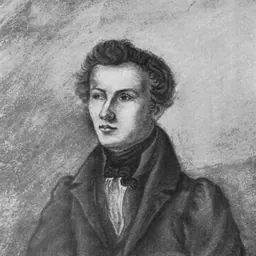
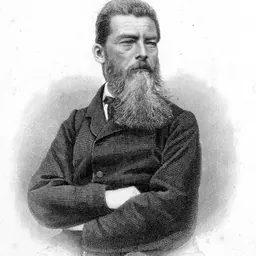
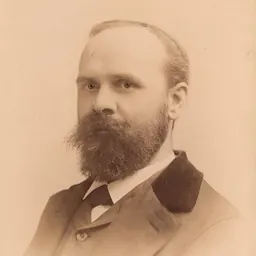


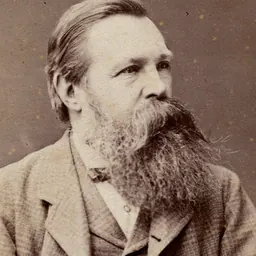
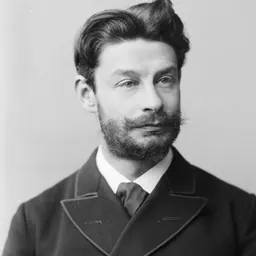
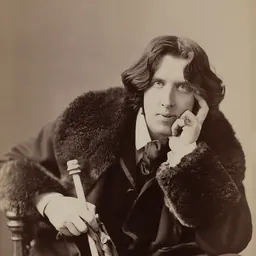
Related people
Same field, nearest in time
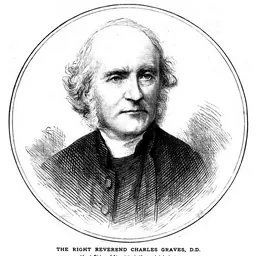




Contemporaries
People whose lives overlapped Max Stirner's






Frequently asked questions
Who was Max Stirner?
German philosopher (1806–1856)
When was Max Stirner born?
Max Stirner was born on 25 October 1806 in Bayreuth.
When did Max Stirner die?
Max Stirner died on 26 June 1856 in Berlin.
What was Max Stirner's occupation?
Max Stirner was a philosopher, journalist, translator, writer, educator and professor of philosophy.
What nationality was Max Stirner?
Max Stirner was German.
Sources & further reading
Cite this page
APA: Biography.guide. (2026). Max Stirner. https://biography.guide/max-stirner/
MLA: "Max Stirner." Biography.guide, https://biography.guide/max-stirner/.
Chicago: "Max Stirner." Biography.guide. https://biography.guide/max-stirner/.
Data last updated: 2026-09-20 · Spot an error? Report a correction.
Portrait: Wikimedia Commons · author & licence
Page generated 2026-09-27 04:57 UTC