
Max Mermelstein
American drug trafficker
About Max Mermelstein
Lived 1942 – 2008 (aged 65). Max Mermelstein was an American drug trafficker.
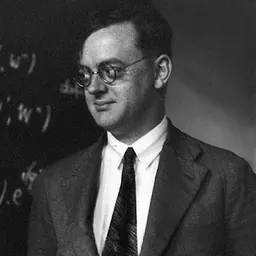
Max Mermelstein (November 1, 1942 – September 12, 2008) was an American drug smuggler for the Medellín Cartel in the late 1970s and early 80s, who later became a key informant against the organization. In the words of James P. Walsh, the U.S. Attorney for Los Angeles CA, Mermelstein "was probably the single most valuable government witness in drug matters that this country has ever known." He became a "weapon for the government".
Early life Mermelstein grew up in Brooklyn. He trained as a mechanical engineer at the New York Institute of Technology. He was also an armorer in the National Guard and knew how to handle explosives after having taken several demolition courses.
In 1979, still fearing for his life and the lives of his family, Mermelstein started working full-time for Cardona, who had become the cartel point man in the United States. Working mainly for Jorge Luis Ochoa through Cardona, Mermelstein not only became intimate with the operations of the dominant drug smuggling network at the time called the Medellín Cartel, but vastly improved it. He was responsible for managing the logistics of drug shipments to the United States which included arranging flights, locating drop points, and scheduling deliveries.
In the late 1970s, the Colombian drug trade was still in its infancy but after just a few flights, Mermelstein was a multi-millionaire. Within six years, he turned a multimillion-dollar-a-year mom-and-pop cocaine industry into a multibillion-dollar-a-year trade.
Because of his unparalleled success, Mermelstein was present at high-council Medellín Cartel meetings and was the only American ever allowed to sit with the cartel leaders. Other honors bestowed on Mermelstein included a Medellín invitation to the baptism of Cardona's youngest son, which was attended by all the cartel leaders.
Participation in Barry Seal's contract murder After fellow drug trafficker Barry Seal agreed to testify against Jorge Ochoa, the reputed leader of the Medellín cartel, Seal was "marked for death." Wanting an American to supervise the job, the other members of the cartel turned to Mermelstein, the one American they all trusted. It was during this time that Mermelstein was offered $1 million to kidnap Seal and $500,000 to kill him. who spent just two years and 21 days in jail and received a $250,000 bonus for cooperating with the government on one drug acknowledged on the stand that he helped plan the contract murder of Seal in Louisiana.
Mermelstein stalled on the assassination attempt as long as possible, but pressure from both sides became too great. Federal prosecutors say it was the investigation into automaker John DeLorean's alleged cocaine-dealing charges on which he was ultimately that led them to Mermelstein.
Mermelstein's arrest In 1985 Mermelstein was arrested while driving near his home in Davie, Florida. In addition to $20,000 in his glove compartment and a .22-caliber Walther, the federal government confiscated $1.2 million in cash and property owned by Mermelstein at the time of his arrest. Fred Friedman -- a former assistant U.S. attorney who prosecuted Mermelstein in Los Angeles -- said "When they arrested him, he was driving his Jaguar, and it was like something out of Miami Vice. The agents surrounded him, and they said it seemed like he had known that he was being surveiled the previous week, and it almost appeared to them like there was a sigh of relief, like he knew it had to happen."
Mermelstein lived under the alias Wes Barclay and worked as chief engineer for the Westgate Vacation Villas in Kissimmee, Florida.
Mermelstein's testimony helped bring down the Medellín Cartel's distributors in Miami. In 1985, after he turned informant, a three million dollar contract was placed on his head, which remained until his death in 2008. Mermelstein provided testimony to grand juries in New Orleans, Miami and Los Angeles.
As a direct result of Mermelstein's testimony, indictments were returned against Fabio Ochoa Vasquez, head of the Ochoa family's operations in Medellín; Pablo Escobar Gaviria, infamous Colombian drug lord and narcoterrorist who headed the Gaviria drug family, and Rafael Cardona Salazar, the elusive drug kingpin who headed the cartel's operations in the United States. Together, the Medellín cartel families are believed to have grossed an estimated $7 billion a year in the United States.
Justice Department officials said Mermelstein provided narcotics investigators with some of the best intelligence data on the cartel and its methods.
Prison sentence reduced In an unexpected move, U.S. District Judge James M. Ideman ordered Mermelstein released after the two years he served in prison since his arrest, declaring that he was sending "a message to Medellin, Colombia." The judge stated "I'd like to see the country get the best mileage it can out of Mr. Mermelstein." Walsh, who argued for a 10-year sentence, was originally incensed. "At the time, I thought it was unduly generous," he said last week, a few days after the sentencing. "I've had time in the last few days to think about it, and I think the judge made the right move."
An unprecedented security measure was taken to protect the mystery guest, as the hearing room was cleared of the public, press and committee staff. After federal marshals seated the witness and placed a screen so that only Senator Biden could see him, others were readmitted to the room. With a three-million dollar contract on his life, Mermelstein was flanked by several deputy marshals and spoke through an electronic voice modulator.
A witness of unprecedented value Just as Pablo Escobar went to extreme measures to kill Mermelstein, the U.S. Government went to extreme measures to protect him. So much so that Gerald Shur, creator of the Federal Witness Protection Program, went into hiding in his own program after the FBI arrested a German assassin who confessed he was contracted by Escobar to kidnap Shur's wife in exchange for Mermelstein's whereabouts. Gerald Shur and his wife, Miriam, were forced into hiding for a year and a half until Escobar's death.
Associate Jon Roberts' self-proclaimed tale was chronicled in the documentary Cocaine Cowboys (2006), an indie hit that spawned a 2008 sequel. He appears in archive footage in the reloaded version of this documentary near the end.
An HBO series and a film by Paramount Pictures — starring Mark Wahlberg, according to Variety — are in the works.
Documentary producer Alfred Spellman of Cocaine Cowboys states on his website rakontur.com, "Jeff Leen's book Kings of Cocaine led me to Max's book, The Man Who Made it Snow, which in turn led us to Jon Roberts and Mickey Munday. We had tried to feature Max for Cocaine Cowboys. I had found out that he was living in Sarasota, Florida. Sgt. Al Singleton of the Miami Dade Police Department arranged for us to speak on the phone twice in late 2003. Max had just testified against Fabio Ochoa in federal court in Miami earlier that year and didn't seem eager to talk to me, so eventually I gave up."
In 2011, Roberts (with co-author Evan Wright) and Munday separately published memoirs about their "Cocaine Cowboys" exploits (American Desperado and Tall Tales, respectively), which mention Mermelstein. Jon Roberts states, "Rafa Cardona Salazar was "like a lieutenant and controlled almost every kilo of coke that came into this country from Medellín. One day I came, he had this American guy there and he introduces the American and says, 'This is my compadre. You know I'm not in town a lot, but whatever it is you need, he'll take care of it. Don't worry about it. Max was a trusted person. In the beginning, it was 75 to 100 kilos a week. When you bring somebody a million dollars a week, a bond grows between people. The government had no idea, and honest to God, if it wasn't for Max Mermelstein... They knew nothing.'
He was interviewed in a disguise in documentaries by PBS Frontline about the Cocaine Cartel associate George Jung, and about Pablo Escobar.
He was portrayed by actor David Piggott in the Netflix limited series Griselda.
Death
Mermelstein died September 12, 2008, aged 65, in Lexington, Kentucky, from cancer of the liver, lung, and bone. Since turning informant he lived under an assumed name within the United States Federal Witness Protection Program.
His eulogy was given by screenwriter Brett Tabor, who met Mermelstein four weeks earlier. Tabor later bought Mermelstein's life story and wrote a screenplay titled Cocaine Cowboys.
Don’t just read it —
keep it.
Full-length biographies made to live with: read them, listen on the way to work, watch them tonight.
- E-book
- Audio
- Video
Instant download · yours to keep · every purchase keeps this site free
Important facts
People in Max Mermelstein's life
Named in this biography and alive at the same time






Related people
Same field, nearest in time


Contemporaries
People whose lives overlapped Max Mermelstein's


Frequently asked questions
Who was Max Mermelstein?
American drug trafficker (1942–2008)
When was Max Mermelstein born?
Max Mermelstein was born on 1 November 1942 in New York City.
When did Max Mermelstein die?
Max Mermelstein died on 12 September 2008.
What was Max Mermelstein's occupation?
Max Mermelstein was a drug trafficker.
What nationality was Max Mermelstein?
Max Mermelstein was American.
Sources & further reading
Cite this page
APA: Biography.guide. (2026). Max Mermelstein. https://biography.guide/max-mermelstein/
MLA: "Max Mermelstein." Biography.guide, https://biography.guide/max-mermelstein/.
Chicago: "Max Mermelstein." Biography.guide. https://biography.guide/max-mermelstein/.
Data last updated: 2026-09-20 · Spot an error? Report a correction.
Page generated 2026-09-27 05:27 UTC