
Max Mathews
American pioneer in computer music
About Max Mathews
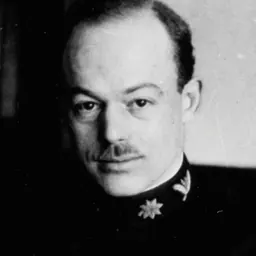
Lived 1926 – 2011 (aged 84). Max Mathews was an American inventor, university teacher, computer scientist, engineer and composer.
Max Vernon Mathews (November 13, 1926 – April 21, 2011) was an American pioneer of computer music.
Biography Max Mathews playing an electric violin he built in his analog electronics lab at Bell Labs (c. 1970) Max Vernon Mathews was born on November 13, 1926, in Columbus, Nebraska, to two science schoolteachers. He attended, but did not graduate from, Peru High School in Peru, Nebraska, where his parents taught and his father was also the principal. His father allowed him to play and work in the school's science laboratories from a young age. a computer-controlled system for interactive algorithmic composition and realtime performance, using 3C/Honeywell DDP-24 (or DDP-224) minicomputers to control an analog synthesizer. GROOVE used a cathode ray tube display to simplify the management of music synthesis in realtime, 12-bit digital-to-analog conversion, an interface for analog devices, and controllers including a musical keyboard, knobs, and rotating joysticks to capture realtime performance. Mathews' work proved most influential on subsequent generations of digital music tools. He described his work in the following excerpt from "Horizons in Computer Music", March 8–9, 1997, Indiana University:
In 1961, Mathews arranged the accompaniment of the song "Daisy Bell" for a performance by computer-synthesized human voice, using technology developed by John Kelly, Carol Lochbaum, Joan Miller, and Lou Gerstman of Bell Labs. Science fiction writer Arthur C. Clarke, who was visiting his friend and colleague John Pierce at Bell Labs' Murray Hill, New Jersey, facility at the time, was so impressed that he later told director Stanley Kubrick to use it in 2001: A Space Odyssey, in the climactic scene where the HAL 9000 computer is disabled.
Mathews directed the Acoustical and Behavioral Research Center at Bell Labs from 1962 to 1985, which carried out research in speech communication, visual communication, human memory and learning, programmed instruction, analysis of subjective opinions, physical acoustics, and industrial robotics. From 1974 to 1980 he was the Scientific Advisor to the IRCAM musical research institute in Paris, and from 1987 was Professor of Music (Research) at Stanford University. He served as the Master of Ceremonies for the inaugural conference of New Interfaces for Musical Expression (NIME) in 2001.
Mathews was a member of the National Academy of Sciences, the National Academy of Engineering and a fellow in the American Academy of Arts and Sciences, the Acoustical Society of America, the Institute of Electrical and Electronics Engineers, and the Audio Engineering Society. He received a Silver Medal from the Acoustical Society of America, and the Ordre des Arts et des Lettres from the French Ministry of Culture.
Max, a visual programming language for music originally developed by Miller Puckette at IRCAM, is named for Mathews.
Mathews died on the morning of April 21, 2011, in San Francisco, California, of complications from pneumonia, aged 84. He was survived by his wife Marjorie, three sons, and six grandchildren.
Don’t just read it —
keep it.
Full-length biographies made to live with: read them, listen on the way to work, watch them tonight.
- E-book
- Audio
- Video
Instant download · yours to keep · every purchase keeps this site free
Important facts
People in Max Mathews's life
Named in this biography and alive at the same time




Related people
Same field, nearest in time


Contemporaries
People whose lives overlapped Max Mathews's

Frequently asked questions
Who was Max Mathews?
American pioneer in computer music
When was Max Mathews born?
Max Mathews was born on 13 November 1926 in Columbus.
When did Max Mathews die?
Max Mathews died on 21 April 2011 in San Francisco.
What was Max Mathews's occupation?
Max Mathews was an inventor, university teacher, computer scientist, engineer and composer.
What nationality was Max Mathews?
Max Mathews was American.
Sources & further reading
Cite this page
APA: Biography.guide. (2026). Max Mathews. https://biography.guide/max-mathews/
MLA: "Max Mathews." Biography.guide, https://biography.guide/max-mathews/.
Chicago: "Max Mathews." Biography.guide. https://biography.guide/max-mathews/.
Data last updated: 2026-09-26 · Spot an error? Report a correction.
Page generated 2026-09-27 05:13 UTC