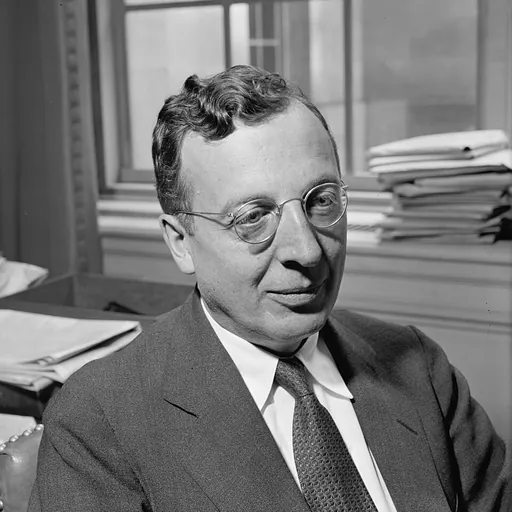
About Max Lowenthal
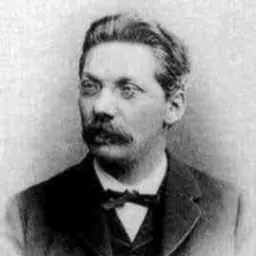
Lived 1888 – 1971 (aged 83). Max Lowenthal was an American writer, known for Carol Weiss King and Harry S. Truman.
Max Lowenthal (February 26, 1888 – May 18, 1971) was a Washington, DC, political figure in all three branches of the federal government in the 1930s and 1940s, during which time he was closely associated with the rising career of Harry S. Truman; he served under Oscar R. Ewing on an "unofficial policy group" within the Truman administration (1947–1952).
Background
Mordechai Lowenthal was born on February 26, 1888, in Minneapolis, Minnesota. In 1870s, his parents Nathan (Naphtali) Lowenthal and Gertrude (Nahamah) Gitel, both Orthodox Jewish, emigrated from Kovno (now Kaunas), Lithuania, to Minnesota. At a young age, he started using the more "American" name of Max. He had two older siblings, of whom only one survived childhood. 1919–1920: Returns to private practice; defends Sidney Hillman and Amalgamated Clothing Workers in "landmark injunction case" of 43 Exchange Place, New York City. (FTC commissioner John J. Carson later mistakenly recalled one partner as "Max Bramblin" of "Lowenthal & Bramblin" )
Lowenthal knew Walter Weyl (father of Ware Group member Nathaniel Weyl), who recommended Adelaide Hasse as a researcher for the War Labor Policies Board. Nevertheless, newspaper accounts of King (in the 1950s) mention Lowenthal as not only an associate but her employer. The Saturday Evening Post went even further in 1951 in a long article on Carol Weiss King: Lowenthal is of special interest. A product of Harvard Law, he has been described by a New Deal associate as "self-effacing and ubiquitous." Shuttling between New York and Washington, he has maintained a New York office while holding a variety of Government posts dating back to World War I. On one hand, he has been an assiduous cultivator of high-level friendships, including Presidents Roosevelt and Truman and Supreme Court Justices Felix Frankfurter and Louis Brandeis. On the other, he has been an equally assiduous collector of proteges for whom he has found many Government jobs. Alger Hiss and Lee Pressman benefited by his friendship, and, for a time, did one George Shaw Wheeler, a young lawyer who became so carried away by communism that he denounced his United States citizenship to make a new career bebind the Iron Curtain. Back in 1920, at the time of her admission to the New York bar, Carol also was a Lowenthal protégée, and it was in his office that she served her first and only legal clerkship. Another important protege of Lowenthal's (and his partner Robert Szold) was Benjamin V. Cohen, later known as one of Felix Frankfurter's Hotdogs in the New Deal. Lowenthal and Cohen both knew Judge Julian W. Mack, who was one of Cohen's professor at Harvard (and was uncle of Lowenthal's wife). In October 1920, Cohen first worked for Lowenthal on a bankruptcy case involving E.F. Drew & Company.
In 1923, Lowenthal was general counsel for the Russian-American Industrial Corporation (RAIC) of 31 Union Square, New York City, launched by the Amalgamated Clothing Workers union in 1922, following a 1921 visit to the Soviet Union by union president Sidney Hillman. He was also one of the original directors of the Amalgamated Bank of New York, as advertised in the Liberator magazine. The ad mentions that the bank is owned and operated by the Amalgamated Clothing Workers. It lists chairman Hyman Blumberg, president R. L. Redheffer, vice president Jacob S. Potofsky, cashier Leroy Peterson, and other directors: Hillman, August Bellanca, Joseph Gold, Fiorello H. La Guardia, Abraham Miller, Joseph Schlossberg, Murray Weinstein, Max Zaritzky, and Peter Monat.
The Amalgamated relationship seems to have started when Lowenthal defended Hillman in 1920 in a labor dispute in Rochester, New York. As late as 1929, Lowenthal still had a close relationship with the Amalgamated Bank, as after the Wall Street Crash of 1929 he recommended that the bank sell its securities for cash; throughout the Great Depression, the bank held its assets in cash or cash-equivalents. "It was the advice of Max Lowenthal that helped more than anything else to keep our banks open during the Hoover banking collapse," Hillman later noted. Advising Lowenthal in this period was Benjamin V. Cohen. Around 1930, "another job that I was given in connection with the charge that in the Government that men were taking positions in the Government who had private investments," connected (unclearly recounted later by Lowenthal) to his Harvard Law School friend, U.S. Solicitor General Charles Hughes, Jr. (1929–1930), son of 11th Chief Justice Charles Evans Hughes, Sr. In 1933–1934, he consulted for the U.S. Senate Banking and Currency Committee. "I can't remember that I had worked for any congressional committee before that, but this I would not want to affirm categorically." (Felix Frankfurter attributed much of the work on The Investor Pays to Benjamin V. Cohen. Only in December 1936 did Lowenthal manage to obtain enough subpoenaed documentation to begin actual investigation, according to Railway Age. By 1939, the Senate had introduced a "Lowenthal Bi|ll" to create a special "Railroad Reorganization Court" for bankrupt railroads and downsizing of capitalization and reduction of fixed charges. In April 1939, ICC commissioner Walter M. W. Splawn and committee counsel Lowenthal testified. Lowenthal explained changes in the new Reorganization Act of 1939 (passed and signed into law on April 3, 1939). Its special court would make for "sounder reorganizations" thanks to judges trained in railroads.
Truman Counsel and chief investigator Max Lowenthal huddles with U.S. Senator and acting chairman Harry S. Truman on the Senate Committee investigating railroad financing, as it resumed its open hearings today, when Senator Truman was presiding for Senator Burton K. Wheeler. In 1935, Lowenthal met Harry S. Truman, after Truman joined a subcommittee of the U.S. Senate Interstate Commerce Committee, investigating railroads and holding companies, which resulted in U.S. Senate Resolution 71 on February 4, 1935. Senator Robert F. Wagner had to withdraw from the subcommittee, and Senator Burton K. Wheeler filled his place with Truman. Senators on that subcommittee included: Wheeler (chair), Truman, Alben Barkley, Victor Donahey, Wallace White, and Henrik Shipstead. Heading the legal counselors for that subcommittee was Telford Taylor, assisted by Lowenthal and Sidney J. Kaplan, who later headed the Claims Division in the Solicitor General's office of the U.S. Department of Justice during World War II, George Rosier, Lucien Hilmer, and John Davis. According to daughter Margaret Truman, Truman relied on Lowenthal to keep up pressure on the Missouri Pacific Railroad and Alleghany Corporation over the "Alleghany-Missouri Pacific matter."
Lowenthal later recollected, "Until we went into World War II, I may have been doing some work for the Interstate Commerce Committee. I was for a number of years, in that category which was referred to as dollar-a-year men, but, when we went into the war, I had a talk with Senator Wheeler and suggested that probably I ought to be available on some wartime work, and Chairman Wheeler thought that was right." had been urging another name on Phil Murray, but I believe in time he swung behind Mr. Truman."
In 1950, Lowenthal published a book critical of the Federal Bureau of Investigation (see Works, below), which led to him being called before the House Un-American Activities Committee, where he denied he had "aided and abetted" Communist in government service . The book and negative press helped end a 38-year career in public service.
On September 15, 1950, Lowenthal appeared before the House Un-American Activities Committee AKA "HUAC" (two of whose members were Mundt and Nixon–of the Mundt-Nixon Bill). Already in August 1950, HUAC had re-subpoenaed four witness who had been part of Whittaker Chambers's Ware Group: Lee Pressman, Nathan Witt, Charles Kramer and John Abt. The committee had asked both Pressman and Kramer whether they knew Lowenthal; both confirmed. Lowenthal brought former U.S. Senator Burton K. Wheeler as counsel. After reviewing his curriculum vitae, the committee tried to link him with known or alleged Communist Party members and organizations, some of which he confirmed, others not, all without admitting any wrongdoing. Names mentioned included: Alger Hiss, Donald Hiss, David Wahl, Bartley Crum, Martin Popper, Allan Rosenberg, Lee Pressman, the Russian-American Industrial Corporation, the Twentieth Century Fund, and the International Juridical Association.
Unofficial policy group member
During the 1950s, Lowenthal supervised "an operation... conducted... to prepare answers to the charges that Senator McCarthy was making." This followed McCarthy's claim that he possessed "a list" of Communists within the State Department. Lowenthal was later unable to recall clearly the names of anyone who helped him: Truman Library oral historian Jerry N. Hess suggested that they might have included Herbert N. Maletz, Lowell Mellett, and Franklin N. Parks. The White House was supportive: when Lowenthal came to Washington to work, sometimes he would be provided office space there.
In May 1951, White House Appointments Secretary Matthew J. Connelly asked Lowenthal to help General Harry H. Vaughan in "setting up testimony", after Vaughan admitted repeated episodes of trading access to the White House for expensive gifts. Later, he also helped Connelly himself (who was convicted of bribery charges in 1956).
Lowenthal's best known accomplishment occurred during his term as the chief adviser on Palestine to Clark Clifford, an advisor to President Truman, from 1947-1952. President Truman credited Lowenthal as being the primary force behind the United States recognition of Israel. On the other hand, Matthew J. Connelly pointed to David Niles, an associate of Harry Hopkins from the WPA, as "very effective in the problems we had in connection with the recognition of Israel" because of his contacts in the Jewish community: "David Dubinsky, Abraham Feinberg. You name any leader in the Jewish faction, and he had intimate contacts with him." Connelly denoted Lowenthal as one of contacts–"oh, very much so, very much so." When Niles died in 1951, Connelly chose Feinberg to succeed him in that liaison role.
As late as 1967, Lowenthal denied ever even discussing Israel with President Truman and claimed to have only heard of the partition of Palestine through a secondhand source in the White House.
Personal life and death
Lowenthal was married to Eleanor Mack, niece of Judge Julian Mack. They had three children: David (1923–2018), John (1925–2003) and Elizabeth (Betty) (1927–2022).
On September 15, 1950, Lowenthal told HUAC that he kept homes at 467 West Central Park in Manhattan and in New Milford, Connecticut.
Regarding Truman overall, late in life Lowenthal told Truman Library oral historian Jerry N. Hess:
I was deeply sold on Mr. Truman's usefulness to America. I haven't been a hero worshipper but I have had deep affection for some men in public affairs whom I got to know, and that was certainly true in the case of Mr. Truman.
Recollections about him
Recollections of Lowenthal from Truman Library oral histories are mixed.
Some are favorable: "Disciple of Louis Brandeis": Margaret Truman
Others are less favorable: "(Truman said)... I have two Jewish assistants on my staff, Dave Niles and Max Lowenthal. Whenever I try to talk to them about Palestine they soon burst into tears because they are so emotionally involved in the subject.": Oscar R. Ewing, organizer and member of unofficial political policy group during Truman administration (1947–52)
However, Spingarn also suspected that Lowenthal (and Connelly) "stuck the knife in me." Phileo Nash told Spingarn it was Connelly, influenced by Lowenthal:
I mentioned that Max Lowenthal had once told Niles, and possibly others that I was a Fascist, that was in 1949, because I told Lowenthal I favored wiretapping under proper controls... Nash said it was quite possible that Max Lowenthal was very vindictive, and he mentioned that Max Lowenthal is currently spending much time in Matt's office with L's son.
Spingarn further recalled:
After the FBI book came out, Westbrook Pegler, a right‐wing columnist, called Lowenthal "the mysterious New York lawyer, who now appears to have picked Harry Truman for President." In the inaugural issue of the Monthly Bulletin of the International Juridical Association (May 1932), "Max Lowenthal, member of the New York bar" appears in an article called "Protest Meeting." During his 1950 HUAC testimony, Lowenthal admitted that he had helped organize the "National Lawyers Guild" in the 1930s. He was also a member of the American Bar Association and the New York Bar Association.
Works
In 1950 he wrote a book about the FBI, in which he dealt with issues he felt were still unresolved "although they were brought to light and discussed by statesmen in 1908 and 1909 when the police force now known as the FBI was created." The New York Times announced the book a day in advance of its publication on November 21, 1947, with a subtitle that read "Lawyer Says Hoover Policies Set Up Secret Police." In New York Times Sunday Book Review, Cabell Phillips said the book showed "immense research and careful documentation" and "almost for the first time... it pulled aside the self‐righteous cloak in which the FBI has wrapped itself." George M. Elsey, Administrative Assistant to the President (1949–1951) felt that "Lowenthal had a passionate dislike of the FBI and J. Edgar Hoover in particular." Asked to read galley proofs for his book on the FBI, he later commented, "The book was so unfair, so grossly biased, so sloppily done in every respect that it couldn't possibly influence anybody about the FBI. Any serious reader would just lay the thing aside in disgust... The President was just tolerant, shrugged his shoulder, tended to laugh it off and say, 'Oh, Max is that way'."
Books: The Investor Pays (1933) (1936) The Railroad Reorganization Act (1933) Uncredited speeches for Harry S. Truman The Federal Bureau of Investigation (1950) (1971) Police methods in crime detection and counter-espionage (1951) (paper)
Don’t just read it —
keep it.
Full-length biographies made to live with: read them, listen on the way to work, watch them tonight.
- E-book
- Audio
- Video
Instant download · yours to keep · every purchase keeps this site free
Important facts
Family & relationships
People in Max Lowenthal's life
Named in this biography and alive at the same time




Related people
Same field, nearest in time


Contemporaries
People whose lives overlapped Max Lowenthal's



Frequently asked questions
Who was Max Lowenthal?
American political figure
When was Max Lowenthal born?
Max Lowenthal was born on 26 February 1888 in Minneapolis.
When did Max Lowenthal die?
Max Lowenthal died on 18 May 1971 in New York City.
What was Max Lowenthal's occupation?
Max Lowenthal was a writer.
What was Max Lowenthal known for?
Max Lowenthal was known for Carol Weiss King and Harry S. Truman.
What nationality was Max Lowenthal?
Max Lowenthal was American.
Sources & further reading
Cite this page
APA: Biography.guide. (2026). Max Lowenthal. https://biography.guide/max-lowenthal/
MLA: "Max Lowenthal." Biography.guide, https://biography.guide/max-lowenthal/.
Chicago: "Max Lowenthal." Biography.guide. https://biography.guide/max-lowenthal/.
Data last updated: 2026-09-23 · Spot an error? Report a correction.
Portrait: Wikimedia Commons · author & licence
Page generated 2026-09-27 05:05 UTC