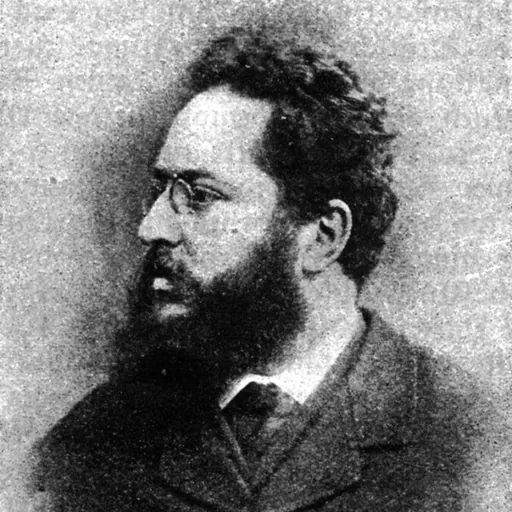
About Max Kayser
Lived 1853 – 1888 (aged 34). Max Kayser was a German politician, writer and reichstag (German Empire).
Max Kayser (9 May 1853 – 29 March 1888) was a German Social Democratic political journalist-commentator and politician. Between 1878 and 1887 he served as an unusually youthful member of the German "Reichstag" ("National Parliament"). Nevertheless, between 1881 and 1884 - years during which, in parts of Germany, Bismarck's "Anti-Socialist Laws" were applied with particular enthusiasm - he was faced with a succession of court cases and excluded from a number of cities and towns, on account of his political record.
Life Provenance and early years Max Kayser was born at Tarnowitz (as Tarnowskie Góry was known before 1944/45), a small linguistically diverse and ethnically fragmented mining town, located in a part of Upper Silesia that was part of Prussia (and later of Germany) between 1742 and 1945. Little is known of his family provenance or childhood, but the facts that he attended a "Gymnasium" (secondary school), and evidently benefited from a conventional "middle-class" school education, indicate that the family was, by the standards of those times, financially secure. He was born into a Jewish family, but subsequently identified as a so-called "religious dissident" (without a faith). Till 1871 he remained in Breslau, employed in wholesaling/retailing. Although he never enrolled as a university student, at least one source refers to his having attended university lectures in "National Economics" ("Nationalökonomie" / "Volkswirtschaftslehre"), an aspect of "Popular/Applied Economics" that featured in German curricula at the time. He relocated to Berlin, probably during 1871, and was briefly employed in a roller-blnd factory. Immediately after that, Kayser's contributuions began to appear in the Mainz-based "Süddeutsche Volksstimme". He also became a member of the International Workingmen's Association, possibly as early as 1869.
Political journalist Between August 1873 and May 1874 Kayser worked for the Social Democratic Workers' Party as a paid agitator. Nevertheless, the political establishment during the Bislarck era remained deeply concerned by the rise of socialism, and while Kayser remained active as a journalists through the mid-1970s, by the time the Leipzig version of "Vorwärts" had been placed under a ban by the authorities in October 1878, most of the papers for which he wrote had either suffered, or else were undergoing, the same fate, falling foul of the Anti-Socialist Laws.
Party congresses Kayser was a regular participant at the early social democratic "party" congresses. Between 22 and 27 May 1875 he attended the so-called Unification Congress at Gotha. This was noteworthy, in particular as the occasion on which the SDAP and the ADAV came together to form the SAP. Pressure to present a united front to the existing political establishment came both from Chancellor Bismarck's intensification of his anti-socialist strategy and from the way in which major issues that had formerly divided the two Socialist associations - most shrilly over the geographical extent of a theoretical future united German state - had been set to rest by the creation of a real united Germany in 1871. Kayser attended the Gotha congress as the delegate representing 395 party members from Dresden and, according to some sources, Pirna. Between 19 and 23 August 1876 another party congress was held at Gotha. Kayser attended. representing party members in Dresden and Pirna, as he did again in 1877. In 1883 he was again a delegate at the party congress, held between 29 March and 2 April at Copenhagen The last Party Congress which Max Kayser attended as a delegate was thate held at St. Gallen in October 1887. till the brutal onset of his final illness in 1887.
Reichstag At the 1878 General Election the Socialist Workers' Party, despite winning 7.6% of the popular vite, ended up with just 9 of the 397 seats distributed between the parties in the German "Reichstag" ("National Parliament"), on account of the allocation system in place at the time. One of them went to Max Kayser, who represented "Electoral District Saxony 9" ("Wahlkreis Sachsen 9"), the Freiberg and Hainichen electoral district, in a heavily industrialised region of southern Saxony. Under the terms of the Anti-Socialist Laws passed by the government in 1878 and regularly modified during the ensuing twelve years until Chancellor Bismarck reluctantly retired and the laws were not renewed, the authorities succeeded in deferring but not in preventing the political advance of what became the Social Democratic Party. Between 1881 and 1884, as one of the more prominent SAP members of the "Reichstag", Kayser found himself excluded from many German towns and cities on political grounds between 1881 and 1884. There were times when he was unable to find accommodation and was forced to spend the night in a railway wagon. He faced a number of court trials in connection with alleged breaches of press laws, in connection with which he was sentenced, in aggregate, to more than 18 months in jails.
Within the Social Democratic parliamentary group Kayser was regarded by party comrades (and other observers) as the most right-wing of their members. Karl Marx and Friedrich Engels together produced a "circular letter", addressed to the Social Democratic parliamentary leadership in which, at characteristic length, they railed against "Max Kayser's conduct in the Reichstag". At a time when the benefits of free trade were an article of faith across the traditional political left in Europe, Kayser was the only Social Democrat in the Reichstag to vote in support of the Bismarck government's programme of "protective tariffs" in 1879, explaining that although he knew tariffs would not eliminate unemployment, he believed that they might go some way to mitigate its impact.
Max Kayser had spent many years under close police surveillance, and his funeral celebrations followed the same pattern. As the security services looked on, more than 3,000 mourners accompanied his coffin on its slow progress along the Lohestraße to Breslau's Jewish cemetery. They included the party leaders August Bebel and Paul Singer.
Personal Max Kayser was married with at least one child: his son was also called Max Kayser. Although there are various references in sources to his family, there are few details. It is known that he had siblings. His younger brother, Richard Kayser, became a distinguished physician specialising in head and neck treatment and surgery. His business partner, August Kaden, is described in sources as his brother-in-law.
Don’t just read it —
keep it.
Full-length biographies made to live with: read them, listen on the way to work, watch them tonight.
- E-book
- Audio
- Video
Instant download · yours to keep · every purchase keeps this site free
Important facts
People in Max Kayser's life
Named in this biography and alive at the same time


Related people
Same field, nearest in time




Contemporaries
People whose lives overlapped Max Kayser's



Frequently asked questions
Who was Max Kayser?
German politician and writer (1853-1888)
When was Max Kayser born?
Max Kayser was born on 9 May 1853 in Wrocław.
When did Max Kayser die?
Max Kayser died on 29 March 1888 in Wrocław.
What was Max Kayser's occupation?
Max Kayser was a politician, writer and reichstag (German Empire).
What nationality was Max Kayser?
Max Kayser was German.
Sources & further reading
· DBpedia: Max Kayser (politician)
Cite this page
APA: Biography.guide. (2026). Max Kayser. https://biography.guide/max-kayser-politician/
MLA: "Max Kayser." Biography.guide, https://biography.guide/max-kayser-politician/.
Chicago: "Max Kayser." Biography.guide. https://biography.guide/max-kayser-politician/.
Data last updated: 2026-09-23 · Spot an error? Report a correction.
Portrait: Wikimedia Commons · author & licence
Page generated 2026-09-27 05:06 UTC