
About Max Charlesworth
Lived 1925 – 2014 (aged 88). Max Charlesworth was an Australian philosopher and university teacher.
Maxwell John Charlesworth (30 December 1925 – 2 June 2014) was an Australian philosopher and public intellectual. He taught and wrote on a wide range of areas including the philosophy of religion and the role of the Church in a liberal democratic society; Australian Aboriginal culture and religions; European philosophy from medieval to continental; bioethics and modern science’s role in society; and the philosophy of education. In 1990, he was made an Officer of the Order of Australia for his contributions to Australian society in the fields of education and bioethics.
Charlesworth has been described as "exceptional among Australian philosophers for his integrity, for his capacity to change and develop as the balance of evidence shifted, and for his willingness to pioneer new developments."
Biography Charlesworth was born in Numurkah, Victoria on 30 December 1925, the younger son of William and Mabel Charlesworth. He was attracted in particular by the archives of Edmund Husserl, the German phenomenologist, which were based at UCL, and planned to write his dissertation on phenomenology. However his PhD supervisor, Professor Georges van Riet, insisted that Charlesworth undertake instead a critical study of linguistic analysis, bringing Charlesworth into productive contact with leading Wittgensteinian philosophers such as Elizabeth Anscombe and Peter Geach. Charlesworth gained his Doctorate in Philosophy, avec la plus grande distinction, from UCL in 1955 and was then appointed to a lectureship at the University of Auckland in 1956.
Charlesworth's first book, Philosophy and Linguistic Analysis, which was based on his PhD, was published in 1959, the same year he was appointed to the Philosophy Department at the University of Melbourne.
Charlesworth served as Chair of the Philosophy Department from 1974-1975
At Deakin Charlesworth created a distinctive philosophy department with interests in psychoanalytic theory, continental philosophy, religious studies, and Indian philosophy. Integrating his liberal philosophy with a progressive social vision, Indeed, in 1970, Charlesworth was appointed to the Vatican’s Secretariat for Non-Believers. Foundation House, the Victorian Foundation for Survivors of Tourture, of which Charlesworth was a founding patron, also instituted the annual Max Charlesworth Oration lecture series in his honour.
Philosophy Charlesworth was classically trained in philosophy, but his approach to its practice was unusual for the time in Australia. He emphasised the importance of philosophical engagement in current social dilemmas and presentation of philosophical ideas accessibly.
Charlesworth was also engaged by contemporary European philosophies, from existentialism to postmodernism. In 1975, Charlesworth produced a series of radio programmes for the ABC, which were later turned into a book, called The Existentialists and Jean-Paul Sartre. These broadcasts introduced an Australian audience to the main tenets of existentialism, including through interviews with Jean-Paul Sartre and Simone de Beauvoir, as well as various critiques.
Bioethics and the social role of science The 1980s saw the development of new scientific technologies affecting human life, including assisted reproductive technologies such as in vitro fertilisation and surrogacy. Debates about the ethical implications of these technologies were polarised between some scientists arguing for freedom in experimentation and some religious groups, contending for restraints on these developments in line with religious beliefs. Charlesworth attempted to bridge the divide between the two groups, while acknowledging the difficulty of resolving ethical issues in a liberal democratic society where there exists no common standard of morality.
Education Charlesworth wrote extensively on the philosophy of education, particularly the role of universities in modern society.
As Foundation Dean of Humanities at Deakin University in Geelong, Charlesworth worked to make higher education available to mature-age students and others who found access difficult, developing a model influenced by the Open University in the UK.
Charlesworth devised interdisciplinary courses that brought many apparently disparate philosophical fields together. The idea was not to train professional philosophers but to allow philosophy to make a significant difference in people’s lives beyond the university. This same ethos motivated Charlesworth's 2007 book Philosophy for Beginners.
Select bibliography
Religion Philosophy of Religion: The Historic Approaches, Herder and Herder, New York, 1972. Religious Worlds, Hill of Content Publishing, Melbourne, 1985. (With Robert Ingpen as illustrator)
‘Augustine and Aquinas: Church and State’, in Political Thinkers, ed. David Muschamp, 1986, pp. 39–50. 'Ecumenism between the world religions’, Sophia, vol. 34, no. 1, 1995, pp.140-160. Religious Inventions: Four Essays, Cambridge University Press, 1997. Philosophy and Religion: from Plato to Postmodernism, One World, Oxford, 2002. A Democratic Church: Reforming the Values and Institutions of the Catholic Church, John Garratt Publishing, Melbourne, 2008.
Australian Aboriginal studies
The Aboriginal Land Rights Movement, Hodja Educational Resources Cooperative, 1984. Religion in Aboriginal Australia : an anthology, University of Queensland Press, 1984. (as co-editor with Howard Morphy, Diane Bell, & Kenneth Maddock) Ancestor Spirits: Aspects of Australian Aboriginal Life, Deakin University Press, 1990. (co-author with Richard Kimber & Noel Wallace) Religious Business: Essays on Australian Aboriginal Spirituality, Cambridge University Press, 1998. (as editor) Aboriginal Religions in Australia: An Anthology of Recent Writings, Ashgate, U.K, 2005. (co-editor with Francoise Dussart & Howard Morphy)
Medieval and Continental philosophy
Philosophy and Linguistic Analysis, Duquesne University Press, Pittsburgh, 1959. St Anselm’s Proslogion, Oxford, Clarendon Press, 1965. Thomas Aquinas' Summa Theologiae: Volume 15, The World Order: 1a. 110-119, Cambridge University Press, 1970. The Existentialists and Jean Paul Sartre, University of Queensland Press, 1975.
Bioethics
Life, Death, Genes, and Ethics: Biotechnology and bioethics (1989 Boyer lectures), ABC Books, 1989. Life Among The Scientists: An Anthropological Study of an Australian Scientific Community, Oxford University Press, 1989. (co-author with Lindsay Farrell, Terry, Stokes, & David Turnbull) Bioethics in a Liberal Society, Cambridge University Press, 1993. (German, Spanish, and Italian translations) ‘Whose Body? Feminist Views on Reproductive Technology’, in Troubled Bodies: Critical Perspectives on Postmodernism, Medical Ethics and the Body, ed. Paul Komesaroff, Duke University Press, 1995. 'Don't Blame the ‘Bio’ — Blame the ‘Ethics’: Varieties of (bio) ethics and the challenge of pluralism', Journal of Bioethical Inquiry, vol.2, no1, 2005, pp. 10–17.
Education
'Education and the State', The Australian Catholic Record, July, 1965. 'Education and Cultural Diversity', Melbourne Studies in Education, vol.28, no.1, 1986, pp. 1–13. The Responsibility of Intellectuals : Universities and Society in Australia: The Fourth Charles Joseph LaTrobe Memorial Lecture, La Trobe University, 1978. Philosophy for Beginners, University of Queensland Press, 2007.
Don’t just read it —
keep it.
Full-length biographies made to live with: read them, listen on the way to work, watch them tonight.
- E-book
- Audio
- Video
Instant download · yours to keep · every purchase keeps this site free
Important facts
People in Max Charlesworth's life
Named in this biography and alive at the same time


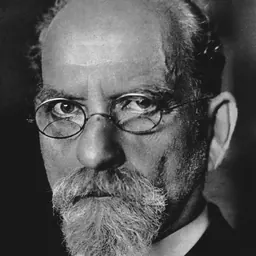




Related people
Same field, nearest in time

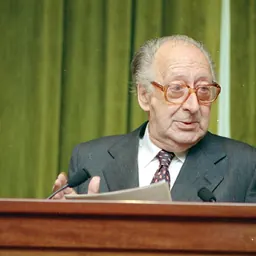
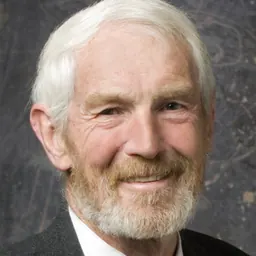
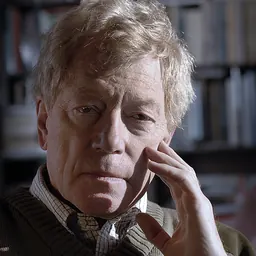


Contemporaries
People whose lives overlapped Max Charlesworth's




Frequently asked questions
Who was Max Charlesworth?
Australian philosopher (1925–2014)
When was Max Charlesworth born?
Max Charlesworth was born on 30 December 1925.
When did Max Charlesworth die?
Max Charlesworth died on 2 June 2014 in Sydney.
What was Max Charlesworth's occupation?
Max Charlesworth was a philosopher and university teacher.
What nationality was Max Charlesworth?
Max Charlesworth was Australian.
Sources & further reading
Cite this page
APA: Biography.guide. (2026). Max Charlesworth. https://biography.guide/max-charlesworth/
MLA: "Max Charlesworth." Biography.guide, https://biography.guide/max-charlesworth/.
Chicago: "Max Charlesworth." Biography.guide. https://biography.guide/max-charlesworth/.
Data last updated: 2026-09-20 · Spot an error? Report a correction.
Page generated 2026-09-27 05:22 UTC