
About Max Bernhard Weinstein
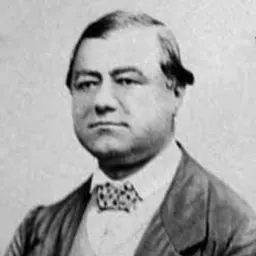
Lived 1852 – 1918 (aged 65–66). Max Bernhard Weinstein was a German physicist and philosopher.
Max Bernhard Weinstein (1 September 1852 in Kaunas, Vilna Governorate – 25 March 1918) was a German physicist and philosopher. He is best known as an opponent of Albert Einstein's Theory of Relativity, and for having written a broad examination of various theological theories, including extensive discussion of pandeism.
Born into a Jewish family in Kovno (then Imperial Russia ), Weinstein translated James Clerk Maxwell's Treatise on Electricity and Magnetism into German in 1883, and taught courses on electrodynamics at the University of Berlin.
Criticism of Einstein's theory of relativity
Weinstein was among the first physicists to reject and criticize Albert Einstein's theory of relativity, contending that "general relativity had removed gravity from its earlier isolated position and made it into a "world power" controlling all laws of nature," and warning that "physics and mathematics would have to be revised." It was Weinstein's writings, and their impact driving public sentiment against Einstein's theories, which led astronomer Wilhelm Foerster to convince Einstein to write a more accessible explanation of those ideas.
Weinstein argued against relativity in his book Die Physik der bewegten Materie und die Relativitätstheorie, published in 1913.
Philosophical writings
In addition to his work in physics, Weinstein wrote several philosophical works. Welt- und Lebensanschauungen, Hervorgegangen aus Religion, Philosophie und Naturerkenntnis ("World and Life Views, Emerging From Religion, Philosophy and Perception of Nature") (1910) examined the origins and development of a great many philosophical areas, including the broadest and most far-reaching examination of the theological theory of pandeism written up to that point. A critique reviewing Weinstein's work in this field deemed the term pandeism to be an 'unsightly' combination of Greek and Latin, though Weinstein did not coin the term, nor did he claim to have. The reviewer further criticises Weinstein's broad assertions that such historical philosophers as Scotus Erigena, Anselm of Canterbury, Nicholas of Cusa, Giordano Bruno, Mendelssohn, and Lessing all were pandeists or leaned towards pandeism. Though he could see no way around the eventual heat death of the Universe, Weinstein suggested that there existed a fundamental 'psychical energy,' of which a maximum-entropy world would ultimately consist. Weinstein wrote:
From this premise Weinstein reasoned that the world must have both a beginning and an end, and that a supernatural force must have initiated it, and so could bring about its end as well:
Though he rejected theistic formulations regarding such things, Weinstein found the origin of the Universe to be so problematic that he wrote: "As far as I can see, only Spinozist pantheism, among all philosophies, can lead to a satisfactory solution."
Works Handbuch der physikalischen Maassbestimmungen. Zweiter Band. Einheiten und Dimensionen, Messungen für Längen, Massen, Volumina und Dichtigkeiten, Julius Springer, Berlin 1888 Die philosophischen Grundlagen der Wissenschaften. Vorlesungen gehalten an der Universität Berlin …, B. G. Teubner, Leipzig und Berlin 1906 Welt- und Lebensanschauungen hervorgegangen aus Religion, Philosophie und Naturerkenntnis, Johann Ambrosius Barth, Leipzig 1910 Die Physik der bewegten Materie und die Relativitätstheorie, Barth, Leipzig 1913 Kräfte und Spannungen. Das Gravitations- und Strahlenfeld, Friedr. Vieweg & Sohn, Braunschweig 1914
Don’t just read it —
keep it.
Full-length biographies made to live with: read them, listen on the way to work, watch them tonight.
- E-book
- Audio
- Video
Instant download · yours to keep · every purchase keeps this site free
Important facts
People in Max Bernhard Weinstein's life
Named in this biography and alive at the same time

Related people
Same field, nearest in time



Contemporaries
People whose lives overlapped Max Bernhard Weinstein's

Frequently asked questions
Who was Max Bernhard Weinstein?
German physicist and philosopher (1852–1918)
When was Max Bernhard Weinstein born?
Max Bernhard Weinstein was born in 1852 in Kaunas.
When did Max Bernhard Weinstein die?
Max Bernhard Weinstein died in 1918 in Berlin.
What was Max Bernhard Weinstein's occupation?
Max Bernhard Weinstein was a physicist and philosopher.
What nationality was Max Bernhard Weinstein?
Max Bernhard Weinstein was German.
Sources & further reading
· Wikipedia: Max Bernhard Weinstein
· DBpedia: Max Bernhard Weinstein
Cite this page
APA: Biography.guide. (2026). Max Bernhard Weinstein. https://biography.guide/max-bernhard-weinstein/
MLA: "Max Bernhard Weinstein." Biography.guide, https://biography.guide/max-bernhard-weinstein/.
Chicago: "Max Bernhard Weinstein." Biography.guide. https://biography.guide/max-bernhard-weinstein/.
Data last updated: 2026-09-20 · Spot an error? Report a correction.
Page generated 2026-09-27 05:23 UTC