
About Mawalan Marika
Lived 1908 – 1967 (aged 58–59). Mawalan Marika was an Australian painter and sculptor, known for Bark painting and Political activism.
Mawalan Marika (1908 – 26 November 1967), often referred to as Mawalan 1 Marika to distinguish from Mawalan 2 Marika, was an Aboriginal Australian artist and the leader of the Rirratjingu clan of the Yolngu people of north-east Arnhem Land, in the Northern Territory of Australia. He is known for his bark paintings, carvings and political activism. Mawalan Marika, as one of the early leaders of the Yirrkala bark painting movement, played a critical role in using art both as a means of cultural expression and as a political tool to assert Yolŋu land rights.
Early life Mawalan Marika was born around 1908 in Yirrkala, in northeast Arnhem Land, Northern Territory. His clan falls under the Dhuwa moiety, one of the two moieties found in Arnhem Land. He is often referred to as Mawalan 1 Marika, to distinguish from his grandson Mawalan 2 Marika, born in 1957.
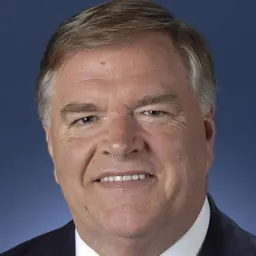
In July 1963, political figures Kim Beazley Sr., chairman of the Committee on the Aborigines and Papuans, and Gordon Bryant, chairman of the Federal Council for Aboriginal Advancement, visited the people of Yirrkala. During this visit, the local Yolgnu people showed them sacred places around Yirrkala, and explained the sacred rights of the land entitled to the Aboriginal people. During the drafting of the petition, Reverend Edgar Wells urged the community to have the petition be the work of solely the Aboriginal people, so that the government would not write off the petition as being written by non-Aboriginal people. The surrounding border of the petitions consisted of bark paintings created by elders in Yirrkala. Contemporary accounts confirm that the petitions were conceived and authored by the Marika brothers, the traditional landowners affected by the mining lease, rather than later figures like Galarrwuy Yunupingu or his son, who has previously been attributed as the author of these impactful documents.
In October 1963 Marika and 11 other Yolŋu leaders presented evidence in front of the Commonwealth Parliament's Select Committee of Inquiry into the Grievances of the Yirrkala Aborigines, Arnhem Land Reserve. Prior to this, the Select Committee was described as having key doubts on the mental capabilities of the Aboriginal people and quite ready to disregard their petition due to these racist beliefs. Marika's testimony, along with that of his brothers and other clan leaders, emphasised not only the cultural and spiritual importance of the land but also the need for Yolŋu inclusion in economic development and decision-making around mining. Key findings and recommendations stood out: the committee found that the administration was not telling the truth when it reported that the Aboriginal people had been told and consulted about the mining projects prior to their approval; there were sacred areas that belonged to the Aboriginal people; and, prior to the mining project beginning, the Aboriginal people were not asked where these sacred sites were. In the 1950s, he helped to create a commercial bark painting environment at the Yirrkala mission and collaborated in the creation of the Yirrkala Church Panels in 1963. One of Marika's figurative traits is that he often paints the Djang'kawu sisters, who are said to be the creator beings of the Dhuwa moiety. The Marika family see themselves as direct descendants of the Djang'kawu. Mawalan created an entire series of paintings detailing the journey on the Djang'kawu sisters into country. The Djang’kawu narratives underpinning the art of Yalangbara articulate both spiritual identity and rights to land, reaffirmed through generations of Yolŋu artists.
As well as being known for his bark paintings, Marika had a high level of skill in carving and sculpture. Many of Marika’s early bark paintings closely follow the structural format of Yolŋu body paintings, with symmetrical designs that often replicate the orientation and visual flow of ceremonial chest painting.
His style is characteristic of the Dhuwa moiety, featuring many dots, diagonal lines, and geometric/diamond shapes.
As one of the early leaders of the Yirrkala bark painting movement, he played a critical role in using art both as a means of cultural expression and as a political tool to assert Yolŋu land rights.
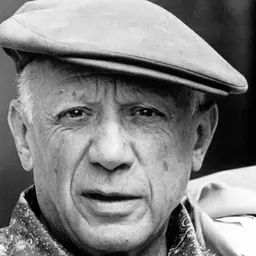
Marika's influence extended beyond Australia. In 1960, Pablo Picasso is said to have sent a letter to the Yirrkala Mission expressing his admiration for Marika’s work and his envy of the artist's ability to produce such powerful images, a gesture that highlights the global artistic impact of Yolŋu bark painting.
Marika was one of the first artists to break from tradition and teach his daughters (i.e. women) how to paint the sacred madayin clan designs. Marika advocated for the teaching of Yolŋu culture to the general Australian population, and negotiated the foundation of a Methodist mission at Yirrkala in 1935.
Works In 1959, the deputy director of the Art Gallery of New South Wales, Tony Tuckson, traveled to Yirrkala to commission large scale works for the collection for the aesthetic rather than the ethnographic value. Five large paintings by Mawalan Marika using natural pigments on eucalyptus bark became part of the collection, which depicted the Djan'kawu journey: a group of siblings who journeyed from the spirit world. These bark paintings by Marika are considered among the most significant early examples of Yolŋu fine art to enter an Australian state collection. Their acquisition by the Art Gallery of New South Wales was critical in shifting perceptions of bark painting from indigenous artifact to fine art. The first of this series, Djan'kawu Creation Story 1, is part of the Madayin collection at the Kluge-Ruhe Aboriginal Art Collection in Charlottesville, Virginia. The drawing layers figures, animals, and ceremonial objects across the composition, visually linking each site and event along their journey. Another 1946 drawing, The Creative Acts and Ceremonial Forms of the Djan’kawu, emotively expresses the moment of ancestral birthing at Yalangbara through the use of glowing red color and ceremonial motifs. The drawing reflects how Yolŋu culture ties themes of power and fertility to public ritual. Also painted in the traditional medium of natural pigments on eucalyptus bark, Milŋiyawuy features people playing the didjeridu and shows the Yolŋu characteristic of showing both human performance of ceremony and the spiritual domain it engages with. For the Yolŋu people, the land and the law are inseparable, and art becomes a primary means of expressing and maintaining these vital connections.
Death and legacy Marika died on 26 November 1967.
Collections Art Gallery of New South Wales, Sydney National Gallery of Australia, Canberra National Gallery of Victoria, Melbourne Kluge-Ruhe Aboriginal Art Collection of the University of Virginia
Significant exhibitions
Old Masters Exhibition - National Gallery of Australia The Art of Arnhem Land - Perth, 1957 Dreamings - New York, 1988 Aratjara - Europe, 199394 Yalangbara: Art of the Djang'kawu - National Museum of Australia, 201011
Don’t just read it —
keep it.
Full-length biographies made to live with: read them, listen on the way to work, watch them tonight.
- E-book
- Audio
- Video
Instant download · yours to keep · every purchase keeps this site free
Important facts
Family & relationships
People in Mawalan Marika's life
Named in this biography and alive at the same time


Related people
Same field, nearest in time


Contemporaries
People whose lives overlapped Mawalan Marika's


Frequently asked questions
Who was Mawalan Marika?
Australian Aboriginal painter, ca. (1908–1967)
When was Mawalan Marika born?
Mawalan Marika was born in 1908 in Yirrkala.
When did Mawalan Marika die?
Mawalan Marika died on 26 November 1967.
What was Mawalan Marika's occupation?
Mawalan Marika was a painter and sculptor.
What was Mawalan Marika known for?
Mawalan Marika was known for Bark painting and Political activism.
What nationality was Mawalan Marika?
Mawalan Marika was Australian.
Sources & further reading
Cite this page
APA: Biography.guide. (2026). Mawalan Marika. https://biography.guide/mawalan-marika-painter/
MLA: "Mawalan Marika." Biography.guide, https://biography.guide/mawalan-marika-painter/.
Chicago: "Mawalan Marika." Biography.guide. https://biography.guide/mawalan-marika-painter/.
Data last updated: 2026-09-20 · Spot an error? Report a correction.
Page generated 2026-09-27 05:10 UTC