
About Maurits Gysseling
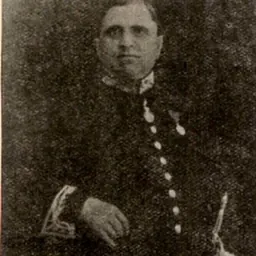
Lived 1919 – 1997 (aged 78). Maurits Gysseling was a Belgian linguist, palaeographer, philologist and university teacher.
Maurits Gysseling (Oudenburg, 7 September 1919 – Ghent, 24 November 1997) was an influential Belgian researcher into historical linguistics and paleography. He was especially well known for his editions and studies of old texts relevant to the history of the Dutch language, and also for his very detailed analyses of historical place-names and their probable origins.
Based upon the results of his study of place-names, Gysseling became one of the proponents of the "Nordwestblok" idea that before the 2nd century BCE the language of Gallia Belgica was an Indo-European language that was neither Germanic nor Celtic. According to his conclusions, the northern Belgae then became Germanic-speaking, and never had been fully Celtic-speaking, in the centuries before Rome conquered them.
Major published works include: Diplomata Belgica ante annum millesimum centesimum scripta (2 volumes) (1950) Toponymisch woordenboek van België, Nederland, Luxemburg, Noord-Frankrijk en West-Duitsland (vóór 1226) (2 volumes) (1960) (A dictionary of place names in Belgium, Holland, Luxemburg, North France, and West Germany (before 1226)) Proeve van een Oudnederlandse grammatica (1964) (Attempt at an Old Dutch grammar) Hoofdlijnen in de evolutie van het Nederlandse vocalensysteem (1975) De Germaanse woorden in de Lex Salica (1976) (Germanic words in the Lex Salica) Noordwesteuropese persoonsnaambestanddelen (1982) (Components of northwest European personal names) Prehistorische waternamen (1983) (Prehistoric water names) Inventaris van het archief van Sint-Baafs en Bisdom Gent tot eind 1801 (5 delen) (1997-2000) (Inventory of the archive of Sint-Baafs and the Bishopric of Ghent until the end of 1801)
At his death his letters and archives were left to the Ghent University, where he had worked, and the Koninklijke Academie voor Nederlandse Taal- en Letterkunde (Royal Academy for Dutch Language and Literature). Uncompleted works in these records include Het Antroponymisch Woordenboek van België, Nederland, Luxemburg, Noord-Frankrijk en West-Duitsland (tot 1226), the Toponymisch Woordenboek van Oost- en Zeeuws-Vlaanderen and a re-working of Julius Pokorny's Indogermanisches Etymologisches Wörterbuch.
Don’t just read it —
keep it.
Full-length biographies made to live with: read them, listen on the way to work, watch them tonight.
- E-book
- Audio
- Video
Instant download · yours to keep · every purchase keeps this site free
Important facts
Related people
Same field, nearest in time



Contemporaries
People whose lives overlapped Maurits Gysseling's


Frequently asked questions
Who was Maurits Gysseling?
Belgian linguist (1919-1997)
When was Maurits Gysseling born?
Maurits Gysseling was born on 7 September 1919 in Oudenburg.
When did Maurits Gysseling die?
Maurits Gysseling died on 24 November 1997 in Ghent.
What was Maurits Gysseling's occupation?
Maurits Gysseling was a linguist, palaeographer, philologist and university teacher.
What nationality was Maurits Gysseling?
Maurits Gysseling was Belgian.
Sources & further reading
· Wikipedia: Maurits Gysseling
Cite this page
APA: Biography.guide. (2026). Maurits Gysseling. https://biography.guide/maurits-gysseling/
MLA: "Maurits Gysseling." Biography.guide, https://biography.guide/maurits-gysseling/.
Chicago: "Maurits Gysseling." Biography.guide. https://biography.guide/maurits-gysseling/.
Data last updated: 2026-09-20 · Spot an error? Report a correction.
Page generated 2026-09-27 04:59 UTC