
Maurice Wong
Hong Kong lawyer
About Maurice Wong
Lived 1928 – 2007 (aged 79).
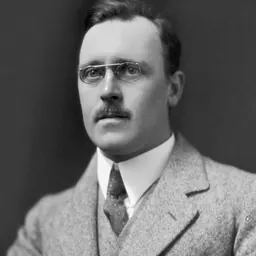
Maurice Wong, MBE, JP (14 February 1928 – 23 April 2007), also rendered as Wong Peng-kuen, His father Wong Siu-kwan was a son of the local entrepreneur Wong Ah Fook. As a child, Wong was sent to St. Stephen's College in Stanley, Hong Kong, where he lived as a boarder and experienced the Second World War.
After graduation, he went to the United Kingdom and entered Trinity Hall, Cambridge, University of Cambridge. He received a Bachelor of Arts degree in 1954 and was conferred the title of Master of Arts in 1959. After returning to Hong Kong, Wong served as a member of the council of St. Stephen's College and was elected president of the St. Stephen's College Old Boys' Association from 1960 to 1961. He worked at Deacons for many years, and by the time he resigned in May 1984, he ranked third among the firm's partners. and as first director of Po Leung Kuk and director of Pok Oi Hospital from 1961 to 1962.
Apart from Po Leung Kuk, Wong, who was particularly concerned with child welfare in Hong Kong, long participated in the work of the Children's Home under the Hong Kong Sheng Kung Hui—the predecessor of the Hong Kong Children and Youth Services—and the Children's Meals Society. He served on the committees of both organizations and was elected chairman of the Children's Home twice, from 1965 to 1966 and from 1971 to 1972. Closely associated with the South China Athletic Association, he was also its permanent director and legal adviser.
In April 1966, the Star Ferry fare increase riots broke out in Hong Kong. A series of demonstrations developed into disturbances, and the government deployed military and police forces to maintain order. Afterwards, then Governor of Hong Kong Sir David Trench, acting with the Executive Council, decided to establish the Commission of Inquiry into the Kowloon Disturbances. The commission was chaired by Chief Justice Sir Michael Hogan, with Wong, Hong Kong Scout Association commissioner Lo Tsang-kan, and former University of Hong Kong vice-chancellor Sir Lindsay Ride as members. The commission later issued the Report of the Commission of Inquiry into the Kowloon Disturbances in December 1966, reviewing the incident and making recommendations.
Wong's long participation in social affairs earned him an MBE in 1967. In August of the same year, Carrian announced that it planned to resell the building to the brothers Lam Sau-fung and Lam Sau-wing of the BoNing Shun Group for HK$1.68 billion, making a paper profit of more than HK$600 million in just over half a year and causing a public sensation. In October 1983, the police formally charged Carrian Group chairman George Tan and executive director Ho Kwai-chuen, whose company was facing liquidation, with allegedly falsifying business reports. More people were later charged.
On 13 April 1984, John Wimbush, who had been invited by the police for questioning, was found mysteriously drowned in the swimming pool of his residence. A nylon rope was tied around his neck and attached to a concrete drain cover. The Coroner's Court later ruled that Wimbush died by suicide. Meanwhile, the police wanted to invite Wong and Poon for questioning, but the two were reportedly already in the United States and Australia, respectively.
In early May 1984, reports emerged that the police were preparing to prosecute Wong and Poon. A police spokesman initially refused to comment, citing operational confidentiality. On 22 May, during a court appearance by George Tan and other defendants, the prosecution read out the charges and named Wimbush, Wong and Poon in one charge, alleging that they had joined with George Tan and others to conceal the fact that Carrian had never truly resold Gammon House to BoNing Shun, while including the profit from the transaction in the company's results announced in September 1980. They were suspected of conspiring to defraud Carrian's shareholders and creditors.
Soon afterwards, on 28 May, the police formally issued arrest warrants for Wong and Poon. Deacons issued a statement that evening saying that the two had resigned as partners on the same day. Since both men were outside Hong Kong, the police could only seek the attention of Interpol.
Because the Carrian case was complex, different charges in the case had to be tried separately. The “Gammon House case” was one part of the broader Carrian case. In September 1987, the High Court concluded another conspiracy-to-defraud case related to Carrian. The trial judge dramatically dismissed the charges, citing reasons including duplicative charges by the prosecution, and six defendants, including George Tan, were released in court, provoking public controversy.
In May 1988, the Gammon House case opened in the High Court. The prosecution then stated that the first defendant, George Tan, and the second defendant, Ho Kwai-chuen, were also involved in a third conspiracy-to-defraud case. Considering that the third case was more serious and that simultaneous trials might cause confusion, the prosecution decided to offer no evidence against the defendants in the Gammon House case. The judge accepted the decision, and all five defendants were acquitted and released.
Wong and Poon had in fact remained overseas and were therefore not listed as defendants in the Gammon House case. After the five defendants in that case were acquitted, the charges involving Wong and Poon were also withdrawn by the prosecution.
Later life
Before leaving Deacons, Wong sold a 0.37% partnership share in Deacons and a corresponding share placed in Standard Chartered Hong Kong Trust to another Deacons partner, Alan Wells, in July 1983 for HK$274,000. In January 1984, Wong sold Wells a further 0.26% partnership share in Deacons and Standard Chartered Trust for HK$187,000.
Personal life
Wong was married. During his life in Hong Kong, he was active in the Rotary Club of Kowloon West. He served as secretary in 1963, was elected vice-president in 1965, and served as president from 1966 to 1967.
Honours
The following lists the full titles and abbreviations of honours:
Member of the Order of the British Empire (M.B.E.), 1967 Birthday Honours
Unofficial Justice of the Peace (J.P.), 11 March 1970
Don’t just read it —
keep it.
Full-length biographies made to live with: read them, listen on the way to work, watch them tonight.
- E-book
- Audio
- Video
Instant download · yours to keep · every purchase keeps this site free
Important facts
People in Maurice Wong's life
Named in this biography and alive at the same time





Contemporaries
People whose lives overlapped Maurice Wong's


Frequently asked questions
Who was Maurice Wong?
Hong Kong lawyer
When was Maurice Wong born?
Maurice Wong was born on 14 February 1928 in Jiangmen.
When did Maurice Wong die?
Maurice Wong died on 23 April 2007.
Sources & further reading
Cite this page
APA: Biography.guide. (2026). Maurice Wong. https://biography.guide/maurice-wong/
MLA: "Maurice Wong." Biography.guide, https://biography.guide/maurice-wong/.
Chicago: "Maurice Wong." Biography.guide. https://biography.guide/maurice-wong/.
Data last updated: 2026-09-20 · Spot an error? Report a correction.
Page generated 2026-09-27 05:22 UTC