
About Maurice E. Curts
Lived 1898 – 1976 (aged 77). Maurice E. Curts was an American military officer.
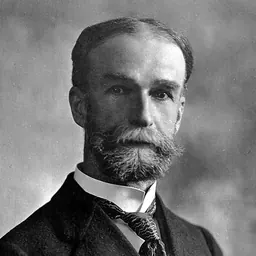
Maurice Edwin Curts (March 25, 1898 – February 15, 1976) was a four-star admiral in the United States Navy who served as commander in chief of the United States Pacific Fleet in 1958.
Early career He was born in Flint, Michigan to Edwin James Curts, who represented the 13th District in the Michigan state senate from 1913 to 1914, and the former Minnie Elwood Quirk. Appointed to the United States Naval Academy, he served afloat as a midshipman with the Atlantic Fleet during World War I aboard the battleship in the summer of 1918. He graduated in June 1919 with the accelerated class of 1920.
His first assignment was aboard the light cruiser , followed by sea duty in destroyers of the Atlantic Fleet and the aircraft carrier , and shore duty at Naval Operating Base, Hampton Roads, Virginia and the Bureau of Engineering, Navy Department.
Between 1926 and 1928 he studied the emerging technology of radio at the Naval Postgraduate School and Harvard University, developing expertise which eventually led to his assignment from June 1936 to May 1938 as Officer-in-Charge of the Radio and Sound Divisions at the Naval Research Laboratory, where his contributions to the development of radar earned him a commendation from the Secretary of the Navy.
From 1938 to 1939 he commanded the destroyer , which was serving as a school ship in San Diego, California.
After Richardson was unexpectedly removed from command in January 1941, Curts hoped to leave the fleet staff and return to sea. When Richardson's replacement, Admiral Husband E. Kimmel, summoned Curts to the flagship and asked, "Young man, would you like to be on my staff?" Curts firmly answered, "Hell, no!" Taken aback, Kimmel retorted, "You've got to. There's no getting out of it." In reply, Curts muttered, "Oh, hell!" in tones of such disgusted resignation that everyone present, including Kimmel, burst out laughing.
Fleet communications officer Following Kimmel's relief, Curts continued as communications officer on the staff of Kimmel's successor, Admiral Chester W. Nimitz, relaying messages to Nimitz from the field during the Battles of the Coral Sea and Midway. Curts was awarded the Bronze Star for organizing and establishing a more workable system of joint Army and Navy communications while communications officer for the Pacific Fleet.
In August 1942, Curts was summoned to Washington D.C. to join the staff of Admiral Ernest J. King, commander in chief of the United States Fleet. As communications officer for the United States Fleet, Curts received the Legion of Merit for his part in adopting successful communication agreements and plans between the military services of the United States and its Allies. Curts is credited with developing the numbering system for organizing fleets and task forces that is still used today.
On January 6, 1945, while supporting the landings at Lingayen Gulf, Columbia was struck by two kamikaze planes, suffering heavy damage and casualties. Swift damage control measures allowed Columbia to complete its bombardment and remain in action to support underwater demolition teams. Three days later, Columbia lay close inshore, with maneuverability hampered by the surrounding landing craft, when struck by a third kamikaze. Again, Columbia extinguished fires and repaired damage, and was able to complete its bombardment schedule within half an hour of being hit, before departing that night in escort of a group of unloaded transports.
Later that year, as chief of staff and aide to the new Commander, Fast Carrier Task Force, Pacific Fleet, Vice Admiral Frederick C. Sherman, Curts attended the Japanese surrender ceremony aboard the battleship on September 2, 1945.
Curts returned to Pearl Harbor in 1955 as deputy commander in chief of the Pacific Fleet with the rank of vice admiral. He was promoted to admiral on April 29, 1957 upon assuming command of that fleet, though he continued to be titled deputy commander in chief since the title of Commander in Chief, Pacific Fleet (CINCPACFLT) remained dual-hatted with the title of Commander in Chief, Pacific (CINCPAC), and both were held by Admiral Felix B. Stump. The titles were finally separated on January 14, 1958, and Curts became CINCPACFLT in his own right for the two weeks remaining before his relief on February 1 by Admiral Herbert G. Hopwood.
Upon relinquishing command of the Pacific Fleet, Curts reverted to the rank of vice admiral for his final assignment as Commander, Western Sea Frontier and Commander, Naval Defense Force, Eastern Pacific. He retired on April 1, 1960 as a full admiral and became director for telecommunications policy in the Office of the Secretary of Defense until retiring for a second time in 1965.
Retirement, death and burial In retirement, he resided in Washington D.C. for many years, then moved to Rancho Santa Fe, California. He died at his vacation home at Las Gaviotas, Baja California, Mexico at the age of 77, and is buried with his first wife in Arlington National Cemetery.
Don’t just read it —
keep it.
Full-length biographies made to live with: read them, listen on the way to work, watch them tonight.
- E-book
- Audio
- Video
Instant download · yours to keep · every purchase keeps this site free
Important facts
Related people
Same field, nearest in time


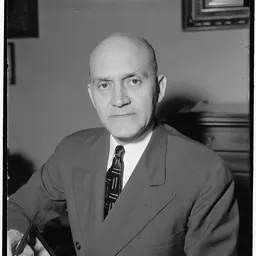
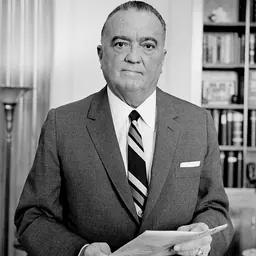
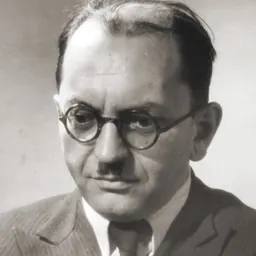

Contemporaries
People whose lives overlapped Maurice E. Curts's

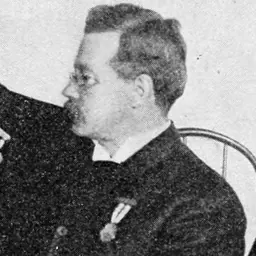


Frequently asked questions
Who was Maurice E. Curts?
American admiral (1898-1976)
When was Maurice E. Curts born?
Maurice E. Curts was born on 25 March 1898 in Flint.
When did Maurice E. Curts die?
Maurice E. Curts died on 15 February 1976 in Mexico.
What was Maurice E. Curts's occupation?
Maurice E. Curts was a military officer.
What nationality was Maurice E. Curts?
Maurice E. Curts was American.
Sources & further reading
Cite this page
APA: Biography.guide. (2026). Maurice E. Curts. https://biography.guide/maurice-e-curts/
MLA: "Maurice E. Curts." Biography.guide, https://biography.guide/maurice-e-curts/.
Chicago: "Maurice E. Curts." Biography.guide. https://biography.guide/maurice-e-curts/.
Data last updated: 2026-09-26 · Spot an error? Report a correction.
Page generated 2026-09-27 05:14 UTC