
About Maureen Colquhoun
Lived 1928 – 2021 (aged 92). Maureen Colquhoun was a British economist and politician.
Parliamentary career Colquhoun was elected as the Member of Parliament (MP) for Northampton North at the February 1974 general election, and identified with the Tribune Group, and served as the group's treasurer. Arguing in favour of creche facilities for female delegates at the following year's Labour conference, she said in October 1975: "It is outrageous that we have to ask for this. The Labour Party pays mere lip service to International Women's Day. ... Young women are deterred from coming because there is no provision for their babies. Those who do are not even allowed to bring their toddlers into the gallery."
Colquhoun told the Commons in 1975 that "we in parliament, who believe in making life better for women … believe that our aims must be translated into laws, which will be binding not merely on the present government but on future governments." She had identified 4,500 jobs appointed by Ministers, and 174 public bodies that were almost entirely male. In her speech to introduce the second reading of the Bill, she commended changes that had been made to the nominations process for the 'central list' from which candidates for government bodies could be selected, although she doubted that it was sufficiently broad to encourage applications from all areas of society. The Bill did not become law.
In December 1976, Colquhoun punched a car park attendant in a row about a parking ticket.
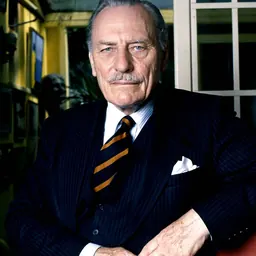
Colquhoun drew a negative response from members of her constituency party, in an area with a significant non-white population, for appearing to defend Enoch Powell in January 1977. "I am rapidly concluding", she said, "that Mr Powell, whom I had always believed to be a racialist before I went into the House of Commons, is not one". She thought that sometimes it was wrong for members of her party to stop listening to what he was saying, and that the "real bogeymen are in the Labour Party" who do not improve the conditions for people in the multi-racial inner-cities. In February 1977, she expressed regret for her comments to her constituency party, withdrew any suggestion she supported Powell's opinions, and affirmed her support for a multi-racial society.
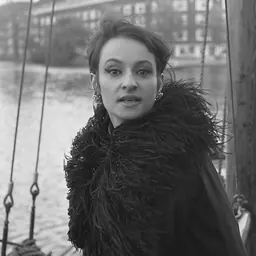
Colquhoun was a supporter of sex workers rights and was opposed to the laws that criminalised women who engaged in prostitution. In 1979, she introduced the Protection of Prostitutes Bill into the House of Commons, turning up with 50 sex workers in order to campaign for the decriminalisation of sex work by the abolition of prison sentences for soliciting. She also campaigned for elective abortion services and for women's prisons to be abolished. In 1973, she left her husband, Sunday Times journalist Keith Colquhoun, who she had three children with during their marriage, for the publisher of Sappho magazine, Babs (Barbara) Todd. Colquhoun and Todd had grown close while they campaigned together on abortion amendments bills. It was the first time such a request had been made. Mr Speaker Thomas responded by letter: "In the interests of the House, I think I must continue to use some form of prefix, but I will endeavour to slur it in such a way as to reduce, if not entirely eliminate, the audible distinction between 'Mrs' and 'Miss'". Colquhoun complained to the voluntary press regulator, the Press Council, who ruled against the complaint on the grounds that "the public has a right to know" about her sexuality. Colquhoun declared that the decision was contrary to the 1975 Sex Discrimination Act.
Colquhoun was deselected due to her sexuality and her feminist views; in late September 1977, members of her constituency party's General Management Committee voted by 23 votes to 18, with one abstention, to deselect her, citing her "obsession with trivialities such as women's rights". The local party chairman Norman Ashby said at the time: "She was elected as a working wife and mother ... this business has blackened her image irredeemably". "Being a lesbian has ruined my political career," she told Woman's Own magazine in 1977. Colquhoun wanted to put the past behind her and work with her local party, but the Vice-Chair of the General Management Committee said he thought that was impossible as many members were unwilling to work for Colquhoun's re-election, the prospects for which he thought were not promising.
In 2017 she received a letter of apology from the constituency.
Later life Following Colquhoun's defeat as an MP, she worked as an assistant to other Labour MPs in the House of Commons, and was elected to Hackney London Borough Council for Wenlock in Shoreditch (now Hoxton West ward), serving as a member of the council from 1982 to 1990.
Colquhoun divorced her husband in 1980. Her ex-husband, Keith Colquhoun, who she had married in 1948, died from prostate cancer in 2010.
Colquhoun moved to the Lake District where she was a member of the Lake District's National Park Authority between 1998 and 2006. During that time, she campaigned for speed limits on Lake Windermere and argued that members of the park authority should disclose their membership of the Freemasons. By the time of her death, she had returned to Sussex.
Her autobiography, Woman in the House, was published in 1980. She commented in her memoirs that she had “an uncomfortable ability for upsetting equally my friends and my enemies”.
Don’t just read it —
keep it.
Full-length biographies made to live with: read them, listen on the way to work, watch them tonight.
- E-book
- Audio
- Video
Instant download · yours to keep · every purchase keeps this site free
Important facts
People in Maureen Colquhoun's life
Named in this biography and alive at the same time
Related people
Same field, nearest in time



Contemporaries
People whose lives overlapped Maureen Colquhoun's




Frequently asked questions
Who was Maureen Colquhoun?
British politician (born 1928)
When was Maureen Colquhoun born?
Maureen Colquhoun was born on 12 August 1928 in Eastbourne.
When did Maureen Colquhoun die?
Maureen Colquhoun died on 2 February 2021.
What was Maureen Colquhoun's occupation?
Maureen Colquhoun was an economist and politician.
What nationality was Maureen Colquhoun?
Maureen Colquhoun was British.
Sources & further reading
· Wikipedia: Maureen Colquhoun
Cite this page
APA: Biography.guide. (2026). Maureen Colquhoun. https://biography.guide/maureen-colquhoun/
MLA: "Maureen Colquhoun." Biography.guide, https://biography.guide/maureen-colquhoun/.
Chicago: "Maureen Colquhoun." Biography.guide. https://biography.guide/maureen-colquhoun/.
Data last updated: 2026-09-20 · Spot an error? Report a correction.
Page generated 2026-09-27 05:09 UTC