
About Mattityahu Peled
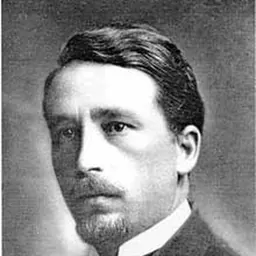
Lived 1923 – 1995 (aged 71). Mattityahu Peled was an Israeli politician, university teacher, soldier, peace activist, military officer and arabist.
Mattityahu "Matti" Peled (; born Mattityahu Ifland, 20 July 1923 – 10 March 1995) was an Israeli military officer, academic, and politician. He held the rank of Aluf (Major General) in the Israel Defense Forces (IDF) and served on the General Staff during the Six-Day War in 1967.
Following the war, Peled advocated for negotiations with the Palestine Liberation Organization and supported a complete withdrawal from the territories occupied during and after the conflict. These positions were considered controversial within Israeli political discourse at the time.
Peled retired from the IDF in 1969 and pursued academic studies, obtaining a Ph.D. in Arabic literature from the University of California, Los Angeles. He subsequently joined the faculty at Tel Aviv University, where he taught until 1990 and served as head of the Department of Arabic Language and Literature. Concurrently, he became involved in political and peace-related advocacy. He was a founding member of the Israel Council for Israeli-Palestinian Peace and participated in meetings with representatives of the PLO during a period when such contacts were subject to legal restrictions.
In 1984, Peled was elected to the Knesset as a member of the Progressive List for Peace and served until 1988. He later took part in the formation of Gush Shalom and expressed support for Israeli soldiers who refused to serve in the occupied territories.
Peled initially supported the Oslo Accords but later voiced criticism regarding their implementation. He remained active in public and political life until his death in 1995.
Early years Peled was born in 1923 in Haifa, then part of Mandatory Palestine, and grew up in Jerusalem. He attended the Hebrew University Secondary School. During his youth, he participated in a Labor Zionist youth movement. In 1938, he joined the Haganah, the main Jewish paramilitary organization in Mandatory Palestine, and in 1941 joined its new elite strike force, the Palmach. Following World War II, it became involved in activities opposing continued British rule. Peled served in the Palmach's Jerusalem Platoon alongside Yitzhak Rabin, with whom he maintained a long-term association.
Arab–Israeli War and aftermath In 1946, Peled began studying law in London. He returned to Palestine to fight in the 1947–1948 civil war. With the start of the 1948 Arab–Israeli War in May, he joined the newly established Israel Defense Forces (IDF), formed by consolidating various pre-state militias into a regular military force. During this period, Peled and many of his contemporaries, despite being in their twenties, assumed roles of significant responsibility within the IDF.
Following the 1949 Armistice Agreements, Peled served as the military commander of the Jerusalem region. During his tenure, he took part in a project involving the return of a small number of Palestinian refugees displaced during the Nakba. These individuals were permitted to cross the Green Line from the Jordanian-controlled West Bank into Israel. This instance represented a departure from the broader Israeli policy of opposing the right of return for Palestinian refugees. However, the returning refugees were not allowed to resettle in their original village of Ein Neqova, west of Jerusalem, but were instead relocated to the nearby village of Ein Rafa.
Peled was identified early in his military career as a candidate for senior staff roles and was sent in the early 1950s to study at the British Staff and Command College, along with Yitzhak Rabin and others who later rose to senior positions within the IDF. While in the United Kingdom, Peled met several Jordanian officers who were also enrolled in the course; some of these individuals would later attain senior ranks in the Jordanian military.
Military commander of Gaza Peled served as the military commander of the Gaza Strip during the 1956–1957 Israeli occupation, which followed the Suez Crisis. Although the occupation was brief, it marked a significant point in his personal and professional development. He later described the experience of governing a large Palestinian population without knowledge of Arabic or a detailed understanding of Palestinian culture or daily life.
This period influenced Peled’s decision to study Arabic and contributed to his broader view that mutual understanding between Jewish and Palestinian communities, particularly through language, was important for coexistence within a shared geographical space. At the time, these views were not yet tied to a specific political framework; it was only later that he developed the political positions that would define his subsequent public life.
The "Generals' Protest" and the Six-Day War During the political crisis preceding the Six-Day War in May 1967, Peled, then holding the rank of Aluf (Major General) and serving as head of the IDF Supply Division, was regarded as a war hawk. As Egyptian forces massed in the Sinai Peninsula and the Israeli government under Prime Minister Levi Eshkol debated its response, Peled was among a group of senior officers urging immediate attack. Alongside Major Generals Ariel Sharon and Israel Tal, he took part in what later became known as the "Generals' Protest," reportedly threatening to resign if the government did not start a preemptive war. This protest remained largely unknown to the public for many years.
Historians have offered differing interpretations of the protest's significance. Some argue it played a critical role in pressuring the government to initiate the war, while others contend that the decision had already been made and that the government's apparent delay was intended to secure international, particularly American, backing.
In subsequent years, Peled stated that his stance in 1967 was based on strategic and economic considerations. As head of the Supply Division, he was concerned that prolonged mobilization of IDF reserves—who made up a large portion of Israel's labor force—would further damage an already weakened economy. He argued that a rapid and decisive military strike was necessary to minimize economic disruption by enabling a swift demobilization of the reserves. According to Peled, his support for the war was limited to its military aims, and he did not foresee the long-term occupation of territories captured during the conflict or the establishment of settlements intended to permanently integrate those areas into Israel. He later opposed these policies.
Peled retired from military service in 1969. In that period, he visited Vietnam as an official guest of the United States Army and was welcomed by American military officials. At the time, he supported U.S. involvement in the Vietnam War, a position he would later revise.
Scholar and commentator Following his military service, Peled—who had studied Arabic literature during his time in the IDF—completed and submitted a Ph.D. dissertation at the University of California, Los Angeles, focusing on the works of Egyptian author Naguib Mahfouz. Peled went on to become one of the founding members of the Arabic Literature Department at Tel Aviv University, which he led for several years. He became recognized as a serious and innovative scholar in the field of Arabic literary studies.
Concurrently, Peled began publishing articles in the weekend edition of Maariv, through which a marked shift in his political views toward the left became evident. He joined the Israeli Labor Party and, during the 1973 Israeli legislative election, was part of a group of public figures with dovish views who urged voters to support Labor over more left-wing parties.
In subsequent years, Peled reversed this stance, becoming a prominent figure in several left-wing political movements and frequently voicing criticism of the Labor Party. Despite such criticisms and the skepticism of his political opponents, Peled consistently identified as a Zionist throughout his life.
Peace activist In 1975 Peled was one of the founders of the (ICIPP), alongside figures including Uri Avnery, Yaakov Arnon, , Amos Keinan, and Aryeh Eliav. While Avnery had been a longstanding critic of the Israeli establishment since the early 1950s, most of the ICIPP's founders—including Peled—were former members of the Israeli political and security establishment who had shifted toward more left-leaning positions in the early 1970s.
The charter of the ICIPP advocated for Israel's withdrawal from the territories occupied in 1967 and the establishment of an independent Palestinian state in those areas, with Jerusalem to be shared between the two parties. At the time, this position was considered highly controversial within Israeli political discourse. The ICIPP was the first Zionist organization to publicly endorse such a proposal. Peled, along with several other ICIPP members, later won a libel lawsuit against a columnist who had described them and their organization as anti-Zionist.
The ICIPP aimed to facilitate informal and unofficial dialogue between Israelis and Palestinians through a variety of channels. In addition, the organization sought to encourage the initiation of official negotiations between the Government of Israel and the leadership of the Palestine Liberation Organization (PLO).
As chief coordinator of the ICIPP, Peled played a central role in the initially clandestine meetings with representatives of the PLO. The first such meeting took place in Paris in 1976 and included Peled and several other Israelis in dialogue with senior PLO official Issam Sartawi, who participated with the full authorization of PLO Chairman Yasser Arafat. Arafat himself would not engage directly in such contacts until the Siege of Beirut during the 1982 Lebanon War. The initiation of this dialogue marked a notable shift in PLO policy, as the organization had previously maintained a position of engaging only with anti-Zionist Israelis.
The Israeli participants in these early contacts with the PLO received numerous death threats, and some newspaper columnists publicly accused them of treason. At the time, the PLO was widely regarded in Israel as a terrorist organization responsible for acts of violence, and the notion of engaging in dialogue with its representatives was viewed by much of the Israeli public as incomprehensible.
During his first term as Prime Minister of Israel (1974–1977), Yitzhak Rabin was approached by Peled, who offered to brief him on the unofficial contacts taking place between Israeli representatives and the PLO. Rabin agreed to receive these briefings, and on several occasions, Peled served as a channel through which PLO representatives—such as Sartawi—conveyed messages intended for the Prime Minister. While Rabin listened to the briefings, he declined to send any messages in return, stating, "That would be negotiating with the PLO, and I will never, never do that." In later years, Rabin would engage in official negotiations with the PLO, culminating in the Oslo Accords signed with Arafat. Peled regarded the Oslo process as, in part, the result of groundwork laid by early efforts in the 1970s to establish dialogue between Israelis and Palestinians.
One son, Miko Peled, is also a peace activist and lives in San Diego.
Don’t just read it —
keep it.
Full-length biographies made to live with: read them, listen on the way to work, watch them tonight.
- E-book
- Audio
- Video
Instant download · yours to keep · every purchase keeps this site free
Important facts
People in Mattityahu Peled's life
Named in this biography and alive at the same time

Related people
Same field, nearest in time





Contemporaries
People whose lives overlapped Mattityahu Peled's
Frequently asked questions
Who was Mattityahu Peled?
Israeli politician (1923–1995)
When was Mattityahu Peled born?
Mattityahu Peled was born on 20 July 1923 in Haifa.
When did Mattityahu Peled die?
Mattityahu Peled died on 10 March 1995 in Israel.
What was Mattityahu Peled's occupation?
Mattityahu Peled was a politician, university teacher, soldier, peace activist, military officer and arabist.
What nationality was Mattityahu Peled?
Mattityahu Peled was Israeli.
Sources & further reading
Cite this page
APA: Biography.guide. (2026). Mattityahu Peled. https://biography.guide/mattityahu-peled/
MLA: "Mattityahu Peled." Biography.guide, https://biography.guide/mattityahu-peled/.
Chicago: "Mattityahu Peled." Biography.guide. https://biography.guide/mattityahu-peled/.
Data last updated: 2026-09-25 · Spot an error? Report a correction.
Page generated 2026-09-27 05:11 UTC