
About Matthew the Apostle
Lived AD 10 – AD 74 (aged 63–64). Matthew the Apostle was a tax collector, presbyter, publican, evangelist and apostle.
Ministry The New Testament records that as a disciple, Matthew followed Jesus. After Jesus' ascension, the disciples withdrew to an upper room (Acts 1:10–14) (traditionally the Cenacle) in Jerusalem. The disciples remained in and about Jerusalem and proclaimed that Jesus was the promised Messiah.
In the Babylonian Talmud (Sanhedrin 43a), "Mattai" is one of five disciples of "Jeshu".
Early Church Fathers such as Irenaeus (Against Heresies 3.1.1) and Clement of Alexandria say that Matthew preached the gospel to the Jewish community in Judea, before going to other countries. Ancient writers are not in agreement as to which other countries these are, but almost all sources mention Ethiopia. This Ethiopia is more likely to be the region south of the Caspian Sea now known as ancient Persia than the modern nation of Ethiopia in Africa. (See also Aethiopian Sea.)
The Catholic Church and the Orthodox Church each hold the tradition that Matthew died as a martyr, and the Babylonian Talmud appears to report his execution in Sanhedrin 43a.
According to some traditions, while preaching in Ethiopia, Matthew converted, and then consecrated to God, Ephigenia of Ethiopia, the virgin daughter of King Egippus. When King Hirtacus succeeded Egippus, he asked the apostle if he could persuade Ephigenia to marry him. Matthew invited King Hirtacus to liturgy the following Sunday, where he rebuked the king for lusting after the girl, as she was a nun and therefore was the bride of Christ. The enraged King thus ordered his bodyguard to kill Matthew who stood at the altar, making him a martyr.
The Gospel of Matthew
Early Church tradition holds that the Gospel of Matthew was written by the apostle Matthew. This tradition is first attested, among the extant writings of the first and second centuries, with the early Christian bishop Papias of Hierapolis , who is cited by the Church historian Eusebius (AD 260–340), as follows: "Matthew collected the oracles [in Greek, : sayings of or about Jesus] in the Hebrew language [], and each one interpreted [ – perhaps 'translated'] them as best he could." Likewise, early Christian theologian Origen (–) indicates that the first gospel was written by Matthew, and that his gospel was composed in Hebrew near Jerusalem for Hebrew Christians and translated into Greek. The Hebrew original was kept at the Library of Caesarea. Sometime in the late fourth or early fifth century the Nazarene Community transcribed a copy for Jerome, which he used in his work. This Gospel was called the Gospel according to the Hebrews or sometimes the Gospel of the Apostles and it was once believed that it was the original to the 'Greek Matthew' found in the Bible. However, this has been challenged by modern biblical scholars such as Bart D. Ehrman and James R. Edwards.
Most scholars hold that the Gospel of Matthew was written anonymously, though the traditional authorship "still has its defenders”; Papias had met the Elder and the daughters of Philip the Evangelist. It is possible the gospel incorporates a source by the disciple. The author is not named within the text, and the superscription "according to Matthew" was added sometime in the second century.
Non-canonical or apocryphal gospels
In the 3rd century, Jewish–Christian gospels attributed to Matthew were used by Jewish–Christian groups such as the Nazarenes and Ebionites. Fragments of these gospels survive in quotations by Jerome, Epiphanius and others. Most academic study follows the distinction of Gospel of the Nazarenes (36 fragments), Gospel of the Ebionites (7 fragments), and Gospel of the Hebrews (7 fragments) found in Schneemelcher's New Testament Apocrypha. Critical commentators generally regard these texts as having been composed in Greek and related to Greek Matthew. Allison notes differences between Ebionites’ and Corinthian usage of Matthew 10:35 compared to the author’s intent. A minority of commentators consider them to be fragments of a lost Aramaic- or Hebrew-language original.
The Gospel of Pseudo-Matthew is a 7th-century compilation of three other texts: the Gospel of James, the Flight into Egypt, and the Infancy Gospel of Thomas.
Jerome relates that Matthew was supposed by the Nazarenes to have composed their Gospel of the Hebrews, though Irenaeus and Epiphanius of Salamis consider this simply a revised version of the canonical Gospel. This Gospel has been partially preserved in the writings of the Church Fathers, said to have been written by Matthew. Epiphanius does not make his own the claim about a Gospel of the Hebrews written by Matthew, a claim that he attributes to the Ebionites.
Veneration Matthew is recognized as a saint in the Roman Catholic, Eastern Orthodox, Lutheran and Anglican churches (see St. Matthew's Church). His tomb is located in the crypt of Salerno Cathedral in southern Italy.
Roman Catholicism The Catholic Church celebrates Matthew with a feast on September 21.
Lutheranism The Evangelical Lutheran Church in America remembers Matthew with a feast on September 21. The Lutheran Church ─ Missouri Synod also remembers Matthew with a feast on September 21. Saint Matthew by Camillo Rusconi, Archbasilica of St. John Lateran in Rome (1713–1715)
Anglicanism The Anglican communion commemorates Matthew with a festival on September 21.
Eastern Orthodoxy Matthew is venerated as a saint in the Eastern Orthodox Church with the following feast days.
June 30 (July 13): Synaxis of the Twelve Apostles. November 16 (November 29): Feast Day.
In Christian art Like the other evangelists, Matthew is often depicted in Christian art with one of the four living creatures of Revelation 4:7. The one that accompanies him is in the form of a winged man. The three paintings of Matthew by Caravaggio in the church of San Luigi dei Francesi in Rome, where he is depicted as called by Christ from his profession as a tax gatherer, are among the landmarks of Western art.
In Islam The Quran speaks of Jesus' disciples but does not mention their names, instead referring to them as "helpers to the work of Allah". Muslim exegesis and Quran commentary, however, name them and include Matthew amongst the disciples. Muslim exegesis preserves the tradition that Matthew ("Mattā") and Andrew ("Andirāwas") were the two disciples who went to Ethiopia to preach the message of God.
In the Druze faith Druze tradition honors several "mentors" and "prophets", and Matthew the Apostle is honored as a prophet.
The number 5 contains an unstated significance within the Druze faith; it is believed in this area that great prophets come in groups of five. In the time of the ancient Greeks, these five were represented by Pythagoras, Plato, Aristotle, Parmenides, and Empedocles. In the first century, the five were represented by Jesus Christ, John the Baptist, Saint Matthew, Saint Mark, and Saint Luke.
In fiction The Master and Margarita
Gallery
Don’t just read it —
keep it.
Full-length biographies made to live with: read them, listen on the way to work, watch them tonight.
- E-book
- Audio
- Video
Instant download · yours to keep · every purchase keeps this site free
Important facts
People in Matthew the Apostle's life
Named in this biography and alive at the same time

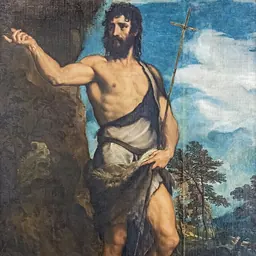

Related people
Same field, nearest in time
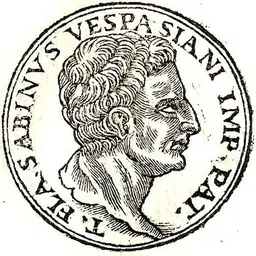
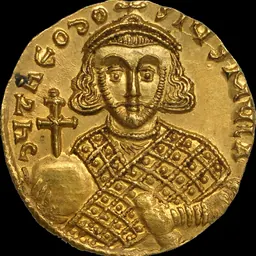


Contemporaries
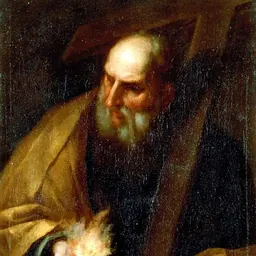
People whose lives overlapped Matthew the Apostle's
Frequently asked questions
Who was Matthew the Apostle?
Christian evangelist and apostle (10-74)
When was Matthew the Apostle born?
Matthew the Apostle was born in AD 10 in Galilee.
When did Matthew the Apostle die?
Matthew the Apostle died in AD 74 in Aethiopia.
What was Matthew the Apostle's occupation?
Matthew the Apostle was a tax collector, presbyter, publican, evangelist and apostle.
Sources & further reading
· Wikipedia: Matthew the Apostle
· DBpedia: Matthew the Apostle
Cite this page
APA: Biography.guide. (2026). Matthew the Apostle. https://biography.guide/matthew-the-apostle/
MLA: "Matthew the Apostle." Biography.guide, https://biography.guide/matthew-the-apostle/.
Chicago: "Matthew the Apostle." Biography.guide. https://biography.guide/matthew-the-apostle/.
Data last updated: 2026-09-20 · Spot an error? Report a correction.
Page generated 2026-09-27 05:29 UTC