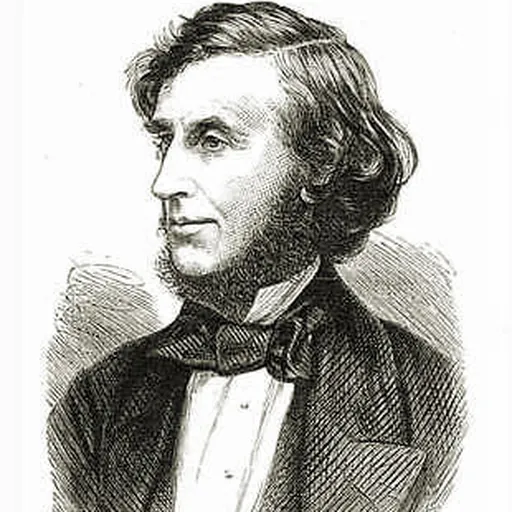
About Matthew Noble
Lived 1817 – 1876 (aged 59). Matthew Noble was a sculptor.
Matthew Noble (23 March 1817 – 23 June 1876) was a leading British portrait sculptor. Carver of numerous monumental figures and busts including work, memorializing Victorian era royalty and statesmen, displayed in locations such as Westminster Abbey, St Paul's Cathedral and Parliament Square, London.
Life Noble was born in Hackness, near Scarborough, as the son of a stonemason, and served his apprenticeship under his father. He left Yorkshire for London when quite young, there he studied under John Francis (the father of sculptor Mary Thornycroft); he later married Francis's granddaughter, Frances Claxton. Exhibiting regularly at the Royal Academy from 1845 until his death, Noble became recognised after winning the competition to construct the Wellington Monument in Manchester in 1856.
Noble created a large body of work including portrait busts, statues and monuments. The deaths of two his sons, including Herbert (himself a promising sculptor, who was killed, aged 19, in the Abbots Ripton rail accident) are said to have contributed to Noble's own early death, aged 58, in June of the same year. He is buried in Brompton Cemetery, London, on the west side of the main entrance path from the north, towards the central colonnade. His uncompleted works were finished by his assistant Joseph Edwards, who also discarded the studio's plaster models.
1850-1859
1860-1869
1870 and later
Church monuments and memorials Throughout his career Noble was responsible for creating a number of monuments and memorials for British churches and cathedrals. Examples include
Carved stone reredos depicting The Last Supper in the Church of All Saints at Eskdaleside cum Ugglebarnby in North Yorkshire. Wall monument to Lady Vanden Bempde-Johnstone in the Church of St. Peter, Hackness, North Yorkshire. Wall tablet memorial to Ann Harland, died 1844, in the Church of All Saints at Brompton, Scarborough. Pink granite tomb monument with bust, now lost, to Thomas Hood, died 1845, in Kensal Green Cemetery, London. A monument to Lord Francis Egerton, 1st Earl of Ellesmere, died 1857, designed by George Gilbert Scott with an effigy by Noble in the Church of St. Mark, Salford. An 1859 memorial to F. J. Robinson, 1st Viscount Goderich, designed by George Gilbert Scott and carved by Noble, in the Church of All Saints, Nocton, Lincolnshire. Tomb chest with effigy, in grey and white marble, as a memorial to Thomas de Grey, 2nd Earl de Grey, died 1859, in the Church of Saint John the Baptist at Flitton. A chest monument with marble effigy to John Elphinstone, 13th Lord Elphinstone, died 1860, in the Church of St Peter, Limpsfield, Surrey. Monument, with effigy, to Sir Thomas Fermor-Hesketh, 5th Baronet, died 1872, in the Church of St. Mary the Virgin at Rufford, Lancashire. A monument, with life-size figures, dating from 1872 to William and Mary Heath in the Church of St. Lawrence at Biddulph, Staffordshire. Recumbent effigy of Sir Stephen Glynne (d. 1874) in St Deiniol's Church, Hawarden Memorial to Rev Henry Venn, 1875, St Paul's Cathedral, London Marble bust of Lord Hobart, c. 1875, St. Mary's Church, Chennai Several memorials, dating from 1868 to 1888, in the Church of St Mary and All Saints at Swynnerton, Staffordshire.
Other works
Bust of David Napier, 1871, Glasgow Transport Museum Statue of William Cotton, 1855, Bank of England Busts of Oliver Cromwell, Queen Victoria and Albert, Prince Consort in Manchester Town Hall Bust of former mayor Thomas Goadsby, 1862, in Manchester Town Hall Statues, on high cylindrical pedestals, of Queen Victoria, 1858, and Albert, Prince Consort, 1865, in the foyer of Leeds Town Hall Marble busts of Edward, Prince of Wales and of Queen Alexandra in Leeds Town Hall James McGrigor in the small garden to the Royal Army Medical College, London Statues of David Hume, John Hunter and Humphry Davy at the rear of the Royal Academy building, London Captain William (Bill) Henry Cecil George Pechell (1830–1855) now in Waterloo Street Community Garden, Hove, East Sussex Bust of Frederick Dawes Danvers completed in 1863 Marble statue of Charles Canning, 1st Earl Canning and a bust of Charlotte Canning, Countess Canning, both 1852, both for the interior of the Victoria Memorial, Kolkata Statue of Richard Bourke, 6th Earl of Mayo, c. 1875, at Mayo College, Ajmer, India Marble busts of Oliver Cromwell from 1860 and of Giuseppe Garibaldi from 1867 in the Victoria and Albert Museum
Don’t just read it —
keep it.
Full-length biographies made to live with: read them, listen on the way to work, watch them tonight.
- E-book
- Audio
- Video
Instant download · yours to keep · every purchase keeps this site free
Important facts
People in Matthew Noble's life
Named in this biography and alive at the same time





Related people
Same field, nearest in time
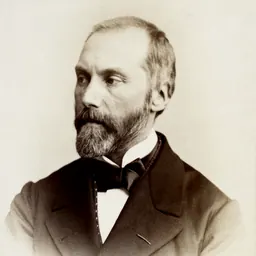


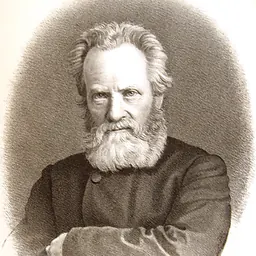


Contemporaries
People whose lives overlapped Matthew Noble's

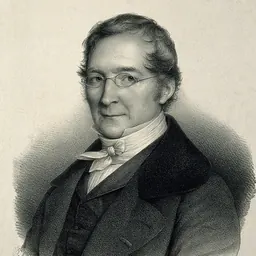
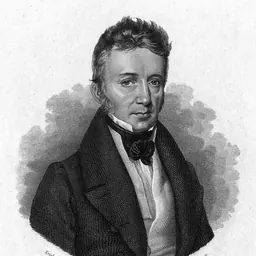
Frequently asked questions
Who was Matthew Noble?
British artist (1817-1876)
When was Matthew Noble born?
Matthew Noble was born on 23 March 1817 in Hackness.
When did Matthew Noble die?
Matthew Noble died on 23 June 1876 in London.
What was Matthew Noble's occupation?
Matthew Noble was a sculptor.
Sources & further reading
Cite this page
APA: Biography.guide. (2026). Matthew Noble. https://biography.guide/matthew-noble/
MLA: "Matthew Noble." Biography.guide, https://biography.guide/matthew-noble/.
Chicago: "Matthew Noble." Biography.guide. https://biography.guide/matthew-noble/.
Data last updated: 2026-09-20 · Spot an error? Report a correction.
Page generated 2026-09-27 05:09 UTC