
About Matthew H. Webster
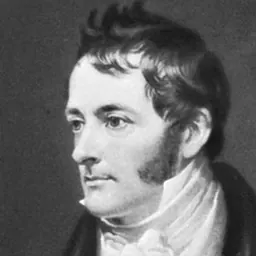
Lived 1803 – 1846 (aged 42). Matthew H. Webster was a lawyer and military personnel.
Continued career Webster was also active in the New York Militia in the 1820s, and his assignments included inspector of the organization's 3rd Brigade, 1st Cavalry Division with the rank of major. In 1830, Beck died while serving as Adjutant General of New York; the governor appointed Webster to fill the vacancy with the rank of brigadier general and he served until 1831.
In 1833, Webster was appointed secretary of the Lancaster School, an Albany institution founded in 1811 to teach poor and working class children whose parents could not afford private school tuition by employing the "Lancasterian system", an educational approach in which older students assisted in instructing younger ones. Webster also became active in politics as a Whig; in July 1834, he was one of the secretaries of the party committee that awarded US Representative Dudley Selden a vote of thanks for obtaining federal funds to improve navigation on the Hudson River. In October 1834, he was selected as a Second Ward delegate to the Albany County convention that nominated candidates for county offices. In 1836, he became editor of the Zodiac, an Albany-based literary and historical monthly magazine. In 1837, he was elected to the board of trustees of the institution now known as the Albany Public Library. In June 1838, Webster became a partner in the Albany Hollow Ware Factory, a business that produced pots, pans, kettles, stoves, and other metal items.
Later career In May 1840, Webster was chairman of the Whig party committee in his ward that endorsed the presidential candidacy of William Henry Harrison. In July 1840, he was elected one of the vice presidents of the city's Whig general committee. In September 1840, he was a featured speaker at a major Harrison rally in Albany. In April 1842, he chaired the 10th Ward committee that nominated Whig candidates for local offices. Webster was a member of the American Association of Geologists, and attended its May 1843 annual meeting, which took place in Albany. In September 1843, he was chosen as a delegate from the 8th Ward to the Whig convention that nominated candidates for Albany County offices.
Webster died of tuberculosis in Manhattan on 28 July 1846. He was buried at the Sixteenth Street Baptist Church Vaults in the Chelsea neighborhood of Manhattan. According to a widely republished newspaper obituary, Webster's generosity and efforts to aid the less fortunate during his life left his wife and children unprovided for after his sudden death, and the writer solicited donations on their behalf.
Don’t just read it —
keep it.
Full-length biographies made to live with: read them, listen on the way to work, watch them tonight.
- E-book
- Audio
- Video
Instant download · yours to keep · every purchase keeps this site free
Important facts
People in Matthew H. Webster's life
Named in this biography and alive at the same time


Related people
Same field, nearest in time




Contemporaries
People whose lives overlapped Matthew H. Webster's





Frequently asked questions
Who was Matthew H. Webster?
adjutant General of New York (1803–1846)
When was Matthew H. Webster born?
Matthew H. Webster was born on 2 November 1803.
When did Matthew H. Webster die?
Matthew H. Webster died on 28 July 1846.
What was Matthew H. Webster's occupation?
Matthew H. Webster was a lawyer and military personnel.
Sources & further reading
· Wikipedia: Matthew H. Webster
Cite this page
APA: Biography.guide. (2026). Matthew H. Webster. https://biography.guide/matthew-h-webster/
MLA: "Matthew H. Webster." Biography.guide, https://biography.guide/matthew-h-webster/.
Chicago: "Matthew H. Webster." Biography.guide. https://biography.guide/matthew-h-webster/.
Data last updated: 2026-09-20 · Spot an error? Report a correction.
Page generated 2026-09-27 05:25 UTC