
About Matthew E. Welsh
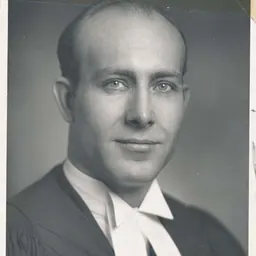
Lived 1912 – 1995 (aged 82). Matthew E. Welsh was an American lawyer, politician, governor, jurist and prosecutor.
Matthew Empson Welsh (September 15, 1912 – May 28, 1995) was an American politician who was the 41st governor of Indiana and a member of the Democratic Party, serving from 1961 to 1965. His term as governor saw a major increase in statewide taxation, including the first state sales tax, and the passage of several important civil rights bills, making Indiana one of the most friendly states to ethnic and religious minorities at that time. His tax hikes led to a near-tax revolt in the state, and people began writing "Indiana—Land of Taxes" on their license plates, at entry points into the state, in stores, and other public places. The situation killed any chance he had seeking higher office and earned him the moniker "Sales Tax Matt". Despite numerous reforms and his popularity within the Democratic Party, he was defeated when he ran for governor again in 1972. After leaving office, he served as chairman of the Indiana Democratic Party, as a member of the Democratic National Committee from 1964 until 1968, and as a federal commissioner on the International Joint Commission from 1966 until 1970. Throughout his life, Welsh was known for his personal motto, "It doesn't cost you anything to be a gentleman." After his retirement in 1972, he returned to Indianapolis, where he remained until his death in 1995.
Early life
Family and background Matthew Welsh was born on September 15, 1912, in Detroit, Michigan, the son of Matthew William and Inez Empson Welsh. Both of his parents were natives of Jackson County, Indiana and had only recently moved to Detroit where his father took a job as a secretary and legal counsel for an insurance company. He had three younger siblings, Mary, John and Margaret. At the outbreak of World War I, his father was hired as an industrial expediter by the federal government and began traveling often. Welsh and his mother moved to Brownstown, Indiana, where her parents lived. After the war ended, Welsh's father joined them in Brownstown, where he became the president of a local bank. In 1926, the family moved again to Vincennes, where Welsh's father took a new job as president of an investment firm.
Welsh's father had been active in local Democratic politics for many years, and from an early age, Welsh was also interested in politics. He attended public school in Vincennes and graduated from Lincoln High School in 1930. He enrolled in the Wharton School at the University of Pennsylvania, graduating in 1934. Welsh met Mary Virginia Homann while attending IU, and the couple began a relationship. After two years at IU, Welsh transferred to the University of Chicago Law School, where he graduated with a degree in law in 1937. The same year, he was married to Mary and the couple settled in Vincennes.
Politics and World War II
In Vincennes, Welsh opened a law practice and purchased a new home. He and his wife had twin daughters, Kathryn and Janet, in 1942. Welsh became involved in politics and ran for a seat in the Indiana House of Representatives and won in the 1940 election. He was re-elected to his seat in 1942, but resigned after the first session of the General Assembly to enlist in the navy, as World War II broke out. Welsh saw little action during the war and spend most of it on patrol of the American coastline. In 1946, he was discharged from the navy and returned home to resume practicing law. In 1950, President Harry Truman appointed him to serve as U.S. attorney for the Southern District of Indiana, a position he held until resigning in 1952 to return to his law practice.
After the General Assembly adjourned, Welsh launched a campaign advocating increased taxes. He argued that the state could not risk waiting on the economy to recover and that a long-term deficit would use the entire reserve fund and leave the state in a desperate condition. He advocated a plan of tax increases in every many area he called the "2-2-2 plan". It would impose a 2% sales tax for the first time in the state, raise the state income tax to 2% on net income for individuals, and 2% on the net income of corporations. Additionally, he advocated an increased tax on cigarettes to construct two new bridges in the state. After announcing his plan, he called a 38-day special session beginning March 12, 1963, of the General Assembly to consider and adopt his plan. After the House wrangled on the issue for two weeks, they passed the plan. In the Senate, the body had a tie vote in which the Republican lieutenant governor cast the break vote, passing the measure. The bill was largely unaltered from Welsh's original proposal, and named one of the new bridges in Welsh's honor, the Matthew E. Welsh Bridge.
Governmental reorganization
Welsh had an easier time persuading Republicans to make a number of reforms to state agencies and departments. The new Department of Administration, placed under the control of the Indiana Secretary of State, was created to streamline many state agencies. The state highway department was compelled reorganized, by replacing the commission that ran it with an executive director who was required to be a civil engineer, and replacing its patronage position with a merit system of hiring.
The consolidation of the state's education system, began in 1959, was accelerated and largely completed during Welsh's term. He aggressively pursued the consolidation agenda at the recommendation of his education adviser. By the time he left office, he had reduced the number of public schools in Indiana from 966 to 466. Welsh was also concerned with the lack of accessibility to higher education in the state and urged for the creation of a commission to investigate the problem and make recommendations to improve the situation. The General Assembly obliged, and the commission was created and recommended creating a state scholarship program, expanding Purdue and Indiana University to include satellite campuses around the state and to construct several new vocational schools. Welsh endorsed the plan, which the legislature implemented during his last year in office.
In 1963 a second law was passed creating the Indiana Civil Rights Commission and given the power to investigate allegations of discrimination, issue cease and desist order, arrest offenders, and issue fines. In June of the same year, Welsh issued an executive order requiring all state departments to use their licensing powers to prohibit discrimination by adding anti-discrimination clauses to their licensing agreements. Welsh stumped the state touting his civil rights credentials and denigrating Wallace. His slogan was "Clear the way for LBJ, vote Welsh the fifth of May." During the primary campaign, Welsh had taken part in a Civil War Centennial Tour where he visited the capitals of each of the southern states, except Alabama's, and returned the battle flags captured by Hoosier soldiers during the American Civil War in official ceremonies. Wallace refused to hold such a ceremony and Alabama's captured battle flags still remain on display in the Indiana World War Memorial. In the primary election, Welsh won a victory over Wallace, 376,023 to 172,646. Wallace also won two delegates when he won the northwestern First Congressional District of Gary, Indiana. However, at the national convention, the Hoosiers delegation refused to award the two votes to Wallace. They voted for Welsh on the first ballot; afterwards, Welsh directed his supporters to vote for Johnson.
One of Welsh's most effective long-term changes was his gradual attempt to change the state's position on accepting money from the federal government. Since 1947, Indiana had been under a law that preventing it from accepting any money from the federal government except in cases specifically allowed by the General Assembly. This law had been enacted following the Great Depression and the government's fear at that time of the domination it had come under after accepting major amounts of money from the federal government, and the strings that came attached to it. Welsh was able to have the law overturned, with little fanfare.
Louie, Louie
Welsh is also known for banning radio stations in Indiana from playing the 1963 hit song "Louie, Louie", for its allegedly-obscene lyrics.
Later years
Constitutionally prevented from seeking a consecutive term, Welsh left office in January 1965 and returned to his law practice in Vincennes. He remained active in the Democratic Party, and had been made a member of national committee in 1964, a position he held until 1968. In 1965, President Johnson appointed him the International Joint Commission that oversaw a range of issues affecting both Canada and the United States, he continued on the commission until 1970. During 1969 he also served on the Indiana Constitutional Revision Committee that authored a series of amendments reorganizing the state courts expanding the power of governors, and making several new constitutional bodies.
Don’t just read it —
keep it.
Full-length biographies made to live with: read them, listen on the way to work, watch them tonight.
- E-book
- Audio
- Video
Instant download · yours to keep · every purchase keeps this site free
Important facts
People in Matthew E. Welsh's life
Named in this biography and alive at the same time



Related people
Same field, nearest in time



Contemporaries
People whose lives overlapped Matthew E. Welsh's






Frequently asked questions
Who was Matthew E. Welsh?
Governor of Indiana (1912-1995)
When was Matthew E. Welsh born?
Matthew E. Welsh was born on 15 September 1912 in Detroit.
When did Matthew E. Welsh die?
Matthew E. Welsh died on 28 May 1995 in Indianapolis.
What was Matthew E. Welsh's occupation?
Matthew E. Welsh was a lawyer, politician, governor, jurist and prosecutor.
What nationality was Matthew E. Welsh?
Matthew E. Welsh was American.
Sources & further reading
Cite this page
APA: Biography.guide. (2026). Matthew E. Welsh. https://biography.guide/matthew-e-welsh/
MLA: "Matthew E. Welsh." Biography.guide, https://biography.guide/matthew-e-welsh/.
Chicago: "Matthew E. Welsh." Biography.guide. https://biography.guide/matthew-e-welsh/.
Data last updated: 2026-09-20 · Spot an error? Report a correction.
Page generated 2026-09-27 05:26 UTC