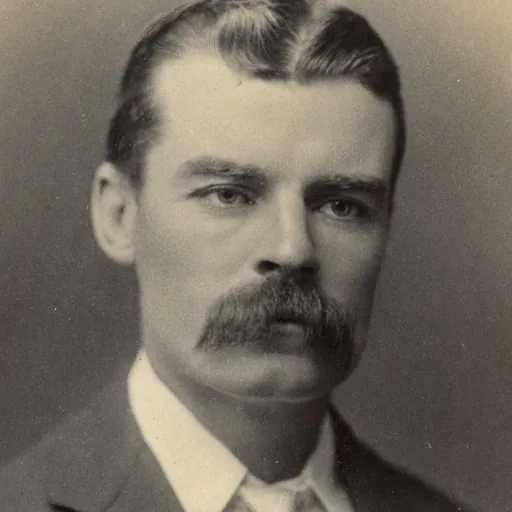
About Matthew Charlton
Lived 1866 – 1948 (aged 82). Matthew Charlton was an Australian politician.
Matthew Charlton (15 March 1866 – 8 December 1948) He was born to Matthew Charlton, an English miner from Durham, and Mabel (née Foard). In 1871, the five-year-old Charlton's father moved with his family to Lambton, a suburb of Newcastle, New South Wales. After primary education at Lambton Public School, Charlton began work at Lambton Colliery as a coal trapper; a children's-only job opening trapdoors for coal carts. When too old for the job, Charlton was given a job at the coal-face. At 23 he married Martha Rollings at nearby New Lambton.
Emerging interest in politics In 1896 plans to reduce coal workers' wages led to strike action. Charlton supported the struggle against wage reductions, but the effort failed and, along with many other miners, he moved to the goldfields near Kalgoorlie, Western Australia. After two years there, Charlton returned to Lambton and became an official in the Colliery Employees' Federation, becoming treasurer in 1901. While occupying that position, Charlton also prepared arbitration cases. Battling for an improvement in mine workers' conditions, he attended a trade union congress in November 1902, at which he moved for nationalisation of the coal mining industry, believing it would "eliminate cut-throat competition between owners that depressed miners' wages and conditions". Charlton became the unofficial spokesperson for the miners, speaking principally about mining matters in parliament. In 1909 a coal miners' strike struck New South Wales and Charlton was called upon by the Colliery Employees' Federation to represent it in front of a wage board. Charlton was unsuccessful in gaining better conditions for the miners but he did settle the dispute, talking to miners around the state and convincing them to return to work. He resigned from state politics and in 1910 Charlton wrested the federal Division of Hunter from the sitting Frank Liddell. Hunter has remained a safe Labor seat ever since.
Early federal career
Charlton was an immediate success with Andrew Fisher and was promoted to the temporary chairmanship of committees in the House in 1913, however Charlton threatened to resign in 1915 over a dispute in government delays in granting the committee increased powers. Fisher mollified him and in 1916 Charlton proved his loyalty to the new Labor leader Billy Hughes by voting for Hughes' conscription referendum bill, even though he was vehemently opposed to conscription and fought hard against it. However, Charlton seemed to accept the affirmative result of the referendum and again proved his loyalty to Hughes by defending him when he became the target of caucus criticism. Charlton attempted to deflect attacks made on Hughes to a party conference, but Hughes left the party before a decision could be made. In August 1920, both Tudor and Ryan were taken ill while two of the Hughes government's most important bills were being debated (the Industrial Peace Bill and the Conciliation and Arbitration Bill). On 12 August, a special caucus meeting elected Charlton as acting leader in the House of Representatives; the party's deputy leader was Senator Albert Gardiner. Ryan died of pneumonia on 1 August 1921 after persistent ill health. On 29 September, the party elected Charlton as deputy leader in place of Ryan. Tudor died of heart disease on 10 January 1922, and Charlton became the de facto acting leader of the party. On 25 January, the party unanimously chose him as leader of the Labor Party in the House of Representatives, thus allowing him to become Leader of the Opposition. The overall leadership of the party remained vacant until 16 May, when Charlton won a ballot against Albert Gardiner (the party's sole senator). Gardiner was then chosen as his deputy.
Leader of the Opposition At the 1922 federal election, Charlton offered alternative policies and looked to be favourite until he was hospitalised with illness halfway through the campaign. Labor still won the most seats as a single party, but Charlton was unable to defeat a strong government coalition. Labor remained in opposition.
Charlton lost the 1925 election, largely due to his stance on industrial relations and continual militant union action which plagued his campaign. Charlton always aided in maintaining amicable relations in the party and many times lent his expertise to conflicts within the NSW branch of the Labor Party. He resigned from his positions on 29 March 1928. His successor James Scullin went on to become the Prime Minister of Australia.
The Division of Charlton in the Hunter Region was named in his honour, and was a safe Labor seat from its creation in 1984 until its abolition in 2016.
Don’t just read it —
keep it.
Full-length biographies made to live with: read them, listen on the way to work, watch them tonight.
- E-book
- Audio
- Video
Instant download · yours to keep · every purchase keeps this site free
Important facts
People in Matthew Charlton's life
Named in this biography and alive at the same time


Related people
Same field, nearest in time


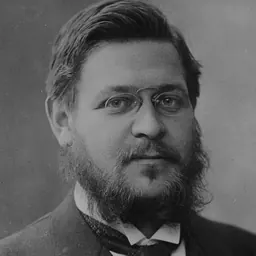
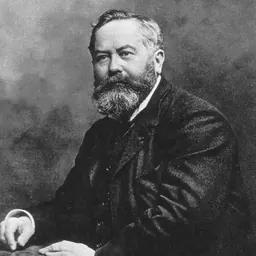

Contemporaries
People whose lives overlapped Matthew Charlton's

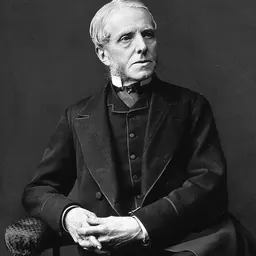
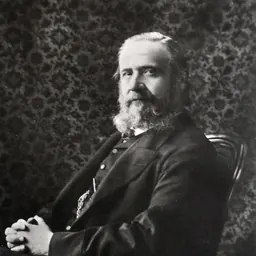

Frequently asked questions
Who was Matthew Charlton?
Australian politician (1866-1948)
When was Matthew Charlton born?
Matthew Charlton was born on 15 March 1866 in Linton.
When did Matthew Charlton die?
Matthew Charlton died on 8 December 1948 in Lambton.
What was Matthew Charlton's occupation?
Matthew Charlton was a politician.
What nationality was Matthew Charlton?
Matthew Charlton was Australian.
Sources & further reading
Cite this page
APA: Biography.guide. (2026). Matthew Charlton. https://biography.guide/matthew-charlton/
MLA: "Matthew Charlton." Biography.guide, https://biography.guide/matthew-charlton/.
Chicago: "Matthew Charlton." Biography.guide. https://biography.guide/matthew-charlton/.
Data last updated: 2026-09-21 · Spot an error? Report a correction.
Portrait: Wikimedia Commons · author & licence
Page generated 2026-09-27 05:00 UTC