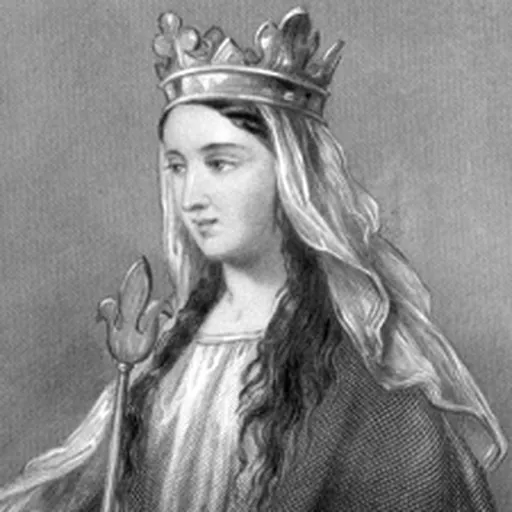
Matilda of Flanders
Wife of William the Conqueror and Queen consort of the Kingdom of England
About Matilda of Flanders
Lived 1031 – 1083 (aged 51–52). Matilda of Flanders was an English regent.
Matilda of Flanders (; ; German: Mechtild) (died 2 November 1083) was Queen of England and Duchess of Normandy by marriage to William the Conqueror, and regent of Normandy during his absences from the duchy. She was the mother of at least nine children who survived to adulthood, including two kings of England, William II and Henry I.
Family background Matilda was born into the House of Flanders to Baldwin V of Flanders and Adela of France. Flanders was of strategic importance to England and most of Europe as a "stepping stone between England and the Continent" necessary for strategic trade and for keeping the Scandinavian intruders from England. Matilda's principal attribute was her descent from Charlemagne and her many royal ancestors, her closest being her grandfather Robert II of France. She was the niece of King Henry I of France, William's suzerain, and at his death in 1060, first cousin to his successor King Philip I of France. A member of the aristocracy, she was closely related to most of the royal families of Europe. A marriage to a member of the (Carolingian) royal family was a means of upward mobility for a soldier or nobleman like William. Her descent from Alfred the Great (whose daughter Ælfthryth was the mother of Arnulf I, Count of Flanders, and great-great-great-great-grandmother of Matilda) also proved a legitimizing factor as queen of England. For these reasons, Matilda was of grander birth than William, who was illegitimate.
Marriage William started to negotiate as early as 1047 with Baldwin V about a marriage with Matilda. Both Baldwin and William had a common interest in stabilizing the relations between Flanders and Normandy and settling border disputes through a marriage. For William the marriage had the added value of marrying into a house with a very strong ancestral bloodline which would compensate his own illigimite ancestry. Despite a papal ban in 1049 by Pope Leo IX at the Council of Reims on the grounds of consanguinity, William and Matilda were married after a delay in . According to the eleventh-century Gesta Normannorum Ducum compiled by William of Jumièges, the marriage took place at the castle of Eu.
William sent his friend and adviser Lanfranc, at the time prior of Bec Abbey, to Rome in order to advocate a lift of the ban but he was not successful with Pope Leo IX nor his two successors Victor II and Stephen IX, who were all of German origin and anti-Normandic due to the Norman conquest of southern Italy. Finally Lanfranc was more successful with Pope Nicholas II and obtained a papal dispensation in 1059. As penance for the dispensation Matilda and William promised to found an abbey each: the Abbaye aux Hommes and the Abbaye aux Dames or the Sainte-Trinité Abbey.250px
Like many royal marriages of the period, it breached the rules of consanguinity, then at their most restrictive (to seven generations or degrees of relatedness); Matilda and William were third cousins once removed. Matilda was about 20 when they married in 1051/2; William was some four years older, and had been Duke of Normandy since he was about eight (in 1035).
The marriage was by all accounts very happy and fruitful. Matilda bore her husband at least nine children in a period of twenty years, and most contemporaries believed that William was never unfaithful to her. There is no evidence of any illegitimate children born to William.
She governed the Duchy of Normandy in his absence, joining him in England after more than a year, to be crowned in an elaborate ceremony. She subsequently returned to Normandy, but crossed to England repeatedly, and ruled England in William's absence between the years 1081 and 1083. Matilda also regularly served as regent in Normandy.
Apart from governing Normandy and supporting her brother's interests in Flanders, Matilda took a close interest in the education of her children, who were unusually well educated for contemporary royalty. The boys were tutored by the Italian Lanfranc, who was made Archbishop of Canterbury in 1070, while the girls learned Latin in Sainte-Trinité Abbey.
Duchess of Normandy When William embarked on the Norman Conquest of England, he sailed in his flagship Mora, which Matilda had given him. Additionally, William gave Normandy to his wife during his absence. Matilda successfully guided the duchy through this period in the name of her fourteen-year-old son; no major uprisings or unrest occurred. She served as regent in Normandy during the absence of William six times: in 1066–1067, in 1067–1068, in 1069, in 1069–1072, in 1074 and, finally, in 1075–1076.
Even after William conquered England and became its king, she delayed her visit to her new kingdom until she could be crowned on Pentecost (Whit Sunday) in 1068, almost two years after it was won. Despite William's conquest, she spent most of her time in Normandy, governing the duchy, supporting her brother's interests in Flanders, and sponsoring ecclesiastic houses there. Only one of her children was born in England; Henry was born in Yorkshire when Matilda accompanied her husband in the Harrying of the North.
Queen of England Matilda arrived in England in April 1068 and was crowned queen on 11 May 1068 in Westminster Abbey during the feast of Pentecost, in a ceremony presided over by the archbishop of York. Three new phrases were incorporated to cement the importance of a queen, stating that she was divinely placed by God, shared in royal power, and blessed her people by her power and virtue. Her claims to authority were enhanced through a special acclamation, or laudes, crafted especially for her. William was re-crowned at the same time in order to demand the court's respect.
She stood as godmother for Matilda of Scotland, who would become Queen of England after marrying Matilda's son Henry I. During the christening, the baby pulled Queen Matilda's headdress down on top of herself, which was seen as an omen that the younger Matilda would be queen some day as well.
Death and burial
Matilda fell ill during the summer of 1083 and died on 2 November 1083. Her husband was present for her final confession. William swore to give up hunting, his favorite sport, to express his grief after the death of his wife. He himself died four years later in 1087.
She was buried in Caen at the Abbaye aux Dames. An 11th-century slab of black ledger stone decorated with her epitaph, marks her grave at the rear of the church. Over time Matilda's tomb was desecrated and her original coffin destroyed. Her remains were placed in a sealed box and reburied under the original black slab. In 1959 Matilda's incomplete skeleton was examined and her femur and tibia were measured to determine her height. Her height was , a normal female height for the time. However, as a result of this examination she was misreported as being leading to the myth that she was extremely small.
Issue Matilda and William had four sons and at least five daughters. The birth order of the boys is clear, but no source gives the relative order of birth of the daughters.
Child Birth – Death Notes Robert c. 1053 – 10 February 1134 Duke of Normandy; married Sybil of Conversano, daughter of Geoffrey of Conversano. Richard c. 1055 – c. 1069–74 Constance c. 1062 – 1090 Betrothed to Harold Godwinson, Alfonso VI of Castile, and possibly Herbert I, Count of Maine, but died unmarried.
Legends There were rumours that Matilda had been in love with the English ambassador to Flanders and with the great Anglo-Saxon thegn Brictric, son of Algar, who (according to the account by the Continuator of Wace and others) in his youth declined her advances. Whatever the truth of the matter, years later she is said to have used her authority to confiscate Brictric's lands and throw him into prison, where he died.
According to a twelfth-century chronicler from Saint-Martin de Tours, when the Norman duke William the Bastard (later called the Conqueror) sent his representative to ask for Matilda's hand in marriage, she replied that she was far too high-born to consider marrying a bastard. After hearing this response, William rode from Normandy to Bruges, found her at the Burg square emerging from Saint-Donatian church, threw her on the ground and pursued his rough courtship in the roadside mud. Naturally, Baldwin took offence at this; but before they could draw swords, Matilda settled the matter by refusing to marry anyone but William. In the thirteenth-century Chronique Rimée of Philippe Mouskes, Matilda exclaims preferring to become a nun instead of the wife of a bastard.
For many years it was thought that Matilda had some involvement in the creation of the Bayeux Tapestry (commonly called La Tapisserie de la Reine Mathilde in French), but historians no longer believe that; it seems to have been commissioned by William's half-brother Odo, Bishop of Bayeux, and made by English artists in Kent.
Don’t just read it —
keep it.
Full-length biographies made to live with: read them, listen on the way to work, watch them tonight.
- E-book
- Audio
- Video
Instant download · yours to keep · every purchase keeps this site free
Important facts
Family & relationships
People in Matilda of Flanders's life
Named in this biography and alive at the same time
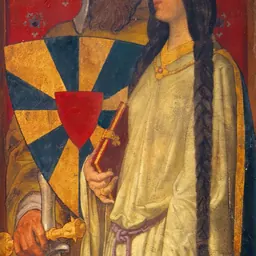

Related people
Same field, nearest in time





Contemporaries
People whose lives overlapped Matilda of Flanders's



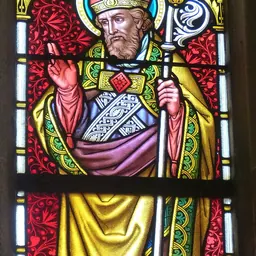
Frequently asked questions
Who was Matilda of Flanders?
wife of William the Conqueror and Queen consort of the Kingdom of England
When was Matilda of Flanders born?
Matilda of Flanders was born in 1031 in Bruges.
When did Matilda of Flanders die?
Matilda of Flanders died on 2 November 1083 in Caen.
What was Matilda of Flanders's occupation?
Matilda of Flanders was a regent.
What nationality was Matilda of Flanders?
Matilda of Flanders was English.
Sources & further reading
· Wikipedia: Matilda of Flanders
· DBpedia: Matilda of Flanders
Cite this page
APA: Biography.guide. (2026). Matilda of Flanders. https://biography.guide/matilda-of-flanders/
MLA: "Matilda of Flanders." Biography.guide, https://biography.guide/matilda-of-flanders/.
Chicago: "Matilda of Flanders." Biography.guide. https://biography.guide/matilda-of-flanders/.
Data last updated: 2026-09-22 · Spot an error? Report a correction.
Portrait: Wikimedia Commons · author & licence
Page generated 2026-09-27 05:03 UTC