
About Mati Logoreci
Lived 1867 – 1941 (aged 73). Mati Logoreci was an Albanian pedagogue and opinion journalist.
Mati Logoreci (10 February 1867 – 7 February 1941) was an Albanian educator, linguist, and publisher from Shkodër, and was one of the active figures associated with the Albanian National Awakening.
He is primarily recognized for establishing the first Albanian-language primary school in Prizren in 1889 and for his extensive work authoring school textbooks. Logoreci was a delegate at the Congress of Monastir in 1908, which established the modern Albanian alphabet, and later served as a key member of the Albanian Literary Commission (1916–1918). He also participated in the Congress of Lushnjë (1920) and played a central role in the early organization and development of the National Library of Albania following its foundation that same year.
Early life
Education and early career Mati Logoreci was born on 10 February 1867 in Shkodër to Frano Logoreci and Marije Thaçi.
Following his education, Logoreci worked as an apprentice for the Parruca trading company, which sent him to work as an accountant in Monfalcone, near Trieste. It was during this period abroad that he came into contact with the patriotic literature of the Albanian National Awakening. He studied the works of prominent figures such as Jeronim de Rada, Dora d'Istria, and Zef Serembe, whose writings on Albanian identity and independence deeply influenced his future career as an educator and nationalist.
Personal life In September 1894, while living in Prizren, Logoreci married Paulina (born 1878), with whom he had four children: Kolë, Gjon, Marta, and Shaqe. and together they founded the Agimi (The Dawn) literary society, which aimed to create a unified Albanian alphabet and publish schoolbooks in the native tongue.
Logoreci worked as a teacher in Prizren until 1903 when he transferred to the school of Franciscan Church of Shkodër where he continued to teach and refine his linguistic theories, eventually leading to his participation in the national congresses of the early 20th century.
Linguistic and political activism Logoreci's involvement in the national movement intensified through his work in publishing and linguistic reform. On 14 November 1907, he began publishing the biweekly periodical Dashamiri (The Well-wisher) in Trieste. Printed using the Agimi alphabet, which utilized diacritics instead of digraphs to represent Albanian sounds, the publication served as a vehicle for nationalistic and educational ideas until it ceased operation in August 1908 after fourteen issues.
Following the Congress of Manastir, Logoreci returned to Shkodër where, in 1908, he collaborated with Lazër Mjeda (brother of Ndre Mjeda) to organize an Albanian night school for adult literacy. During this period, he published the 201-page textbook Ndolliina historijet t'motshme (1911), Working with scholars such as Aleksandër Xhuvani, he contributed to the first official efforts to standardize Albanian orthography and school curricula. Following the Congress of Lushnjë in 1920, where he served as a delegate for Shkodër, Logoreci played a significant role in the linguistic "Albanianization" of the new state's administration.
In 1920, Logoreci introduced the term “bashki” to designate the municipal administration of Shkodër, replacing the Ottoman Turkish term belediye, which had been used during the late Ottoman period. The designation was subsequently adopted for municipal institutions throughout Albania and remains the standard Albanian term for a municipality today. Following these contributions, Logoreci moved to the newly established capital, Tirana, to join the Ministry of Education.
On 10 July 1920, the Ministry of Education established the National Library of Albania and placed it under Logoreci's direction.
In 1937, Logoreci was appointed to a prestigious state commission tasked with selecting a new national anthem to replace the existing one, which some leaders felt lacked a purely Albanian spirit. He served on this committee alongside prominent intellectuals such as Parashqevi Qiriazi, Karl Gurakuqi, Lasgush Poradeci, Odhise Paskali and others. The project was never fully realized as a musical composition and the original anthem remained in use.
Throughout his career, Logoreci maintained extensive professional collaborations with leading scholars and national figures across the Albanian territories and abroad. Beyond his familial and linguistic partnership with Ndre Mjeda, he was a close associate of figures such as Gjergj Fishta, Luigj Gurakuqi, and Aleksandër Xhuvani. He also maintained a professional correspondence with the prominent Austrian albanologist Norbert Jokl, exchanging ideas on the standardization and development of the Albanian language.
Logoreci remained an active voice in Albanian cultural life until his death in Tirana on 7 February 1941.
Textbooks and primers
Abetari i shqipes (The Albanian Primer, 1899) – Developed for use in the Prizren school. Natyra (Nature, 1900) – A natural sciences textbook for primary education. T'ndodunit e histories së shenjtë (Events of Sacred History, 1903) – A religious history text. Historia e përgjithshme (General History, 1905) – One of the first comprehensive history textbooks in the Albanian language. Arithmetika (Arithmetic, 1907) – A mathematics text tailored for elementary students. Mësimi i këndimit (Reading Lessons, 1912) – A literary reader designed to improve literacy rates. Ndolluni historije t'motshme (Events of Ancient History, 1911)
Periodicals and editorial work
Dashamiri (The Well-wisher, 1907–1908) – A biweekly periodical published in Trieste focused on education and national identity. Drita (The Light, 1936) – A high-circulation newspaper founded in Tirana that served as a major intellectual forum prior to World War II.
Legacy
Several institutions and landmarks in Albania and Kosovo have been named in honor of Mati Logoreci to commemorate his contributions to national education:
Mati Logoreci Primary School (Shkodër): A prominent 9-year school in his birthplace. Mati Logoreci School (Prizren): Named in honor of his founding of the first Albanian school in the city in 1889. Rruga Mati Logoreci: There is a street named after him in Tirana. National Library of Albania: The library maintains a permanent photo of Mati Logoreci in its main hall to honor him.
Don’t just read it —
keep it.
Full-length biographies made to live with: read them, listen on the way to work, watch them tonight.
- E-book
- Audio
- Video
Instant download · yours to keep · every purchase keeps this site free
Important facts
People in Mati Logoreci's life
Named in this biography and alive at the same time

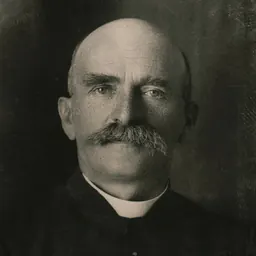




Related people
Same field, nearest in time


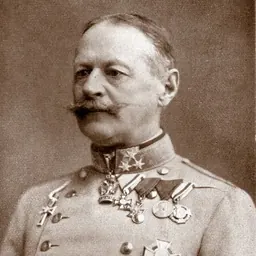

Contemporaries
People whose lives overlapped Mati Logoreci's
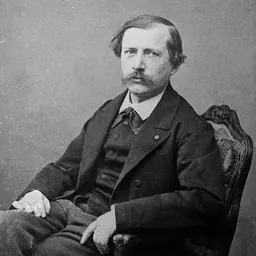


Frequently asked questions
Who was Mati Logoreci?
Albanian educator, linguist and publisher (1867-1941)
When was Mati Logoreci born?
Mati Logoreci was born on 10 February 1867 in Shkodër.
When did Mati Logoreci die?
Mati Logoreci died on 7 February 1941 in Tirana.
What was Mati Logoreci's occupation?
Mati Logoreci was a pedagogue and opinion journalist.
What nationality was Mati Logoreci?
Mati Logoreci was Albanian.
Sources & further reading
Cite this page
APA: Biography.guide. (2026). Mati Logoreci. https://biography.guide/mati-logoreci/
MLA: "Mati Logoreci." Biography.guide, https://biography.guide/mati-logoreci/.
Chicago: "Mati Logoreci." Biography.guide. https://biography.guide/mati-logoreci/.
Data last updated: 2026-09-20 · Spot an error? Report a correction.
Page generated 2026-09-27 05:31 UTC